
 24 Feb 2026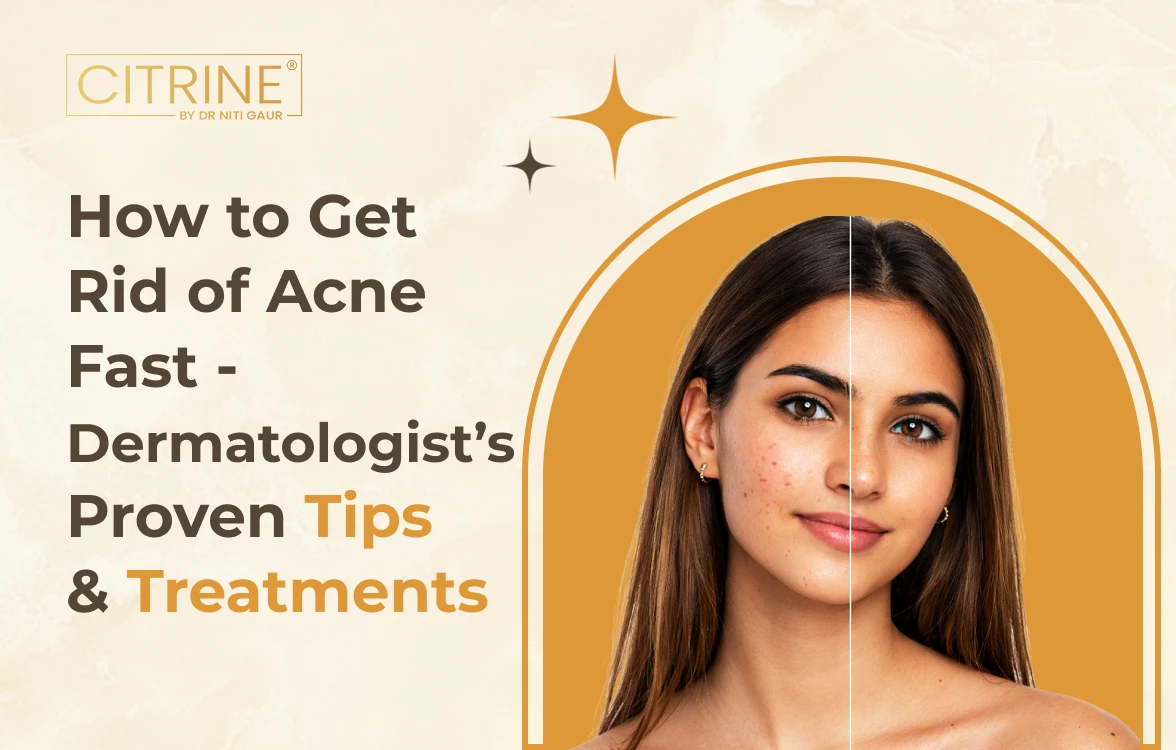
Pesky acne breakouts can appear unexpectedly on the face, back, chest, or shoulders, ruining your appearance and confidence and ultimately affecting your social and professional life. Nothing can eliminate them overnight, but dermatologists know ways to make the skin clear and healthy in less time. Dermatologists in Gurgaon, Dr. Niti Gaur, recommend a combination of certain medications, targeted skincare, and in-clinic procedures for safe and effective acne treatment.
In this blog, we share all potential ways to treat acne in a timely and safe manner. Go ahead and follow the tips and treatments for fast acne relief and prevention of associated concerns.
The Acne Types and Causes
Acne, a common skin issue, is broadly of two kinds: Non-inflammatory acne- the open and closed comedones (blackheads and whiteheads), and the inflammatory acne- papules, pustules, nodules, and cysts.
Comedones result from clogging of pores with dirt, excess sebum, and dead skin cells, while inflammatory acne results from a bacterial infection alongside impurities, natural oil, and cell debris. The most severe acne type is the cyst, the deep-seated, painful, pus-containing nodules. The red, painful bumps are papules, and the pus-filled papules are pustules, both of which are common inflammatory acne lesions.
Some acne breakouts are the result of hormonal changes or fungal infection.
Dermatologist-Approved Tips to Say Hello to Clearer Skin
The tips provided here by Dr. Niti Gaur, an expert acne treatment doctor in Gurgaon, aim to prevent and reduce acne breakouts:
- Maintain clean, non-greasy, and sweaty skin and hair.
Twice daily, cleanse skin with a suitable, mild cleanser (containing benzoyl peroxide) and pat the skin dry with a clean, soft towel to avoid clogging of pores with dirt, cosmetic residues, and extra sebum. Regularly wash hair with the right shampoo, don’t leave hair oily and dirty for long. Especially, take a shower after a sweaty workout or activity. - Avoid harsh exfoliation.
Do not scrub acne-prone skin. Also, avoid mechanical or chemical exfoliation, as it can worsen inflammation and lead to more severe acne and scarring. - Have a healthy diet plan.
Stick to a diet low in sugars, carbohydrates, and iodine. Limit dairy products, processed and greasy/oily foods, as well as any foods that could trigger acne breakouts. Focus on increasing intake of omega-3 fatty acids, zinc, antioxidants, vitamins A, C, and E, dietary fiber, probiotics, and hydrating foods. - Use only suitable sunscreen and moisturiser.
Go for non-comedogenic, fragrance-free, lightweight, hydrating sunscreen and moisturiser, or any other skincare product. - Keep dirty and oily hands or personal belongings away.
Do not touch acne-prone skin with dirty, greasy hands, or bring it into contact with any oily, dirty surface, as dirt and oil can settle and clog pores. - Never pick or pop pimples.
Such action will only aggravate inflammation/infection and increase the chances of scarring and post-inflammatory hyperpigmentation. - Take care while removing unwanted hair.
Shave with a clean blade in the right direction of hair growth. Get waxing and threading from a professional to avoid irritation and acne. - Use ice therapy.
Wrap ice in a clean, dry cloth and apply it 2-3 times daily for a few seconds to reduce inflammation and redness and shrink painful pimples. - Spot-treat the acne.
Try products containing 2% to 5% benzoyl peroxide to kill acne-causing bacteria, sulfur for gentle drying of pimples, or 1-2% salicylic acid to unclog pores and lessen inflammation. - Maintain a healthy routine.
Stress, sleep disturbances, and dehydration can cause or worsen acne. So, manage stress healthily, take proper sleep, and have enough water daily.
Safe, Most Effective, Fast Results-Yielding Dermatologist-Recommended Treatments for Acne
- Prescription medicines/topicals- Topical retin-oids can help reduce the skin cell turnover to unclog the pores and prevent new breakouts. Benzoyl peroxide in topical products can help kill acne-causing bacteria. Either of the two can be paired with an oral antibiotic to reduce acne-causing bacterial growth. Isotre-tinoin is very effective for severe acne. For women with hormonal acne, hormone-based drugs are best.
- Chemical peeling- Glycolic acid or salicylic acid can be used to exfoliate the skin and get the acne-causing bacteria and debris clear from the skin. It can even work to fade post-acne marks.
- Light and laser treatments- These generate heat that can shrink the sebaceous glands to reduce sebum production and even inhibit acne-causing bacteria growth. It can even reduce swelling and redness associated with acne by destroying the small blood vessels beneath the affected skin.
- Cortisone injection- The severe acne can shrink faster, often within 24 hours, of using this injection.
- Medical-grade comedone extraction- A professional can safely and effectively remove blackheads and whiteheads with a comedone extractor.
- MediFacial- A customised medical-grade facial that can work on the underlying cause of acne, or HydraFacial that involves deep cleansing, exfoliation, extraction, and protection, can help clear skin.
How Long Does it take for Acne to Clear Up from the Skin?
The inflammation associated with acne can be reduced by 2-3 days, and a noticeable improvement in acne can be seen in 1-2 weeks. Consistency is the key to getting the expected clearance. For long-term acne control, proper treatment and a 6-8 week wait time are generally required.
When Does Acne Warrant Seeing a Dermatologist?
Acne breakouts may not be controlled with self-measures provided by a dermatologist. If that’s what is happening, consult a dermatologist promptly. Here are the indications that a dermatologist has to be consulted for acne management:
- Acne breakout in a child aged below 8 years
- Lingering acne breakouts after 6 to 8 weeks of continuous use of over-the-counter acne relief products
- Moderate to severe acne breakouts
- The risk or occurrence of scarring, dark marks, or repeated acne breakouts.
In a Nutshell
Early, appropriate acne treatment by a dermatologist and proper skincare can prevent long-term skin damage. Dermatologist-led care and treatments can leave the skin healthier and clearer for the long term.
For the safest, fastest relief from mild to moderate acne breakouts, speak with Dr Niti Gaur at Citrine Clinic in Gurgaon for effective acne treatments.
About the Author