
 23 Feb 2026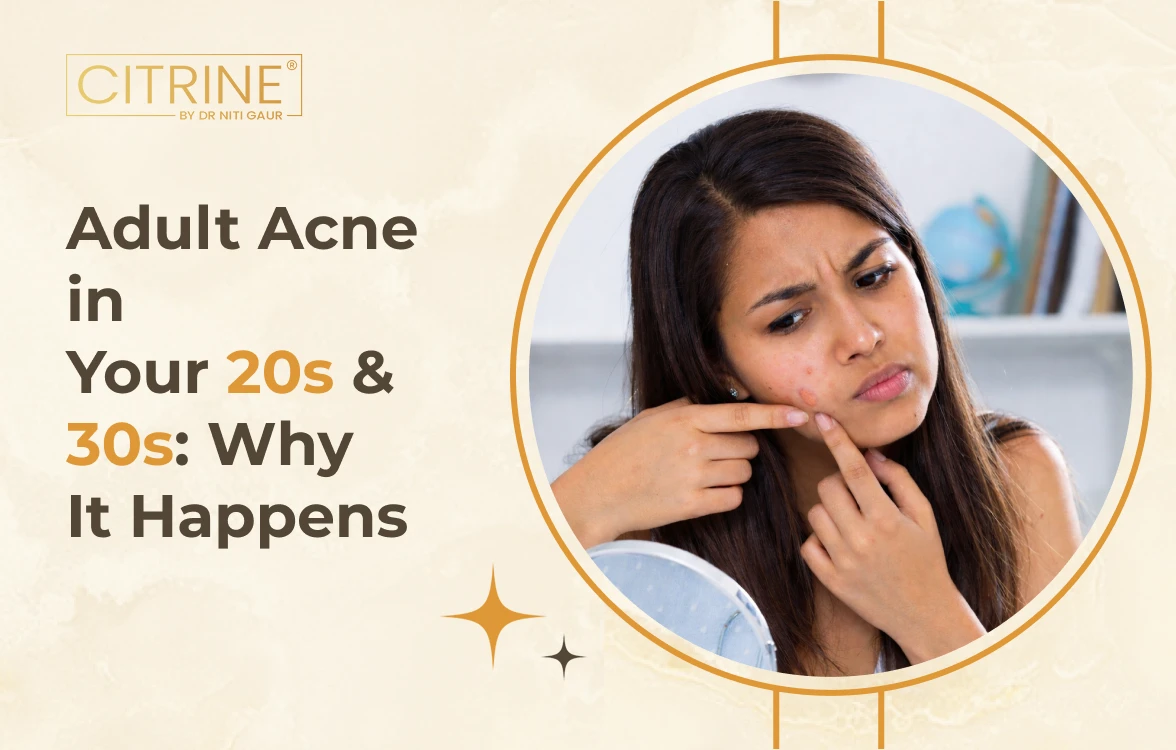
Let's be honest: no one warned us adult acne was a thing.
You survived the awkward teenage breakouts, only to find yourself dealing with painful bumps on your jawline right before a big meeting, or waking up with a cyst a week before your period. Frustrating doesn't even cover it.
The good news? You're far from alone. Adult acne is incredibly common, and more importantly, it's treatable once you know what's actually causing it.
At Citrine Clinic, under the expert care of Dr. Niti Gaur (with over 21 years of experience as a dermatologist), we don't just throw products at your skin. We get to the "why" behind your breakouts, then build a plan that actually works for your skin.
What Does Adult Acne Actually Look Like?
Adult acne isn't always the same as the breakouts you had in high school. It can show up in a few different ways:
-
Whiteheads: Small, closed bumps under the skin.
-
Blackheads: Open pores clogged with oil and dead skin.
-
Pustules: Red, inflamed bumps with a white centre.
-
Painful red bumps: Irritated spots that linger.
-
Cystic acne: Deep, sore, under-the-skin bumps that can stick around for weeks.
The real kicker? Adult breakouts tend to heal much slower than teenage ones. And they're not always confined to your T-zone. Many people in their 20s and 30s see them popping up along the jawline, chin, neck, back, and shoulders.
Teenage Acne vs. Adult Acne: What's the Difference?
If your breakouts feel totally different now than they did back then, that's because they are.
|
Feature |
Teenage Acne |
Adult Acne (20s & 30s) |
|
Main cause |
Puberty & surging androgens |
Hormonal shifts, stress, slower cell turnover & lifestyle factors |
|
Typical skin type |
Usually oily or very greasy |
Can be dry, sensitive, combination, or even oily and dehydrated |
|
Most common areas |
T-zone (forehead, nose, chin) |
U-zone (jawline, chin, neck) |
|
Type of breakouts |
Blackheads, whiteheads, smaller pustules |
Deep, painful, under-the-skin cysts and stubborn inflamed spots |
|
Healing time |
Often clears up relatively quickly |
Slower to heal and much more likely to leave dark marks (PIH) |
Why Are You Still Breaking Out in Your 20s and 30s?
Nine times out of ten, adult acne is a mix of a few different triggers working together. Here's what's likely going on under the surface:
1. Hormonal fluctuations (the biggest culprit)
Your hormones don't just settle down after your teens. They can still wreak havoc well into your 30s.
-
Menstrual cycle: That pre-period breakout on your chin? Classic.
-
PCOS: Polycystic Ovary Syndrome can cause excess androgens, leading to oily skin and stubborn cystic acne.
-
Pregnancy & postpartum: Big hormonal shifts can trigger sudden breakouts (even if you've never had them before).
-
Starting or stopping birth control: Any major change to your contraception can throw your skin off balance for a few months.
2. Stress is showing up on your skin
Work deadlines, late nights, relationship stress, that never-ending to-do list... it all adds up. When you're stressed, your body pumps out cortisol. More cortisol = more oil production. More oil + inflammation = the perfect breeding ground for acne.
3. Your skin is renewing itself slower
Ageing is a beautiful thing, but cell turnover isn't one of the perks. In your teens, your skin shed dead cells every ~20 days. By your 30s, that can slow to 30-40 days. Those lingering dead skin cells are far more likely to get trapped in your pores and cause blockages.
4. Your "teenage" skincare routine is working against you
Still reaching for that harsh scrub or stripping toner? Adult skin has a more delicate moisture barrier. Over-drying it sends a panic signal to your sebaceous glands to produce even more oil. On the flip side, some rich anti-ageing creams or heavy oils can be comedogenic (pore-clogging) without you realising it.
5. Lifestyle and environment play a sneaky role
Your diet and surroundings matter more than you think.
-
High-glycemic foods & refined sugar: They can trigger inflammation in some people, making breakouts worse.
-
City living & pollution: Dust, grime, and sweat can settle into pores, leading to those small, persistent red bumps (often called "city acne").
-
Humidity: Can send oil production into overdrive.
How to Tackle Adult Acne at Home (Without Making It Worse)
Before jumping into treatments, your daily habits need a little TLC. These small tweaks can make a huge difference:
-
Be gentle, always. Ditch the harsh scrubs. Opt for a pH-balanced, non-comedogenic cleanser twice a day.
-
Hydration is non-negotiable. Oily skin still needs moisture! Look for lightweight, gel-based, or water-based moisturisers that won't clog pores.
-
Hands off. We know it's tempting, but picking or squeezing adult acne almost guarantees a dark mark (post-inflammatory hyperpigmentation) that can stick around for months.
-
Wear sunscreen every single day. Many acne treatments increase sun sensitivity. A matte, gel-based, non-comedogenic SPF is your best defence against both burns and dark spots.
-
Be patient with new products. Adult acne takes time to calm down. Give any new routine at least 6-8 weeks before deciding it isn't working.
When At-Home Care Isn't Enough: Targeted Treatments That Actually Work
If you're doing all the right things and still breaking out, it's time to get to the root cause with professional help. At Citrine Clinic, Dr. Niti Gaur creates a personalised plan for you based on your skin, triggers, and goals.
Here are some of the most effective treatments we use for adult acne:
|
Treatment |
How it helps |
Best for |
|
Medical-grade Chemical Peels (like Acnelan or Black Peel) |
Exfoliates dead skin, unclogs pores, and calms inflammation without over-stripping. |
Stubborn breakouts, congestion, and early pigmentation. |
|
Medifacials |
A step above your regular facial. Uses medical-grade actives to deeply cleanse, treat acne, and restore hydration. |
Sensitive or combination adult skin that needs results without irritation. |
|
Carbon Laser Treatment (Hollywood Peel) |
Uses liquid carbon and laser energy to kill acne-causing bacteria, reduce oil, and minimise the appearance of pores. |
Oily skin, blackheads, and overall texture concerns. |
The right treatment plan often combines a few of these with the right at-home routine and, if needed, internal support for hormonal triggers.
Stop Guessing, Start Getting Answers
Adult acne in your 20s and 30s isn't a sign you're doing something wrong, and it definitely isn't something you just have to "wait out." It's a skin condition with real underlying causes, and it responds incredibly well to the right approach.
The difference between months of frustration and finally seeing clear skin is getting a plan tailored to you.
Ready to figure out your "why"? Book a consultation with Dr. Niti Gaur and the team at Citrine Clinic today. We'll assess your skin, identify your triggers, and create a personalised roadmap to clearer, healthier skin that lasts.
You can also check our clinic location and patient reviews before visiting.
View Citrine clinic location, directions, and reviews on Google Maps
Frequently Asked Questions (FAQs)
1. Is adult acne different from teenage acne?
Yes, adult acne tends to be deeper, more inflammatory, and concentrated on the lower face.
2. Can stress cause acne?
Yes. Stress stimulates the production of cortisol, which stimulates the production of oil, leading to breakouts.
3. Will my adult acne leave permanent scars?
If left untreated or picked, adult acne is highly likely to cause deep acne scars or dark spots.
4. Should I stop using moisturizer if I have acne?
No, skipping moisturizer damages your skin barrier, which can actually worsen breakouts.
5. How long does it take to notice the results from professional treatment?
It takes about 6 to 12 weeks to notice a marked difference.
About the Author