
 19 Feb 2026
Hair is often called our "crowning glory." When we suddenly see clumps of it in the shower or on our pillows, it can be deeply distressing. If you notice more than 50 to 100 strands of hair falling every day, it could be an indication of an underlying problem.
At Citrine Clinic, under the guidance of renowned dermatologist Dr. Niti Gaur, we believe that identifying the root cause of hair fall is the foundation of effective and lasting hair recovery.
Whether it is a matter of progressive thinning of your hair or sudden hair fall, we have the latest treatments available to restore hair growth.
Understanding Hair Fall
Hair fall refers to the shedding of your hair from the areas where it normally grows, especially the scalp. It can appear as:
- Complete baldness
- Sudden shedding of hair
- Patchy hair loss
- Progressive thinning
Both men and women can have these patterns.
Why is My Hair Falling Out Suddenly?
Sudden hair shedding, also known as telogen effluvium, may affect both men and women. Here are the most common causes of hair fall in both men and women:
1. Hormonal Changes
Hormonal changes have a massive impact on the hair growth cycle. In women, a decrease in estrogen levels after childbirth or during menopause can lead to severe hair shedding. In men, the hormone DHT (dihydrotestosterone) is the main cause of pattern baldness.
2. Intense Emotional Stress
An increase in stress levels can push hair follicles into a resting phase prematurely. This causes hair to fall out simultaneously a few months after the stressful event.
3. Nutritional Deficiencies
Your hair needs fuel to grow. A lack of iron, zinc, Vitamin D, or protein can lead to weak roots and brittle strands. Sudden "crash diets" are a frequent cause of sudden hair fall.
4. Medical Conditions & Autoimmune Conditions
- Alopecia Areata: Alopecia areata is an autoimmune disease that causes the body to attack its own hair follicles, resulting in patchy bald patches.
- Thyroid disorder: Hyperthyroidism or hypothyroidism can affect your hair growth cycle.
- Scalp infections: Dandruff or fungal infections can cause inflammation and damage your hair.
5. Genetic Predisposition
Androgenetic alopecia, or pattern baldness, is hereditary. While it often happens gradually, certain triggers can make the thinning appear more sudden.
Hair Fall Treatments Available at Citrine Clinic
Hair fall treatments at Citrine Clinic are never "one-size-fits-all." Dr. Niti Gaur conducts a thorough scalp analysis and blood tests to identify the root cause before recommending a plan.
Non-Surgical Treatments
- GFC (Growth Factor Concentrate): This is an advanced form of P-R-P. This treatment relies on growth factors in your own blood to stimulate follicles and increase hair density.
- PRP (Platelet-Rich Plasma): Platelet injections that aid in the repair of damaged follicles and promote natural hair growth.
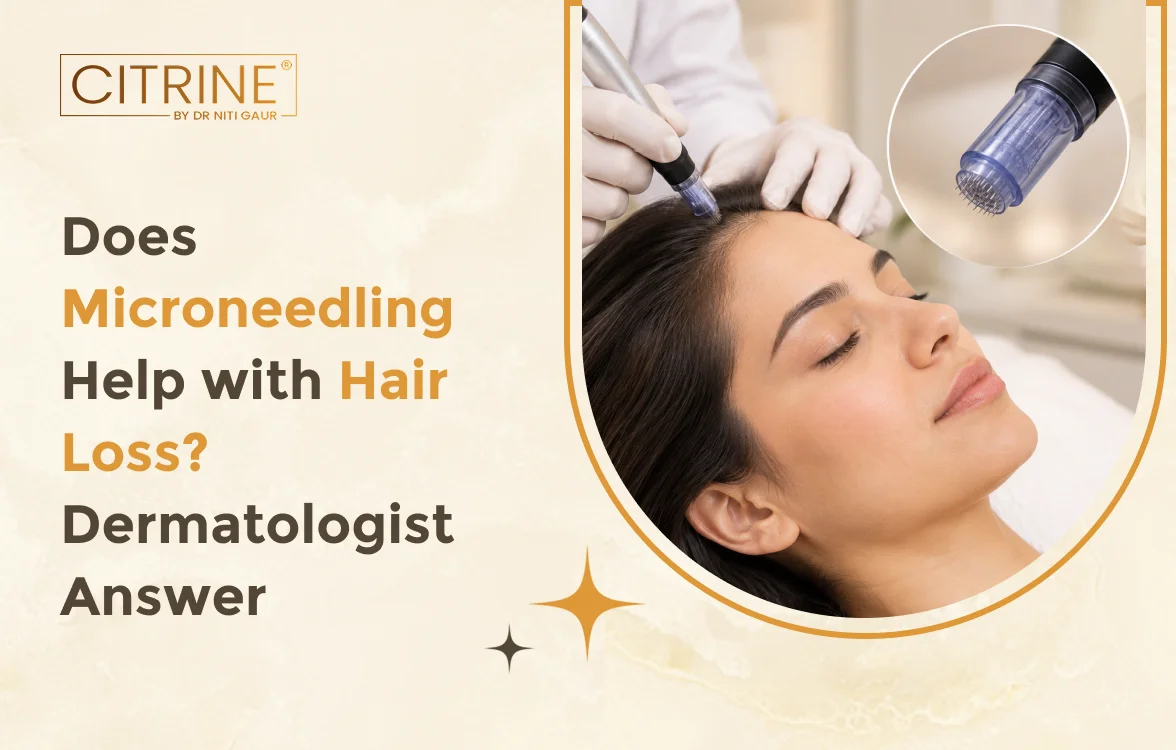
- Microneedling with P-R-P: A treatment that combines microneedling and P-R-P to improve absorption and promote collagen.
- Low-Level Laser Therapy (LLLT): In this procedure, medical-grade lasers are utilised which promote blood flow to the roots.
Surgical & Permanent Solutions
- FUE (Follicular Unit Extraction): This is a minimally invasive hair transplant technique that involves the extraction of individual follicles from the donor area without leaving a linear scar.
- FUT (Follicular Unit Transplantation): This procedure covers a large area of balding in a single sitting.
Depending on the cause and severity of hair fall, the expert dermatologist will choose a treatment that will work best for you.
Comparison of Hair Fall Treatments
| Type of Procedure | Best For | Recovery Time | Frequency |
| GFC Therapy | Early thinning & shedding | Minimal (Zero downtime) | 3-6 sessions |
| PRP Therapy | Hair density & quality | 24 hours | Monthly sessions |
| LLLT (Laser) | Inflammation & maintenance | None | Weekly |
| Hair Transplant | Permanent baldness | 8–10 days | One-time procedure |
Depending on the cause and severity of hair fall, the expert dermatologist will choose a treatment that will work best for you.
When to See a Dermatologist?
If you observe that your hair part is widening, there are visible patches on your scalp, or your ponytail is getting thinner, then it is the right time to seek professional assistance. The sooner you do this, the better your chances of avoiding permanent hair loss.
At Citrine Clinic, Dr. Niti Gaur, a leading dermatologist uses medical expertise and advanced technology to help you restore hair health and regain your confidence.
Conclusion
Hair fall may be sudden, alarming, and stressful too. But identifying the cause is the first step towards the correct solution.
At Citrine Clinic, hair loss is assessed medically before recommending a treatment. Whether it is genetic, autoimmune, stress-related, or scalp-related – there are solutions for all.
Early detection and proper treatment can help in achieving healthier and stronger hair.
Frequently Asked Questions (FAQs)
1. Can GFC therapy help in cases of severe baldness?
GFC is most effective for hair thinning and early stages of hair loss; for complete baldness, a hair transplant is usually the recommended permanent solution.
2. Can dandruff lead to permanent hair loss?
Dandruff does not lead to hair loss, but the inflammation and scratching associated with dandruff can damage the hair follicles, resulting in temporary hair loss.
3. How soon can I notice the results after a GFC treatment?
Patients can notice a decrease in hair shedding in 2 sessions, and noticeable hair growth in 3-4 months.
4. Do hair transplant results look realistic?
Yes. We perform FUE and FUT procedures with extreme precaution to provide a natural appearing hairline; therefore, your new hairline looks similar to the existing hair.
5. Will making changes to my lifestyle assist in preventing my hair loss?
Yes. If your hair loss is caused by lack of proper nutrition, then making changes to your diet will aid in preventing further loss. However if the cause of your hair loss is due to hormones, genetics, or both,
GFC (Growth Factor Concentrate) & LLLT (Low Level Laser Therapy) treatments will be required.
About the Author