
 28 Jun 2026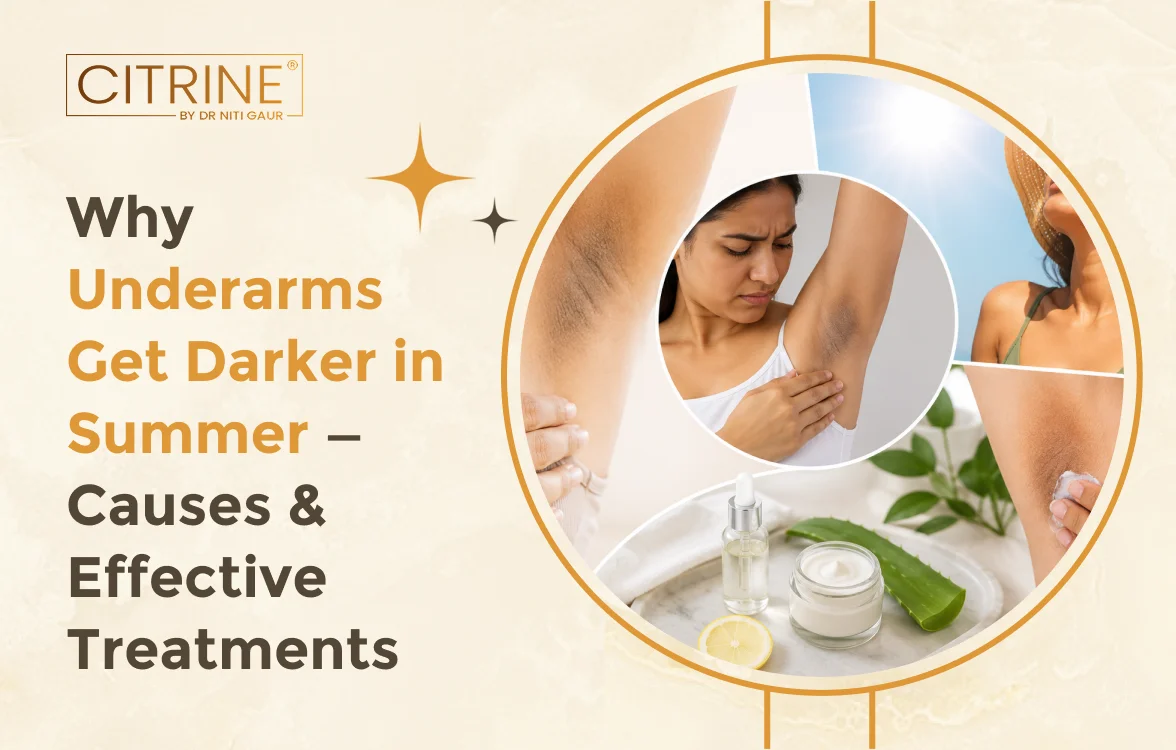
Quick Summary
- Too much sweat or humidity makes underarm pigmentation even more visible during the monsoon season as well during summers.
- Factors that cause darker underarms include friction, shaving, using deodorants, dead skin, and some medical conditions.
- It is not usually harmful to have dark underarms, but sudden and severe pigmentation might require medical evaluation.
- Medical procedures such as chemical peel, laser treatments are useful for getting rid of stubborn pigmentation.
- Treatment should always depend on the underlying cause rather than simply trying to lighten the skin with home remedies.
Introduction
Summer and monsoon bring higher temperatures, increased sweating, and sticky humidity. While most people expect tanning and oily skin during this season, many also notice that their underarms start looking darker than usual.
Dark underarms can affect self-esteem because of which individuals feel uncomfortable wearing sleeveless clothes. Many people think that poor hygiene is to blame, however, in reality, there are many other factors that contribute to underarm pigmentation.
The good news is that underarm darkening can be improved if the underlying cause is identified. That is why understanding why it happens is often the first step towards preventing and treating it.
What Is Underarm Darkening?
Underarm darkening refers to having brown, gray or black pigmentation in the underarms. It could affect one or both underarms and can become noticeable during the humid months. It is usually not a serious problem, however darkening that is sudden can indicate a health concern.
Why Do Underarms Get Darker in Summer and Monsoon?
High humidity does not darken the skin directly. Instead, it creates a condition that leads to increased sweating, friction and irritation. This triggers pigmentation.
Common Reasons Behind Summer Underarm Darkening
| Cause | How It Leads to Darkening |
| Excess sweating | Causes irritation and inflammation |
| Friction | Repeated rubbing darkens the skin |
| Shaving | Leads to irritation and appearance of shadowing |
| Tight clothing | Increases rubbing and sweat accumulation |
| Deodorants and fragrances | May cause allergic reactions and pigmentation |
| Dead skin buildup | Makes the underarms look dull and darker |
| Hormonal conditions | Can stimulate increased pigmentation |
| Obesity and insulin resistance | Can be linked to dark patches |
Why Does Armpit Darkening Occur?
- Friction from Clothing
Tight or synthetic fabrics rub against soft underarm skin all day. The body responds by making more melanin as protection. Over months, this shows up as visible darkening. - Shaving
The razor causes micro-injuries to thin underarm skin. Ingrown hairs add to inflammation. Both trigger melanin production especially when shaving frequency rises in summer. - Waxing
Repeated waxing pulls at the skin. For melanin-rich or sensitive skin, this cumulative trauma leads to post-inflammatory hyperpigmentation (PIH) over time. - Chemical Deodorants and Antiperspirants
Alcohol, fragrances, parabens, and aluminum salts in many deodorants cause low-grade irritation. Even when you can't see it, that irritation builds melanin steadily. - Post-Inflammatory Hyperpigmentation (PIH)
Every time underarm skin gets irritated, it heals by depositing extra melanin. Flat dark patches stay long after the original trigger is gone. More common in darker skin tones. - Acanthosis Nigricans
This refers to dark, thick, velvety patches in the armpits, neck, or groin. It is strongly linked to insulin resistance, PCOS, type 2 diabetes, and thyroid disorders. This needs medical evaluation, not just skincare. - Hormonal Changes
Pregnancy, PCOS, thyroid imbalance, and hormonal contraceptives all increase melanin in body folds. Often fades after the trigger resolves but may need treatment. - Hyperhidrosis (Excessive Sweating)
More sweat means more moisture and friction under the arms. Sweat salts also irritate skin directly, worsening pigmentation in humid months. - Obesity
More skin folds implies more friction and moisture retention. It is also linked to acanthosis nigricans through associated insulin resistance. - Genetics
Some people are more likely to have dark underarms because of their genetic skin color. This is normal and has nothing to do with their health. - Nutritional Deficiencies
Low Vitamin B12 or Vitamin D can lead to hyperpigmentation.
Comparison Table: Causes at a Glance
| Cause | Who It Affects | Key Feature | Reversible? |
| Friction from clothing | Anyone in tight/synthetic fabrics | Gradual darkening | Yes, with habit change |
| Shaving | Frequent shavers | Darkening and ingrown hairs | Yes, switch methods |
| Chemical deodorants | Sensitive skin | Itching alongside darkening | Yes, change product |
| PIH | Darker skin tones | Flat dark patches | Yes, takes time |
| Acanthosis nigricans | Insulin resistance, PCOS | Thick, velvety texture | Partially — treat root cause |
| Hormonal changes | Pregnancy, PCOS | Darkening across folds | Often yes, post-trigger |
| Hyperhidrosis | Heavy sweaters | Worse in monsoon | Manageable |
| Genetics | Darker skin tones | Present since puberty | Lightened, not cured |
Does Monsoon Humidity Directly Cause Dark Underarms?
No.
Humidity does not produce more pigment; instead, it increases worsens conditions that lead to pigmentation such as:
- Excessive sweating
- Friction
- Increased bacteria
- Skin irritation
- Inflammation
This explains why most individuals develop dark armpits during summers and monsoons.
Also Read: Neck & Underarms Darkness Worsening in Humidity – What to Do?
Common Mistakes That Make It Worse
- Excessive scrubbing – causes skin irritation and triggers melanin
- Lemon juice – too acidic for underarm skin, may affect PIH
- Potato and turmeric pastes – affect pH balance of the skin; has limited evidence, causes irritation in many cases
- Switching deodorants frequently – continually exposes skin to irritants
- Shaving over irritated skin - doubles inflammation
How Is Underarm Darkening Treated?
Topical Treatments
| Ingredient | What It Does | Details |
| Niacinamide (4-5%) | Blocks melanin transfer to skin surface | Works best for sensitive areas |
| Azelaic Acid (10-20%) | Reduces melanin and fights bacteria | Gentle on folds |
| Kojic Acid | Naturally derived melanin inhibitor | Often in prescribed combos |
| Alpha Arbutin | Gentler alternative to hydroquinone | Good for long-term use |
| Vitamin C (stabilized) | Brightens and reduces oxidative damage | Needs correct formulation to show results |
| Topical Retinoids | Increases cell turnover, fades pigmentation | Requires supervision of a dermatologist |
| Hydroquinone (2-4%) | Gold standard for hyperpigmentation | Prescription only, limited duration |
Professional Cosmetic Treatments for Dark Underarms at Citrine Clinic
Chemical Peels
Uses glycolic, lactic, salicylic, or TCA acid to remove pigmented outer skin and reveal fresh skin underneath. Safe and effective when done by a trained dermatologist.
Laser Therapy (Q-switched Nd:YAG)
Targets melanin specifically without damaging surrounding tissue. Laser hair removal adds a dual benefit as it reduces hair growth and skin trauma together.
Microdermabrasion
Gentle physical exfoliation for superficial pigmentation. Good option for sensitive skin with milder darkening.
Advanced Peels (BioRePeel)
Combines exfoliation with biostimulation. Useful when standard peels haven't delivered results.
Treatment Comparison Table
| Treatment / Option | Indication | Sessions Needed | Downtime | Expected Results Timeline |
| Mild Chemical Peel | Mild-moderate PIH | 4-6 | Minimal | 4-8 weeks |
| TCA Peel | Moderate-severe darkening | 3-5 | 3-5 days | 6-12 weeks |
| Q-switched Nd:YAG Laser | Deep pigmentation, acanthosis nigricans | 4-8 | Minimal | 8-16 weeks |
| Laser Hair Reduction | PIH from shaving/waxing | 6-8 | None | 3-6 months |
How to Avoid Underarm Darkening
Hair Removal
- Switch from shaving to laser hair removal as it is painless and long-lasting.
- If waxing, wait for at least 2-3 weeks between sessions. It is never a good idea to get waxed over irritated skin.
- Shave using a clean razor, shaving cream, and shave in the direction of hair growth.
Clothing
- Wear breathable clothes especially during monsoon.
- Do not wear tight sleeveless tops because they cause constant armpit fold friction.
- Change sweaty clothes.
Deodorant and Hygiene
- Choose fragrance-free and alcohol-free deodorants.
- Choose zinc-based or naturally antimicrobial deodorants.
- Wash with a pH balanced, fragrance-free cleanser.
Skincare
- Hydrate the armpit areas, as dry skin tans more quickly.
- Exfoliate once a week using an AHA product.
- Apply sunscreen on your underarms if you wear sleeveless clothes outdoors.
Lifestyle
- Manage weight to reduce skin fold friction.
- Address PCOS, insulin resistance, or thyroid issues as pigmentation won't fully clear otherwise.
- Get Vitamin B12 checked if you're vegetarian or vegan.
Can Home Remedies Remove Dark Underarms?
Home remedies are popular because they are cheap. However, most of the time, they do not work or irritate the skin.
Some ingredients that irritate the skin are:
- Lemon juice
- Baking soda
- Toothpaste
- Harsh scrubs
These methods can sometimes worsen pigmentation.
When Should You See a Dermatologist?
Take immediate action if:
- Darkening occurred suddenly for no apparent reason.
- Skin looks thick or velvety.
- Darkening occurs on your neck or behind the eyes.
- You experience unusual weight gain, abnormal menstrual periods, hair loss, or fatigue.
- Home care did not improve after 3-4 months.
- There is itching, pain, or redness in the affected area.
These symptoms could point to acanthosis nigricans, insulin resistance, or hormonal imbalance. This is where a dermatologist’s advice is needed.
Realistic Expectations
Treatment will:
- Lighten the underarm skin substantially within weeks or months.
- Relieve inflammation and stop melanin production.
- Address problems like acanthosis nigricans with combined treatment.
Treatment will not:
Work overnight
- Lighten the underarm skin lighter than your natural skin tone.
- Prevent future outbreaks if trigger habits continue.
- Realistic improvement time: 3-6 months with consistency
Final Takeaway
Dark underarms during summer and monsoon are extremely common and are usually caused by a combination of sweating, friction, shaving, irritation, and underlying skin or hormonal factors. Understanding the reason behind the pigmentation is essential because treatment varies from person to person.
Simple preventive measures such as reducing friction, choosing gentle products, and maintaining good skincare habits can make a significant difference. For persistent or severe pigmentation, consulting an experienced dermatologist can help identify the cause and determine the most suitable treatment plan.
If underarm darkening is affecting your confidence or keeps recurring despite home care, seeking professional guidance from a dermatologist such as Dr. Niti Gaur at Citrine Clinic can help you make informed decisions about treatment and long-term skin health.
To book a consultation with Dr. Niti Gaur, visit Citrine Clinic now. You can also check patient reviews before visiting.
View our clinic location and trusted patient reviews to make an informed choice.
View Citrine clinic location, directions, and reviews on Google Maps
FAQs
1. Can dark underarms be permanently removed?
They can be significantly and durably lightened. True permanence depends on removing the root cause and maintaining good skin habits long-term.
2. Does shaving cause permanent dark underarms?
No, it's reversible. Switch to laser hair removal and use depigmenting actives. Most people see improvement within a few months.
3. Is underarm darkening a sign of diabetes?
It can be. Thick, velvety darkening (acanthosis nigricans) is linked to insulin resistance, an early diabetes marker. Get a blood sugar check if the texture feels different.
4. Which deodorant can be used on dark underarms?
Choose fragrance-free, alcohol-free, and paraben-free products. Products containing niacinamide or zinc work well for sensitive, pigmented underarm skin.
5. How long will underarm darkening take to clear up?
Milder cases: 6-12 weeks with regular application of topical treatment. Resistant darkening or acanthosis nigricans: 3-6 months, usually requiring professional help.
6. Can obesity cause dark underarms?
Yes, through skin fold friction and insulin resistance-linked acanthosis nigricans. Weight management helps, but the pigmentation also needs direct treatment.
7. Does waxing make underarms darker?
Repeated waxing can trigger PIH, especially in medium-to-dark skin tones. Allow enough recovery time between sessions or switch to laser hair removal.
8. Are home remedies like lemon juice or baking soda effective?
Not reliably, and both can backfire. Lemon juice irritates sensitive skin and worsens PIH. Baking soda disrupts skin pH.
9. Can hormonal imbalance cause dark underarms?
Yes. PCOS, hypothyroidism, and pregnancy all affect melanin production in body folds. Treating the hormonal root cause is part of getting lasting results.
10. Is laser treatment safe for underarms?
Yes, when done by a qualified dermatologist. Q-switched Nd:YAG laser targets melanin without harming surrounding skin. Multiple sessions are needed for full results.
About the Author