
 15 Jun 2026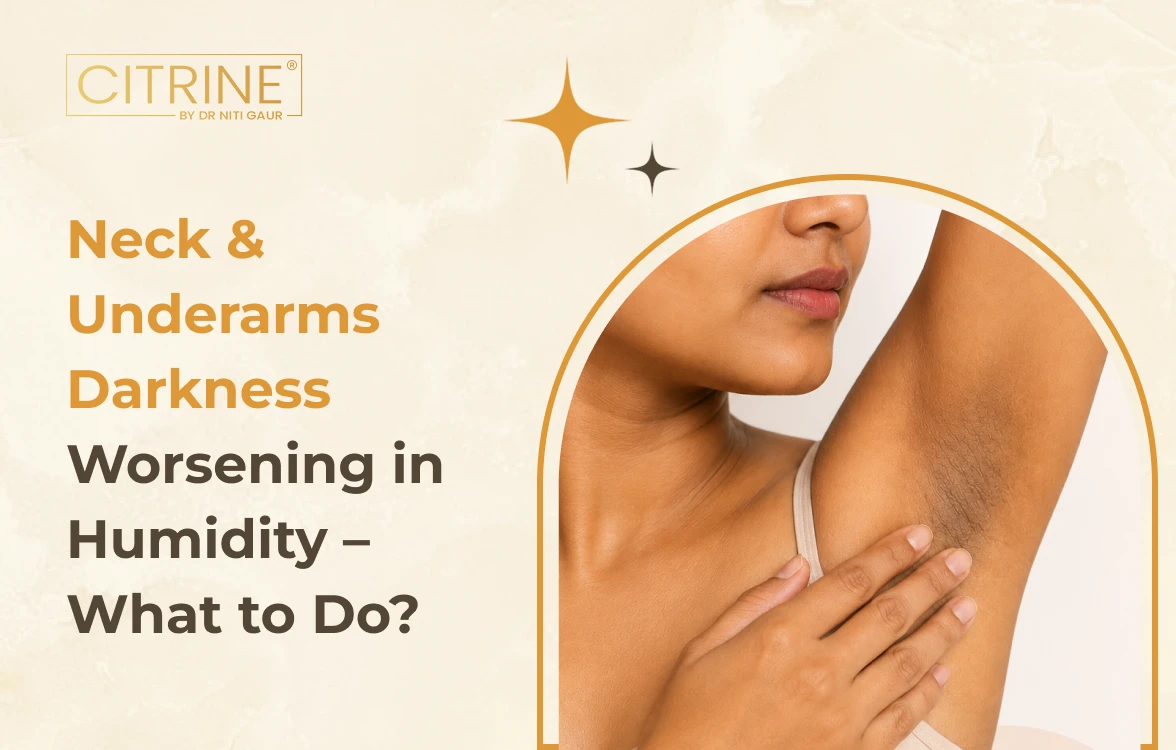
Many individuals notice that their neck and underarms tend to darken in monsoon season or a hot and humid environment. As a result of this, the skin may appear dull and patchy and even with regular scrubbing, it does not improve.
This can be extremely frustrating as pigmentation affects clothing choices, confidence and overall appearance. But in many cases, darkening of the neck and underarms can mean more than a mere cosmetic issue. Darkened areas can indicate friction-induced pigmentation, hormonal imbalances, insulin resistance, obesity, PCOS, or skin inflammation.
Before we understand the effective treatments available to manage this, let us understand why humidity worsens neck and underarms darkness.
What Is Neck and Underarm Darkening?
At its core, darkening in the neck and underarm area is a type of hyperpigmentation, meaning the skin produces more melanin (the natural pigment behind skin colour) than the skin around it.
When this darkening also comes with thickened, velvety skin, doctors usually refer to it as acanthosis nigricans.
Broadly speaking, there are two patterns worth knowing about:
- Friction or sweat-related darkening – this happens from ongoing rubbing, sweating, or irritation, and the skin doesn't thicken.
- Acanthosis nigricans – patches that are noticeably darker, thicker, and velvety, often tied to insulin resistance, PCOS, thyroid problems, or excess weight.
At a glance, both can look fairly similar, but the way they're treated is quite different, which is exactly why getting an accurate diagnosis matters before jumping into any treatment.
Why Does Humidity Make Neck and Underarm Darkness Worse?
A few things tend to happen at once when humidity rises, and together they make pigmentation in the neck and underarms more visible:
- More sweating: During humid weather, the sweat glands in the neck and underarms stay active for longer, and skin that stays damp for too long gets irritated.
- More friction: Skin that's damp tends to cling to clothing, collars, so the rubbing in these folds increases, which over time can leave behind darker marks.
- Deodorants: Sweat that comes into contact with deodorants on the skin causes irritation on the underarm area, making the area darker.
- Tight or synthetic fabrics: Clothes that trap heat cause more rubbing against the neck and underarm skin all day long.
- Existing acanthosis nigricans: If there's already some insulin resistance or hormonal imbalance at play, sweat and friction simply bring attention to pigmentation that was already forming underneath.
- Less airflow: Skin folds don't get much ventilation during humid weather, so dead skin and sweat residue pile up faster than usual.
None of this has anything to do with being unclean. In fact, scrubbing harder in an attempt to fade the darkness usually backfires and causes more irritation.
Is Humidity the Real Cause Behind Dark Underarms and Neck?
No. Humidity alone does not result in darker skin. Instead, it acts as an intensifier of whatever causes pigmentation process, such as:
- Sweat that stays on the skin
- Friction
- Inflammation
- Skin infection
- Irritation from certain products
Thus, instead of concentrating completely on lightening the skin, it is more logical to address the cause of pigmentation.
Could an Underlying Medical Condition Be Responsible for Dark Underarms and Neck?
At times, yes.
Darkening around the neck and underarms can sometimes point to a health condition that needs a closer look from a doctor.
Common Medical Conditions Include:
| Condition | Typical Features |
| Insulin resistance | Velvety dark patches that show up on the neck and underarms. |
| Prediabetes or diabetes | Darkening that gets progressively worse along with skin thickening. |
| PCOS | Stubborn pigmentation that pairs with irregular periods and acne flare-ups. |
| Obesity | Increased skin friction that occurs alongside underlying insulin resistance. |
| Hypothyroidism | Darker, noticeably dry skin accompanied by persistent physical fatigue. |
| Certain medications | Dark patches and pigmentation that gradually shift and develop over time. |
Common Mistakes People Make that Often Causes Dark Underarms and Neck
- Using loofahs or rough scrubs on the neck and underarms, which only adds to the irritation and pigmentation.
- Trying lemon juice, baking soda, or bleach-based remedies at home, which can chemically harm sensitive skin.
- Depending entirely on whitening creams without ever getting blood sugar or hormone levels checked.
- Using a blunt razor on the underarms, which adds to friction-related darkening.
- Sticking with tight, synthetic clothing during humid months, which traps sweat and increases friction.
Tips to Manage Neck and Underarm Darkening at Home
Keep the Area Dry
- Change sweaty clothes as soon as you can.
- Stick to breathable cotton fabrics.
- Pat the skin dry after you sweat.
Reduce Friction
- Opt for loose-fitting clothes.
- Steer clear of rough fabrics.
- If your doctor recommends it, work toward a healthy weight.
Choose Gentle Personal Care Products
- Switch to fragrance-free deodorants if you notice irritation.
- Skip harsh scrubs altogether.
- Avoid using anything that causes redness.
Improve Hair Removal Practices
- Avoid shaving on dry skin.
- Always use a clean, sharp razor.
- If shaving keeps causing irritation, laser hair reduction is worth considering.
Also Read: What Is the Best Armpit Hair Removal Treatment for Indian Skin?
Moisturize Regularly
- Skin with a healthy barrier is far less likely to get irritated or pigmented.
Manage Underlying Health Conditions
- Getting insulin resistance, PCOS, or obesity under control often helps pigmentation improve over time.
When Should You Consult a Dermatologist for Dark Underarms and Neck?
It is a good idea to book an appointment if you notice any of the following:
- Thick and rough patches when you touch them.
- Pigmentation that is not only on the neck and underarms, but also appears on other areas such as knees or elbows.
- Dark patches that remain even after consistent home care.
- Occurrence of skin tags along with darkening.
- Individuals who have a family history of PCOS, thyroid, and changes in pigmentation.
A dermatologist will examine the skin and go through your medical history, and may suggest some basic blood tests to check for insulin resistance or hormonal causes if needed. This matters because treating only the skin, without looking into what's causing it, tends to give results that don't last.
Dermatological Treatments Available for Darker Underarms and Neck
After the cause has been identified, a dermatologist might recommend treatment, depending on your skin type, how severe it is, and how your skin responds along the way:
| Treatment | What It Does |
| Topical retinoids (tretinoin) | Helps skin cells turn over faster, gradually fading pigmentation. |
| Urea or salicylic acid creams | Softens thickened skin and smooths out roughness. |
| Kojic acid or niacinamide formulations | Helps even out the skin tone over time. |
| Chemical peels (lactic or glycolic acid) | Works on deeper layers of skin to improve tone and texture. |
| Laser hair removal | Cuts down on friction and the shadow effect from regrowing hair. |
| Q-switched laser toning | Goes after excess pigment sitting deeper in the skin. |
| Managing the underlying condition | Involves controlling blood sugar, hormones, or weight. |
Note: None of these treatments deliver overnight results. Topical creams generally take a few weeks before you notice a difference, and procedures like peels or laser sessions are typically spread across several sittings.
What Can You Expect From the Treatment Options?
- It is certain that treatment will be able to minimize the appearance of pigmentation while enhancing the texture of the skin, but it is not possible to fade it completely.
- In cases where hormonal factors or insulin resistance have caused the pigmentation, then treatments will only be effective when combined with managing the underlying cause.
- The success of the procedure will be dependent upon your skin type, how long pigmentation has been there and how regular you are with your follow-ups.
- Sun protection and regular skincare routine is important for the results to last post-treatment.
Final Takeaway
When the neck and underarms get darker during humid weather, it's a fairly common issue, and most of the time it is because of sweat, friction, and skin irritation rather than a lack of cleanliness.
That said, if the patches feel thick or velvety, keep spreading, or just aren't responding to basic care, it's better to get them checked out instead of guessing or trying random home remedies.
For mild cases, daily habits, gentle skincare, and breathable clothing can genuinely make a difference. And if the pigmentation is persistent or seems to be linked to something deeper, a proper evaluation can help you figure out the right next step, whether that's a topical treatment, a procedure, or working on an underlying health condition.
If neck or underarm darkening keeps recurring with seasonal changes, consulting a dermatologist such as Dr. Niti Gaur at Citrine Clinic can help identify the underlying cause and guide appropriate treatment based on your skin's specific needs.
To book a consultation with Dr. Niti Gaur, visit Citrine Clinic now.
You can also check our clinic location and patient reviews before visiting.
View Citrine clinic location, directions, and reviews on Google Maps
FAQs
1. Is dark neck and underarms sign of diabetes?
Yes, it can be, particularly if the skin starts feeling thick and velvety. This specific issue is known as acanthosis nigricans, which points directly to insulin resistance, meaning a quick blood sugar test is a smart move.
2. Can dark underarms go away on their own?
If the issue is mild, simple skin care and basic lifestyle adjustments can clear it up. However, if the root cause is linked to your hormones, you will need actual medical treatment.
3. Does shaving cause darker underarms?
Yes, it does. Shaving over and over causes constant friction that ends up darkening the skin over time.
4. Is it safe to use lemon juice and other homemade remedies on dark underarm and neck?
No, you should avoid this because putting lemon juice on sensitive skin can cause chemical burns and make the dark patches even worse.
5. Can deodorants cause dark underarms?
Yes, quite a few deodorants pack harsh chemicals or heavy scents that irritate your skin, triggering inflammation that leads to darkening.
6. Is darker skin more common in individuals who have dark skin tones?
It simply tends to look more obvious on deeper skin tones. This happens because melanin naturally reacts more intensely to any form of inflammation.
7. When can I expect results from dermatological treatments?
Most professional treatments require about 6 to 12 weeks before you notice real changes. Advanced options like chemical peels or laser therapy demand multiple sessions spread across several weeks.
8. Can losing weight help reduce dark underarms or neck?
If your pigmentation stems from weight issues or insulin trouble, reducing weight can steady your insulin levels, which gradually helps fade the dark spots.
9. Is it normal for darkening to look worse in summer and improve in winter?
Yes, this happens a lot because heat and friction spike during humid months and make the darkness stand out, even if the root issue stays exactly the same.
10. Should I stop using deodorant if my underarms are dark?
Not really necessary. It's often more helpful to switch to a gentler, fragrance-free, or natural deodorant rather than cutting it out entirely, especially during humid weather.
About the Author