
 30 Jul 2026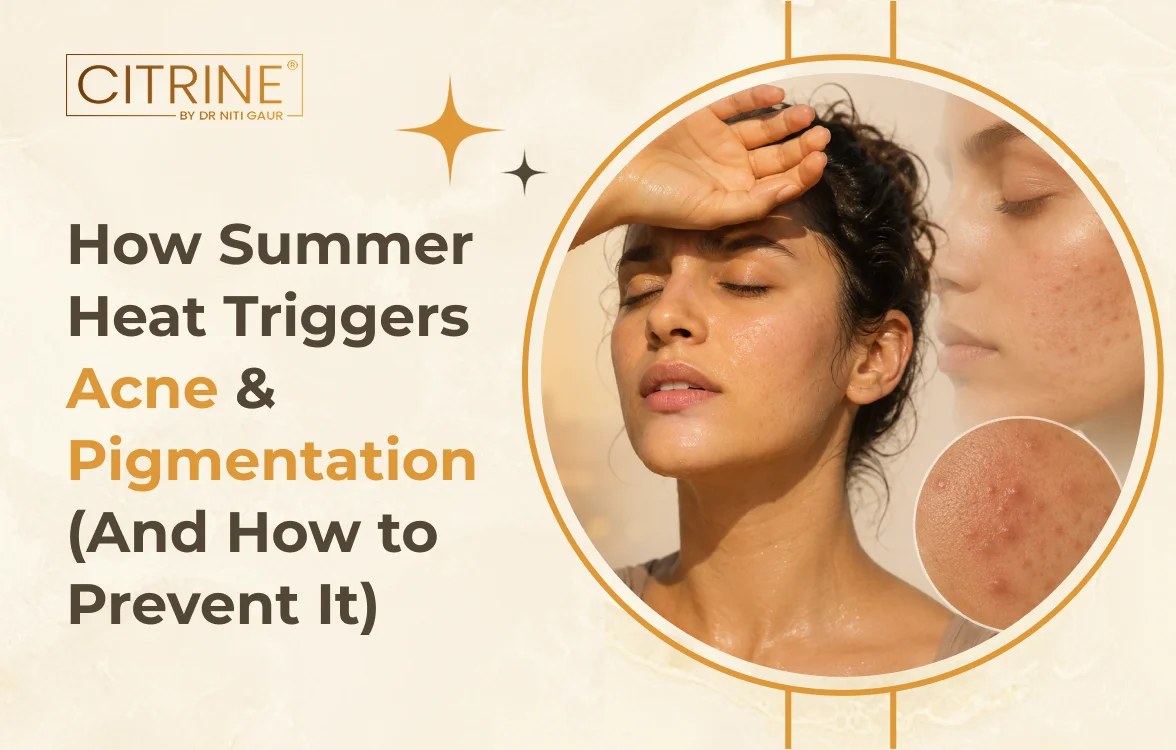
You may look forward to summer for long holidays, pool time, enjoying water or outdoor sports, and seasonal delights. However, continued exposure to heat and sunlight can make your skin more prone to tanning, acne, and even hyperpigmentation.
Taking proper care of your skin during the summer will help maintain its overall health and even prevent acne and pigmentation, and other skin issues.
Wondering how to avoid summer skin issues?
If you are worried about experiencing skin oiliness, congestion, frequent breakouts, dullness, or dark spots in the summer, or you are already having such issues, you can take our skin professional’s help. Here, in this read, skin doctor in Gurgaon discusses why acne and pigmentation happen in the summer, so you know how to prevent them and when to consider professional treatment.
Why Summer Heat is Not Right for the Skin?
The hot weather can weaken the skin barrier by:
- Increasing perspiration and sweat build-up on the skin surface
- Elevating the sebum (natural skin oil) secretion by sebaceous glands
- Increasing the daylight exposure
- Increasing the growth of acne-causing bacteria
- Causing frequent friction
- Clogging the pores
- Causing dehydration.
These factors further trigger the summer skin concerns.
How Summer Heat Triggers Acne Flare-Ups?
Here’s the list of potential reasons with explanations:
- More Sebum Production
In the summer, the summer heat causes dehydration, and the humid weather makes the sebaceous glands more active. Therefore, sebum (natural oils) content rises on the skin surface. When excess sebum mixes with dirt, sweat, dead skin cells, and cosmetic residues, it can plug pores, leading to acne breakouts. - More Sweating
Sweating alone cannot lead to pore congestion. However, if sweat sits on the skin for a long time, it can mix with dirt, natural skin oils, or acne-causing bacteria, leading to a variety of acne flare-ups. Usually, whiteheads and blackheads occur when there are no bacteria; pimples or painful nodules and cysts occur when bacteria flourish, causing inflammation. - More Bacterial Growth
The hot, humid weather is an ideal environment for the multiplication of acne-causing bacteria. If one repeatedly touches dirt, sweaty hands on the skin, wears tight clothing, helmets, or masks, and daily applies heavy makeup, then there is a high risk of inflammatory acne breakouts. - Frequent Use of Heavy Cosmetics or Sunscreen
In hot, humid weather, the use of thick creams, heavy makeup, and comedogenic sunscreens may trigger skin congestion, breakouts, and folliculitis.
How Summer Heat Triggers Pigmentation?
Here’s the list of potential reasons with explanations:
- Direct UV Exposure
The UV rays from the sun directly stimulate the melanocytes- the specialized skin cells- to produce the skin-coloured pigment called melanin. When melanin is produced in excess in sun-exposed areas, it can cause or worsen tanning, sun spots, melasma, freckles, post-inflammatory hyperpigmentation, or uneven skin tone. - Direct Heat Exposure
Excessive exposure to summer heat also worsens melasma, a form of hyperpigmentation. - Summer Acne Breakouts
Acne breakouts are too common in summer, and so when they heal, they may leave behind marks. That’s the post-inflammatory hyperpigmentation.
What to Do or Avoid to Prevent Summer Acne and Pigmentation?
Here are some dermatologist-recommended prevention strategies:
- Apply a broad-spectrum sunscreen with a high SPF about half an hour before stepping outdoors in the summer sunshine. Repeat application every 2-3 hours if spending the whole day out in the sun. Never skip wearing sunscreen and sun-protective clothing
- Twice daily, gently cleanse the skin to keep the pores free of dirt, pollutants, excess oil, and sweat
- Use only gel-based moisturizer, non-greasy sunscreen, mineral-based makeup, or a lightweight skincare product to keep the skin well hydrated and breathable
- Maintain hygiene. Always shower and cleanse your skin if you have been sweating or been outdoors in a polluted environment
- Regularly change your bedsheet and pillow covers as oil, sweat, and bacteria can build up on fabrics. Also, clean phone screens
- Avoid wearing tight clothing, as friction can increase the risk of summer skin issues
- Ensure skin’s hydration with adequate water intake and a proper, hydrating skincare routine
- Avoid being aggressive with the skin. Use mild exfoliants once or twice a week
- If acne develops, leave it undisturbed to avoid acne marks and scarring
- Have a well-balanced diet with limited greasy, dairy-rich, or sugar-loaded foods.
Also Read: Best Sunscreens for Indian Skin Types: How to Choose the Right One
How do Dermatologists help manage Acne and Pigmentation in the summer?
If simple changes to skincare and lifestyle are not helping manage summer acne and pigmentation, consider a professional, personalized treatment plan tailored to your skin concern, type, and needs.
Usually recommended in-clinic treatments for acne and pigmentation include:
- Chemical peels
- Laser resurfacing/toning
- Carbon laser peel
- Microneedling + P-RP
- Medical-grade facials like HydraFacial.
The Takeaway
Summer heat, humidity, sweating, and excess oil production trigger acne and pigmentation, which are manageable with personalized summer skincare and timely, professional treatment.
Speak with our experienced dermatologist in Gurgaon, Dr. Niti Gaur, at Citrine Clinic today for summer skincare recommendations. Her clinic is located in Huda Market Road, Sector 15 Part 2, Market, Gurgaon, Haryana.
She and her team offer the best care and treatment for acne and pigmentation concerns.
Check out Citrine Clinic on Google for location, photos, and authentic patient reviews.
FAQs on Acne and Pigmentation Treatment in Summer Season
When should I see a dermatologist for acne or pigmentation issues in the summer?
To avoid long-term summer skin damage, promptly see a dermatologist near me for early treatment if acne or pigmentation develops. Consultation is necessary if experiencing stubborn, inflammatory acne; persistent acne marks; permanent acne scars; exacerbated pigmentation; or irritated/sensitive skin.
Why is pigmentation a common summer skin concern?
During the summer, there is strong sunshine, and so one has high UV exposure. Prolonged or repeated exposure to direct UV rays stimulates increased eumelanin production as a natural defense against UV radiation. But as melanin is a colored pigment, its accumulation leads to dark spots/patches or tanning.
Why does acne exacerbate in the summer?
The hot, humid weather in the summer leads to increased activity of the sweat and sebaceous glands. More sweat and skin oil can build up on the skin, clogging pores and making acne flare-ups, recurrence, and worsening more likely.
Does skin become extra oily in summer?
Yes, it’s because of the summer heat and humidity. The skin becomes dehydrated due to summer heat, and the resulting moisture loss is compensated for by increased oil production, leaving the skin oilier. Moreover, when humidity is high, excessive sweating further makes the skin very greasy and acne-prone.
Which sunscreen should be used to UV-protect acne-prone skin?
Go for a dermatologically-tested, non-greasy, lightweight, non-comedogenic, gel-based or matte-finish, hydrating sunscreen.
Is it necessary to use moisturizer in the summer?
Yes, moisturizer helps lock in natural moisture in the skin to maintain skin balance and prevent dehydration-related skin oiliness. If the skin is too oily or acne-prone, it's best to use a lightweight, gel-based moisturizer.
About the Author