
 26 Oct 2026
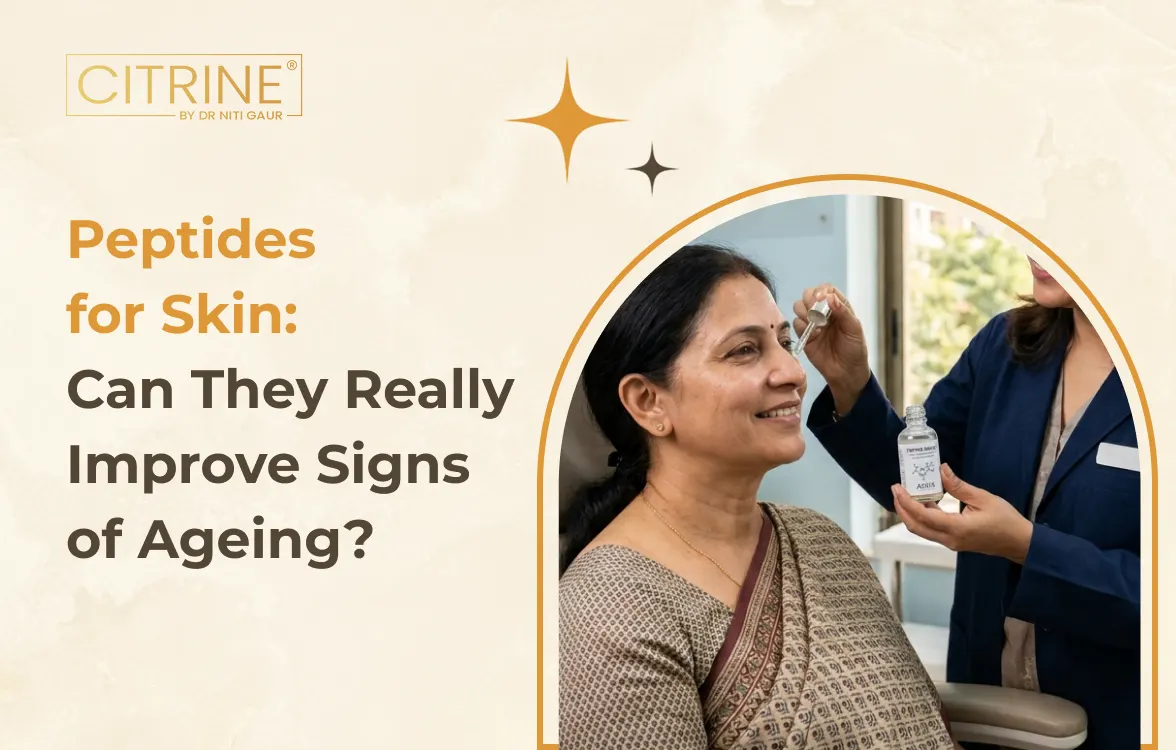
With age, the skin becomes noticeably thinner, drier, and less firm and resilient. Visible fine lines and wrinkles, skin laxity, loss of volume, and a dull complexion lead people to seek appropriate anti-aging treatment.
A gentler, popular approach to fighting signs of skin aging is using peptides. Peptides are short chains of amino acids that can behave as signaling molecules in the skin. Depending on their structure and how they're formulated in products, peptides offer many benefits for the skin.
But can skin peptides really reverse signs of aging? Peptide formulations can boost skin hydration, support collagen remodeling, improve skin texture and brightness, and reduce the appearance of fine lines and wrinkles. But they cannot replace evidence-based, professional treatments or sunscreen use. They are a beneficial, supportive part of an anti-aging skincare routine.
For those exploring anti-aging treatments in Gurgaon, an experienced dermatologist can help determine which skincare ingredients and procedures suit individual skin concerns. Dr. Niti Gaur at Citrine Clinic can guide patients toward an appropriate treatment approach for skin aging, combining a suitable skincare routine with professional treatments when needed.
Quick Glimpse
- Peptides support biological processes in the skin.
- Potential benefits: hydration, texture, and skin quality improvement
- Some peptides can restore youthfulness.
- They work best as part of a suitable anti-aging skincare routine.
- For persistent or severe aging concerns, only professional procedures work.
- Peptides can be a useful part of an anti-aging skincare routine when combined with moisturization, sun protection, and dermatologist-guided care.
What Are Peptides for Skin?
Peptides are 2- to 50-unit-long chains of amino acids that function as building blocks and functional messengers for proteins.
Some cosmetic peptides are formulated to interact with biological pathways involved in skin barrier repair and extracellular matrix activity. They can help build collagen and elastin, which contribute to the skin’s firmness, elasticity, and overall texture, improve moisture retention, and calm redness and inflammation.
However, different peptides have different roles. Therefore, not every skincare product with peptides will produce the same improvements.
How Do Peptides Work on the Skin?
Peptides used as active ingredients in skincare products can work through several proposed mechanisms.
Here are different types of peptides and how they work:
1. Signal peptides: Some peptides act as signaling molecules that encourage extracellular matrix activity. They help support the skin’s structural framework and collagen remodeling. They also provide biochemical signals to control cell behavior, tissue repair, and development.
2. Carrier peptides: Certain peptides act as delivery agents for trace elements like copper, encouraging healing and regeneration of skin and other components the skin needs to function.
3. Neurotransmitter-modulating peptides: Some cosmetic peptides can relax the muscles that cause dynamic wrinkles and are considered to produce a mild, Botox-like softening of expression lines.
4. Enzyme-inhibiting peptides: Some peptides, in different concentrations and formulations, are under investigation for their potential to affect enzymes involved in collagen breakdown or other skin-aging pathways.
What Signs of Aging Can Really Improve with Peptides?
Some peptide formulations can improve signs of premature skin aging, but results vary.
Dermatologists usually recommend the use of peptides in a skincare routine that already targets:
- Superficial fine lines/expression lines
- Early wrinkles
- Skin dryness
- Rough texture
- Loss of skin radiance
- Reduced firmness and elasticity
- Photoaged skin.
How to Incorporate Peptides in Skincare Routine at Different Ages?
- In your 20s: The skincare focus should be on preventing premature skin aging and irritation. So, dermatologists recommend gentle daily cleansing, moisturizing, and using sunscreen. Peptide-based serum use is optional.
- In your 30s: Early fine lines, rough texture, and dull complexion are usually visible. So, dermatologists recommend using peptide-based serum after cleansing as part of a broader, preventive, anti-aging routine.
- In your 40s: You may notice more visible loss of skin firmness and elasticity. So, dermatologists recommend peptides that support collagen and elastin production, along with evidence-based ingredients or professional, in-clinic treatments based on your aging skin concerns.
- In your 50s and beyond: Skin appears more aged because of loss of collagen, elastin, hyaluronic acid, and volume. So, dermatologists recommend a combination of barrier-supportive skincare, sunscreen use, peptides, retin-oids (if appropriate), and appropriate professional treatment.
How Long Do Peptides Take to Improve Aging Concerns?
Clinical studies on cosmetic peptides found that improvements occur over several weeks to months. Results and timelines mainly depend on the peptide's type, concentration, and formulation.
With consistent use of peptides and other proper skincare steps, skin usually feels soft and smooth within a few weeks. But fine lines and texture improve over several weeks, and some signs of aging take longer to improve because the process happens gradually.
Conclusion
Peptides can be a part of an anti-aging skincare routine.
Certain cosmetic peptide formulations can improve skin hydration, texture, and fine lines. To maintain skin youthfulness, the best approach combines a proper anti-aging skincare routine with appropriate ingredients, healthy lifestyle habits, and, if needed, dermatologist-recommended treatment.
For personalised advice on using peptides for skin, consult a dermatologist to understand what suits your skin type, age, and concerns. Dr. Niti Gaur, skin doctor in Gurgaon at Citrine Clinic can help you explore suitable skincare options and evidence-based treatments for healthier-looking skin.
FAQs on Peptides for Skin Anti-Aging
Do peptides really work for fine lines and wrinkles?
Yes, some peptide formulations can help soften superficial fine lines and early wrinkles. However, results vary by product.
Can peptides boost collagen?
Some peptides are designed to encourage extracellular matrix activity, which includes collagen production. But the extent of collagen production depends on the peptide formulation, concentration, and skin penetration.
Can peptides replace reti-nol?
Peptides and ret-inol work differently for the skin. Retinoids are best for photoaged skin, while peptides are gentle, supportive skincare ingredients for selected patients.
Are peptides safe for everyone to use on their skin?
Yes, most people tolerate cosmetic peptides. Safety depends on the chosen peptide product formulation and concentration. It is best to do a patch test and then slowly add the peptide product to your skincare routine.
Can peptides replace cosmetic skin treatments for aged skin?
Generally, no. Peptide-based skincare may improve skin quality and appearance of superficial or early signs of aging. But they can't work the same way as dermatological procedures designed to treat significant wrinkles, deep folds, sagging skin, volume loss, noticeable/deep pigmentation, and severe photoageing.
About the Author