
 24 Oct 2026
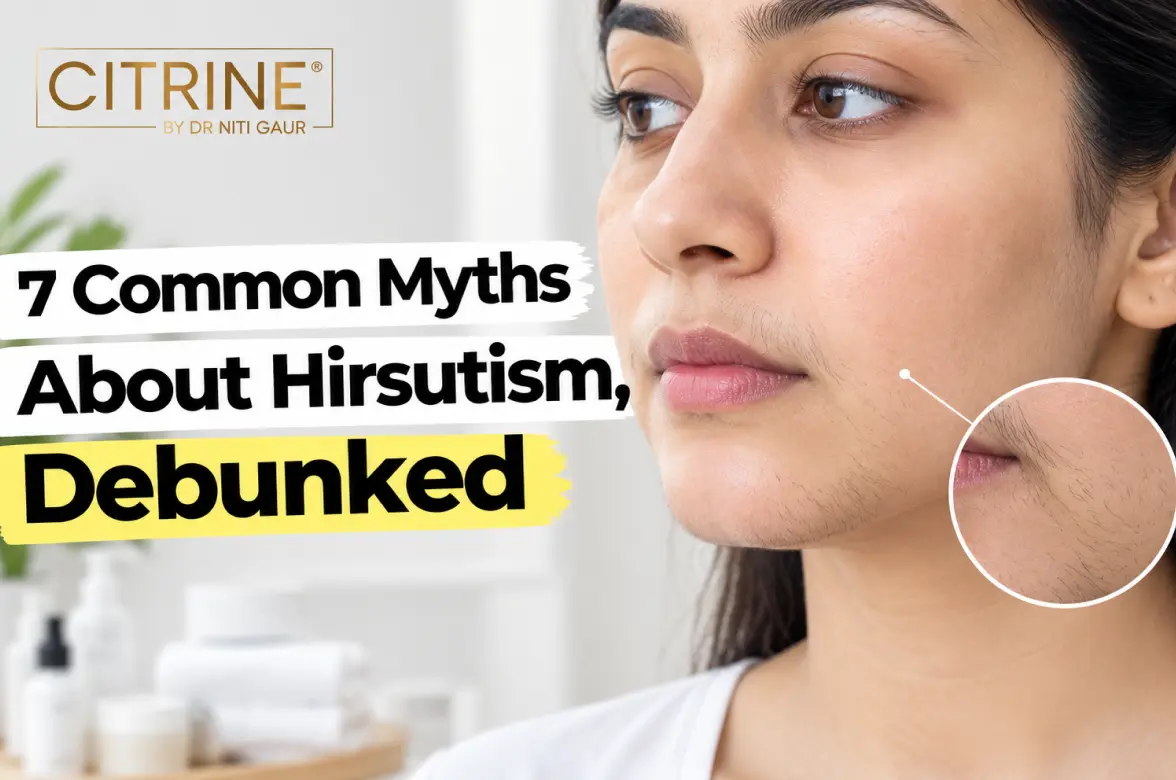
Do you regularly shave, thread, or wax unwanted facial or body hair? Even with regular removal, you might be frustrated to see unwanted, dark, coarse hair regrowing quickly. The confusion about the exact reason for unwanted hair growth can make you unnecessarily embarrassed and delay your appropriate medical care if it's hirsutism.
‘Most women experience unwanted, dark, coarse hair growth in areas where the hair growth results from androgen excess. These areas include the chest, face, lower abdomen, and back. It can happen due to hormonal changes, medical issues like PCOS, use of certain medications, or increased sensitivity of hair follicles to androgens. The most likely reason is hirsutism. But sometimes, no clear cause is identified’, shared Dr. Niti Gaur, a laser specialist and an experienced dermatologist in Gurgaon.
Hirsutism, a condition characterized by excessive hair growth, is surrounded by many misconceptions. This is why people who have it often can't identify it early or manage it.
Quick Summary: Hirsutism Facts at a Glance
- Hirsutism is a medical condition with coarse, pigmented, excessive hair growth.
- It affects women with male-pattern hair growth.
- Anyone can have it irrespective of complexion, ethnic background, or weight.
- Heredity and androgen excess are the primary drivers.
- The condition is manageable.
- Shaving or waxing does not affect hair growth rate and thickness.
- Laser hair removal significantly reduces unwanted hair growth.
What Causes Hirsutism in Women?
Hirsutism affects females and mainly occurs due to increased androgen levels, PCOS, genetic factors, or increased sensitivity of hair follicles to hormones.
Sometimes, certain medications may also contribute to excessive hair growth in females.
A skin expert or dermatologist can help identify the cause and determine whether further medical evaluation is needed to manage this health concern.
7 Common Myths About Hirsutism: Facts vs. Misconceptions
Misconception #1: Hirsutism is just a cosmetic problem.
Fact: Unwanted, dark, coarse hair can signal PCOS, Cushing Syndrome, or hormonal imbalances. It can impact both physical and mental well-being.
Misconception #2: Every PCOS-affected woman experiences hirsutism.
Fact: Even though PCOS (Polycystic Ovary Syndrome) is a very common reason behind hirsutism, not every woman with PCOS has hirsutism. PCOS can have hirsutism as a symptom along with others because of increased androgen activity.
But if there is no PCOS or high androgen level, excess terminal hair growth can still occur due to an unidentifiable reason. In some cases, certain medicines can have excess hair growth as a side effect. Another less common possibility is a hormonal disorder of the adrenal gland or ovary that raises androgen levels. In some women, hair follicles are more sensitive to even normal androgen levels, leading to unwanted, extra hair growth.
Misconception #3: Just overweight or obese women have hirsutism.
Fact: Insulin resistance and weight can impact hormone levels. Still, women with lean or average weight can even develop hirsutism.
Misconception #4: Only women with pale or fair skin and dark hair have more visible, excessive hair growth.
Fact: Hair visibility varies by its color and your natural skin tone. However, women with a genetic predisposition and hormonal imbalances usually experience excess hair growth. It is important to correctly differentiate between hirsutism and fine, soft hair growth on the face and body. The number and distribution of normal facial or body hair vary with genetics, ancestry, and hair follicles' sensitivity to androgen activity.
Misconception 5: Hirsutism affects older women.
Fact: Age is not the only determining factor for hirsutism. Hirsutism can start in adolescence or at any age, usually due to changes in androgen levels or hair follicles' sensitivity to androgens. Medication or some health issue associated with hormonal imbalance may sometimes be the reason. If you notice new or rapid growth of dark, coarse hair, it may not be just aging; a professional evaluation is needed.
Misconception #6: Shaving or waxing makes hair regrow thicker and darker.
Fact: Shaving cuts unwanted hair at the skin’s surface, while waxing removes hair from the hair bulb (follicle). Neither affects the hair roots under the skin, but both can cause ingrown hairs and skin irritation. However, when shaved or waxed, hair regrows; it feels stubbly/rougher and sometimes darker. Don't confuse this with hirsutism.
Misconception #7: Laser Hair Removal Can Prevent Hair Regrowth in Hirsutism Patients.
Fact: Multiple sessions of laser hair removal can make targeted hair follicles unable to grow new hair. Therefore, this method provides a gradual, significant reduction in unwanted hair density and thickness, with slower regrowth. It is particularly useful for removing dark, coarse, unwanted hair and can complement medical treatment for hirsutism.
But it cannot be considered a cure, as the underlying cause, like PCOS or hormonal disorder, is not addressed. The results vary based on ongoing hormonal stimulation, the individual's skin and hair characteristics, the laser technology, and the treatment settings and response.
How Is Hirsutism Diagnosed?
A dermatologist evaluates the pattern of unwanted hair growth, the patient's medical history, menstrual cycle, and other signs.
A blood test is recommended to check hormone levels, and other examinations may be advised to identify the root cause.
Treatment Options for Hirsutism
Hirsutism can be managed with a set of treatments recommended by a dermatologist:
Options may include:
- Laser hair reduction
- Prescription medications to manage hormonal effects
- Other hair removal methods.
Read Also: Why Is Hair Still Growing After Laser Hair Removal?
Final Takeaway
Hirsutism is a medical plus cosmetic concern, commonly experienced by women. But misinformation about it can make it harder to manage.
In reality, excessive, dark, coarse hair growth is caused by androgen excess or increased sensitivity to androgen hormones. Any female can have it, just as seen on a typical masculine face and body.
The most effective approach is a combined, personalized plan that targets the underlying problem while using a suitable hair removal method. For more details on hirsutism and unwanted hair growth removal, consult Dr. Niti Gaur, an experienced dermatologist and laser specialist in Gurgaon.
Get a proper treatment plan to manage excess hair growth and support healthier skin.
You Can Also Meet Us At Both Locations:
SCO- 19, Huda Market Road, Sector 15 Part 2, Market Gurugram, Haryana
C-70, Ground Floor, Sudesh Kumar Marg, Rajouri Garden, West Delhi, New Delhi
FAQs on Hirsutism
Can poor hygiene cause hirsutism?
Unwanted or excessive dark, coarse hair growth is not caused by poor hygiene, excessive cleansing, scrubbing, or irritating skincare products. Instead, it results from increased hair follicle activity due to genetics and hormonal influences.
Is hirsutism not treatable?
Hirsutism can be effectively managed with a combination of personalized, dermatologist-recommended treatments, but you can’t permanently remove unwanted hair.
Does shaving increase facial hair growth?
Shaving does not affect the hair follicle activity or increase hair growth. Hair that regrows after shaving may feel thicker because shaving leaves a blunt tip.
Is laser safe and effective for hirsutism treatment?
It can be, if the device and settings suit the individual’s skin tone and hair characteristics, and a skilled, experienced professional performs the treatment at a modern clinic.
Which doctor helps treat hirsutism?
A dermatologist can help remove unwanted hair with a laser. But if the underlying potential reason is PCOS or another hormonal issue, a gynecologist or endocrinologist consultation will be needed for diagnosis and treatment. Your primary healthcare provider can help coordinate a proper evaluation with the right specialist.
About the Author