

 31 Jul 2026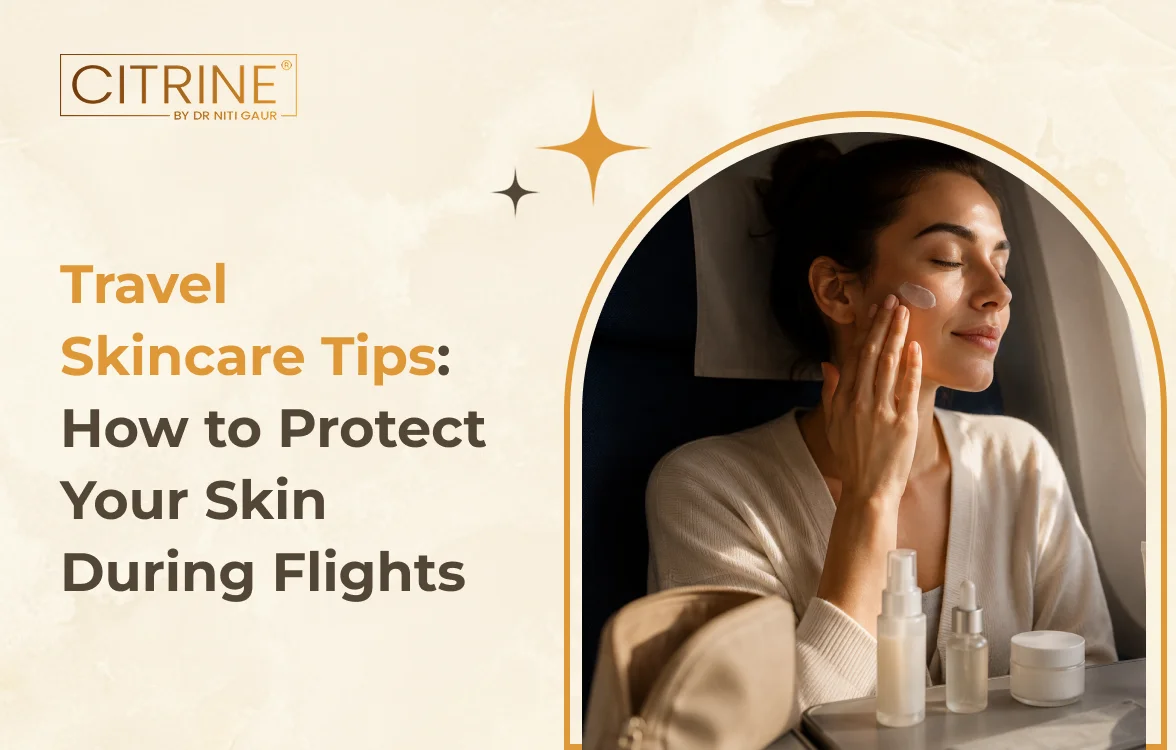
Struggling with dry/flaky, dull, tight, irritated, or oily, blemished skin following your air travel? Most travelers who take long flights experience disturbed sleep or stress, are exposed to dry cabin air, and experience climate shifts, so they end up with skin problems like yours.
If you want to enjoy your long flights without worrying about your skin barrier and overall skin health, you must practice a proper travel skincare routine. Here, dermatologist in Sector 15, Gurgaon, Dr. Niti Gaur, recommends tips for maintaining healthy, dewy, glowing skin throughout your air travel journey. Before knowing them, understand why skin health and quality are affected by air travel.
How Skin Gets Affected During Flights?
Usual reasons are:
- Constant skin exposure to very dry air and the pressurized environment of the cabin
- Skin’s exposure to different climates
- Change of sleep schedules
- Bad lifestyle habits
- Stress.
Taking long-haul flights can sometimes dehydrate the skin, as cabin air is low in humidity, causing the skin to lose moisture. Also, factors like cabin pressure, travel stress, and poor sleep can weaken the skin barrier. As a result, the skin becomes dry, dull, flaky, irritated, and sensitive, while some may also experience excessive sebum or oil reduction, acne breakouts, and puffy eyelids.
Although the cabin environment is cool, the air inside the flight or aircraft is dry. When the skin becomes dehydrated, it sometimes compensates with excessive sebum production, which can clog the pores and trigger acne in acne-prone individuals.
How To Safeguard Your Skin Before Taking a Long Flight?
Here are dermatologist-recommended pre-air travel skincare tips:
- Follow a gentle, barrier-focused skincare routine. Use a mild cleanser, hydrating toner, hydrating serum, a ceramide-rich moisturizer, a sunscreen, and a hydrating lip balm with SPF
- Drink plenty of water and keep your skin well moisturized
- Avoid excessive caffeine and alcohol consumption
- Avoid wearing foundation or heavy makeup
- Wear skin-suited, broad-spectrum sunscreen of high SPF.
Before boarding a flight, it’s very important to ensure the skin is well-hydrated, has a strong protective barrier, and is UV-protected. As an already hydrated skin won’t get extremely dehydrated, a healthy skin barrier won't make the skin easily irritated, bare skin will comfortably breathe, and sunscreen use will not make the skin UV-damaged or cause oxidative stress during a flight.
How to Protect Your Skin During Flights?
While on your flight, do follow these dermatologist-recommended tips:
- Keep applying a nourishing lip balm, a hydrating under-eye cream, and petroleum jelly on extremely dry, sensitive areas
- Use a hydrating mist or sheet mask followed by a cream-based moisturizer with ingredients like hyaluronic acid, thermal water, glycerin, or panth-enol
- Keep skin clean, free of heavy cosmetics. A tinted moisturizer and a light BB cream are allowed
- Reapply moisturizer if the flight is more than 4-5 hours
- Maintain hand and skin hygiene. Avoid touching, picking, rubbing, or scratching the skin
- Drink an adequate amount of water and have hydrating foods/drinks.
During the flight, it’s important to keep the skin free of oil and impurities as these lead to breakouts. Have natural moisture locked in the skin to prevent tightness or dehydration, and have sensitive skin protected against dehydration and harmful UV rays.
Moreover, because cabins can have contaminated surfaces, avoid touching or picking your skin, as this could trigger skin infections, irritation, and acne breakouts.
What Care Does Your Skin Need After Landing?
Upon arrival at the destination, the dermatologist recommends practicing gentle skincare suited to the local climate.
1. First, wash the skin with a mild cleanser to remove impurities and sunscreen. And then immediately rehydrate it with a suitable moisturizer.
2. If spending days in hot, humid weather, consider using a lightweight moisturizer and a non-greasy/non-comedogenic sunscreen, or any other cosmetics. But if it's cold and dry, use mild hydrating cleansers, rich moisturizers, and barrier creams.
3. Changing the skincare routine according to the climate and skin needs/condition is very important, or else skin concerns can develop.
Essential Travel Skincare Tips for Frequent Flyers
If traveling often on flights, especially on long flights:
- Keep all essential skincare products recommended by the dermatologist handy for use during the flight and after landing. Do not experiment with new products
- Go for barrier-repair and protective skincare
- Consistently use hydrating products
- Always wear broad-spectrum sunscreen during the day.
You can also schedule a consultation with a skin doctor near me and receive professional, personalized skincare treatment and guidance from a certified dermatologist before going on a trip or vacation.
Here are some skincare products that you should carry on every flight:
- Mild, hydrating cleanser
- Hydrating serum
- Moisturiser
- Lip balm with UV protection
- Facial mist/sheet mask
- Hand cream
- Under-eye cream
- Acne patches
- Broad-spectrum sunscreen of high SPF.
Healthy Skin Starts with Smart Travel Habits
Air travel, though very exciting, can stress out the skin both inside and out. But with dermatologist-recommended travel skincare habits, skin health and an appealing appearance can be best maintained.
Whether it’s a short or long flight, gentle, hydrating skincare and sun protection are essential. Follow all our expert skincare tips throughout your trip or vacation.
For personalized travel skincare advice and expert solutions tailored to your skin type, consult Dr. Niti Gaur, an experienced dermatologist at Citrine Clinic, Gurgaon. From preventive skincare guidance to advanced treatments, she can help you protect your skin, maintain its natural glow, and keep it looking its best—wherever your travels take you.
If you need professional, personalized skin treatment or skincare guidance, she and her team provide it at the best price.
Plan your visit with Google Maps and explore patient reviews and clinic photos.
FAQs on Skin Care Tips During Flights and Travel
Is it safe to wear makeup during air travel?
Yes, makeup application is safe and approved by a dermatologist, but only if the flight is short and a minimal, mineral-based, non-comedogenic, lightweight makeup is used. Heavy makeup can make the skin prone to breakouts due to compensatory oiliness in a less humid cabin environment.
How often should I apply moisturizer during a long flight?
Reapply moisturizers every few hours to maintain the skin’s hydration. Moisturizers containing ceramides, glycerin, or hyaluronic acid are usually the best for preventing severe dryness during flight.
Will eczema, rosacea, or sensitive skin worsen while traveling by air?
Yes. Sudden exposure to dry air and cabin pressure, climate shifts, or stress can weaken the skin barrier and make it more likely to respond to irritants. Therefore, irritation, redness, and flare-ups often show up in people with sensitive skin conditions. To avoid exacerbations of skin issues, it’s important to have consistent, minimal, dermatologist-recommended travel skincare.
Is sunscreen application essential during flight?
Using a broad-spectrum sunscreen with a high SPF is non-negotiable if you are moving out during the day. As sunshine enters the airplane through windows, and even before taking flight and after landing, you may have some exposure to harmful UV rays. However, if taking nighttime flights, sunscreen application is not necessary.
What skincare products should I avoid using during a flight?
Dermatologists never recommend using retin-oids, strong chemical peels, harsh scrubs, alcohol-based/heavy products, or any drying or irritating skincare products. As such, skincare products only worsen skin condition during air travel.
When to see a dermatologist for travel-related skin problems?
Consider consulting a dermatologist near me at the earliest if you experience stubborn acne breakouts, frequent rosacea flare-ups, worsening skin concerns, extreme dryness or irritation, or pigmentation issues, for proper diagnosis and the best-suited treatment.
If a professional’s attention is initially avoided or delayed, the skin condition worsens, and costly in-clinic skin treatments are the only relief.
About the Author