
 27 Oct 2026
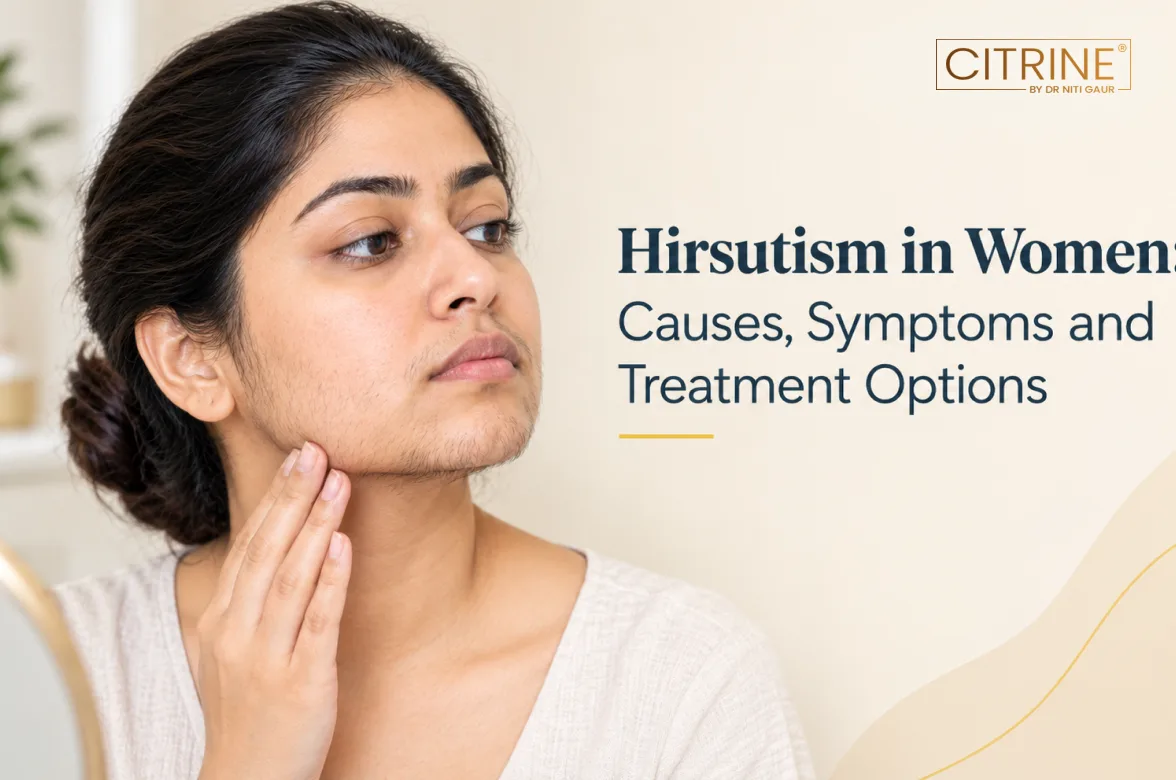
Noticing dark, coarse hair growth on your upper lip, chin, chest, or abdomen? In women, excessive hair growth in these areas can be more than an aesthetic concern. It may be related to hormonal imbalance or an underlying medical condition like PCOS (Polycystic Ovary Syndrome). This dermatological concern is called hirsutism.
Thankfully, dermatologists in Delhi, including Dr. Niti Gaur, offer several treatment options for hirsutism. Treatment is planned based on the cause and severity of hirsutism. Options include hormonal management, prescription drugs, laser hair reduction, or a combination of approaches.
Quick Glimpse
- Hirsutism is excessive, dark, coarse hair growth in a male pattern.
- Common areas: Chin, cheeks, upper lip, chest, abdomen, thighs, and back.
- Primary reason: And-rogen excess, usually in PCOS.
- Treatment options: Anti-and-rogen medication; temporary or long-lasting hair removal options.
- Seek medical advice for sudden, rapidly progressing hair growth alongside hormonal symptoms.
What is Hirsutism in women?
Hirsutism is a condition characterized by excessive growth of pigmented, coarse, terminal hair in andr-ogen-sensitive areas of the face and body in females. The hair follows a male-pattern distribution, usually appearing on the chin, upper lip, jawline, chest, lower abdomen, back, and inner thighs.
But if excessive hair growth occurs in areas that aren't typically andr-ogen-sensitive, it isn’t hirsutism; it's hypertrichosis.
What Causes Hirsutism in Women?
Women also have andr-ogens, including testos-terone, but in small amounts compared to men. Andr-ogen hormones play a role in many normal bodily functions. But when andr-ogen is in excess, or hair follicles become more sensitive to normal circulating andr-ogen in women, fine hair becomes thicker, darker, and more prominent; this is hirsutism.
Several contributing factors are:
- Polycystic Ovarian Syndrome (PCOS): Around 60% to 70% of hirsutism cases are due to this hormonal and metabolic condition, which affects ovulation and andr-ogen levels. Women with PCOS may experience unwanted facial or body hair along with irregular/missed periods, stubborn acne or oily skin, thinning scalp hair, trouble conceiving, ins-ulin resistance, or weight-related issues.
- Hormonal and endocrine disorders: Women with Cushing syndrome, non-classic congenital adrenal hyperplasia, or thyroid disorder can have increased adrenal hormone production and excess andr-ogen activity that causes excessive hair growth. Rarely, an ovarian or adrenal tumor can be the reason, and this needs urgent medical attention.
- Certain medications: Some drugs like anabolic steroids, corticosteroids, or specific hormone treatments can contribute to unwanted hair growth or andr-ogen-related issues.
In roughly 5% to 20% of women, excessive, terminal hair growth has no identifiable cause, despite normal andr-ogen levels and no irregularities in the menstrual cycle. That’s referred to as idiopathic hirsutism.
What Are the Common Symptoms of Hirsutism?
Symptoms vary depending on the underlying reason, hormonal levels, and an individual’s sensitivity to andr-ogens.
- Extra Facial Hair: Dark, coarse terminal hair replaces fine peach fuzz on the chin, upper lip, sideburn area, or jawline. The facial hair may become more noticeable or quickly return after threading, shaving, waxing, or laser hair removal.
- Excessive Body Hair: Thicker, darker hair growth on the chest, around the nipples, lower abdomen, lower back, or inner thighs.
- Other Signs of Hyperand-rogenism: Women with PCOS can even have irregular or absent menses, acne or oily skin, or scalp hair thinning alongside excessive facial or body hair growth.
- Emotional Distress: Women with excessive, recurring, unwanted facial and body hair growth can have low social confidence and poor emotional well-being.
Women with ovarian or adrenal tumors have a deeper voice or more muscle mass alongside excessive hair growth. This is a rare possibility.
How is Hirsutism Diagnosed?
- Medical examination: A dermatologist assesses the distribution, extent, and progression of terminal hair growth and looks for associated symptoms like acne, scalp hair thinning, insu-lin resistance, and weight-related changes. Also review medical history and medications in use. Per the Ferriman-Gallwey scale, a total score of 8 or higher, based on hair growth across 9 body areas, confirms Hirsutism.
- Blood tests: Based on the exam and symptoms, a dermatologist may order blood tests to check total testos-terone/and-rogen; DHEAS for adrenal andr-ogen excess; 17-hydroxyprogesterone for suspected non-classic congenital adrenal hyperplasia; thyroid/prolactin testing for a suspected related disorder; or blood glucose/metabolic assessments for suspected PCOS/insu-lin resistance.
- Medical imaging: Some women may be ordered for pelvic ultrasound if PCOS is suspected or adrenal/ovarian CT or MRI scan if a tumor is suspected.
How is Hirsutism in Women Treated?
The treatment plan depends on the exact cause of hair growth, the extent of the condition, medical history, and whether the patient wants to become pregnant. Most women benefit from a combination of hair removal and medical/lifestyle management.
Cosmetic hair removal/reduction options include shaving, waxing, threading, and laser hair reduction Laser hair reduction is most commonly used because it requires little maintenance and works for almost every patient without causing ingrown hairs or skin irritation.
Medications may be needed in some cases, like ins-ulin-sensitizing drugs, anti-andr-ogens, or oral contraceptives.
If PCOS is the reason, a switch to healthy lifestyle habits is recommended. This includes healthy weight management.
Final Takeaway
Hirsutism in women is the excessive growth of dark, pigmented terminal hair on the face and body areas with androgen sensitivity. It is a manageable condition that may be associated with hormonal changes or increased sensitivity of hair follicles to androgens. But safe and effective treatment can only be planned when its underlying cause and severity are known.
If you notice persistent or worsening coarse hair growth, consult dermatologist Dr. Niti Gaur for proper diagnosis and for unwanted hair removal and hirsutism treatment in Delhi.
Visit now: Citrine Clinic Rajouri Garden: C-70, Ground Floor, Sudesh Kumar Marg, Rajouri Garden, New Delhi
FAQs on Hirsutism in Women
Is hirsutism always because of PCOS?
No. PCOS is just one cause. The condition can even be due to adrenal disorders, certain medications, or an unidentified reason.
Can hirsutism be prevented?
Not always, especially if genetic factors or underlying hormonal issues are involved; however, early evaluation and appropriate management/treatment by a clinician can help control rapid, progressive hair growth.
Can hirsutism be permanently cured?
Medical treatments help manage hormones, while cosmetic hair removal options like laser hair reduction or electrolysis remove unwanted hair for the long term. Ongoing management or maintenance may still be important.
Is laser hair reduction effective for hirsutism?
Yes, medical-grade lasers can help significantly reduce dark, coarse hair over multiple sessions. But women need to combine lasers with medical management, as and-rogen hormones may cause new or continued, unwanted hair growth.
When should I see a dermatologist for hirsutism?
Schedule a consultation if you have persistent, coarse facial or body hair, especially if it's increasing or accompanied by other symptoms like acne, scalp hair thinning, or more. Go for an urgent medical assessment if there is sudden, rapid, unwanted hair growth along with a deepening of voice.
About the Author