
 11 Aug 2026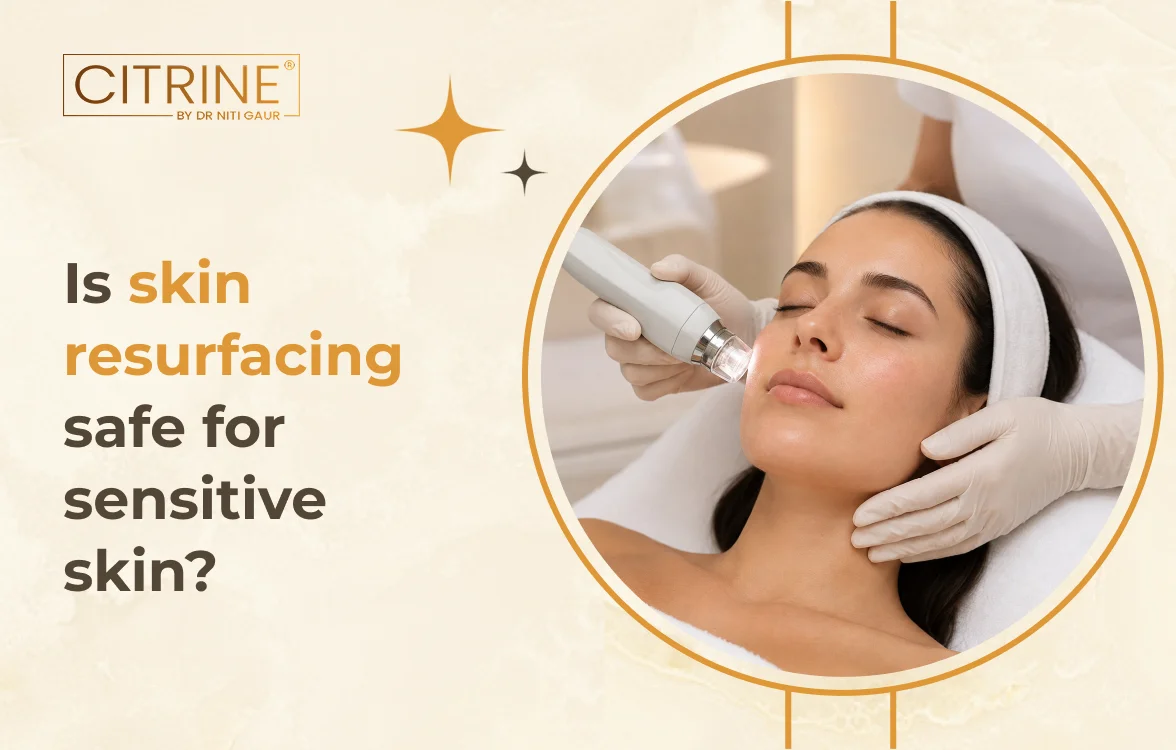
People with sensitive or reactive skin usually face challenges maintaining their skin health even with a basic skincare routine. They often experience redness, dryness, stinging/burning sensations, tightness, itching, or irritation when using certain skincare products/cosmetics or during professional cosmetic skin treatments. With such a skin type, it’s natural to think whether undergoing a skin resurfacing treatment for acne scars, fine lines, pigmentation, or uneven skin texture will be safe.
The good news is: Skin resurfacing can be safe for sensitive skin- but still, it is not meant for everyone. The choice of skin resurfacing depends on the underlying reason for skin sensitivity, the condition being addressed, and the dermatologist's expertise. With proper evaluation, a personalized treatment protocol, and a proper aftercare plan, most sensitive-skinned people can safely undergo skin resurfacing, shares dermatologist in Gurgaon, Dr. Niti Gaur.
Before you decide on any skin resurfacing treatment, here’s what you must know about sensitive skin and skin resurfacing treatments that can suit your sensitive skin.
Quick Summary About Skin Resurfacing for Sensitive Skin
- Skin resurfacing can be safe for sensitive skin with a personalized treatment plan.
- Dermatologist evaluation is essential before choosing any resurfacing procedure.
- Safer options include non-ablative fractional lasers, mild peels, and controlled microneedling.
- Aggressive treatments like CO2 lasers, strong chemical peels, and microdermabrasion may increase irritation risk.
- Recovery is usually short with gentle treatments, while collagen improvement develops gradually over months.
- Proper aftercare and sun protection are important for safe healing and better results.
What is Skin Resurfacing?
It is a cosmetic dermatological procedure that aims for smooth, healthy, and appealing skin. Helps get rid of the dead/damaged skin or stimulates natural collagen remodeling. It involves different procedures at different depths of the skin.
Consultation with a dermatologist is needed to determine the most suitable skin resurfacing treatment, based on the skin condition and tolerance.
Skin Concerns Skin Resurfacing Treatments Can Address
- Scars
- Fine lines and wrinkles
- Pigmentation
- Sun damage
- Uneven skin tone/texture
- Enlarged pores.
What Makes Skin Sensitive?
- Allergies
- Eczema/Dermatitis
- Rosacea
- Damaged skin barrier
- Prolonged/wrong use of skincare products or inappropriate selection of products
- Environmental factors like exposure to extreme weather, polluted air/water, and UV radiation.
These are the usual causes. Knowing what is causing your skin sensitivity is important for planning any skin resurfacing treatment.
Is Skin Resurfacing Safe for Sensitive Skin?
Short answer: Mostly, yes, if the treatment is carefully chosen and individualized.
During a consultation with a qualified dermatologist for a skin resurfacing treatment, the treatment is selected and tailored to individual factors.
The appropriateness of a specific skin resurfacing procedure is decided based on the patient's:
- skin sensitivity
- skin type
- existing concerns
- current skincare routine
- medical records
- previous reactions to the treatments.
Skin Resurfacing Options Safe for Sensitive Skin
Here are the sensitive skin treatments that can work effectively in people with sensitive skin:
- Non-Ablative Fractional Lasers- Modern fractional, non-ablative lasers like ClearLift aim to heat the fibrous tissues in the dermis to stimulate collagen remodeling without causing skin surface vaporization. They are usually considered for improving skin texture in people with sensitive skin. With this, the recovery is quick and involves minimal risk of irritation.
- Mild Chemical/Enzyme Peels- Low-strength acid solutions, fruit enzymes, or superficial peels are recommended for gently exfoliating sensitive skin without risk of burning, irritation, and prolonged redness.
- Controlled Microneedling- With ultra-fine needles, multiple controlled micro injuries can be created in the skin to treat fine lines, mild acne scars, superficial pigmentation, and slight roughness through natural collagen remodeling. For sensitive skin, the depth and pressure of the needles are personalized so that delicate skin barriers remain unharmed.
Skin Resurfacing Procedures to Avoid for Sensitive Skin
- Fully Ablative Lasers- High-intensity CO2 or erbium lasers are best for deep scars, significant sun damage, and severe wrinkles. They provide dramatic skin improvement by causing superficial thermal ablation. But for sensitive skin, there is a high risk of complications.
- Strong Peels- Chemical formulations like trichloroacetic acid or phenols cause deeper injury to the skin. Though they help with advanced skin concerns, there is a high risk of inflammation, blistering, and disrupted barrier for sensitive skin.
- Microdermabrasion- This mechanical exfoliating procedure uses abrasive crystals or a diamond-tipped device. When it is used over sensitive skin, there is a high risk of micro-tearing of fragile capillaries and worsening of chronic redness or rosacea.
Downtime and Results
- Mild treatments take 1-3 days while moderate treatments take 5-10 days
- Initial improvements show up in 2-6 weeks
- Collagen remodeling happens gradually in 3-6 months.
How Can a Dermatologist Make Skin Resurfacing Safe for Your Sensitive Skin?
Consultation is the first step of the skin resurfacing journey, where a dermatologist will:
- Assess the health of your skin barrier and accordingly recommend a barrier-repair skincare routine
- Go through your current skincare products/regime
- Recommend customized skincare formulations
- Perform a patch test before recommending any skin resurfacing treatment
- Customize the treatment settings to treat your concerns based on skin’s sensitivity
- Give personalized pre-skin resurfacing treatment instructions to ensure treatment safety and proper healing and results
- Discuss what to expect after the treatment and how to take care of the treated skin to ensure no complications during healing.
So, schedule a consultation on time to know your safest skin resurfacing option if you have signs of sensitive skin and need relief from persistent cosmetic skin concerns.
Final Takeaway
Skin resurfacing is safe and effective for selected people with sensitive skin if the treatment is carefully selected. Usually, gentle fractional, non-ablative lasers, mild peels, and controlled microneedling are safer options, while aggressive skin resurfacing procedures need careful consideration to avoid unnecessary, serious skin reactions.
If you have sensitive skin and are considering skin resurfacing treatment for concerns like acne scars, pigmentation, fine lines, or uneven texture, a skin assessment by a dermatologist is the safest first step. Dr. Niti Gaur carefully evaluates your skin sensitivity, barrier health, treatment history, and cosmetic concerns before recommending the most suitable skin resurfacing treatments in Gurgaon. Personalized treatment and aftercare plan helps minimize irritation, support faster healing, and achieve natural-looking skin improvement safely.
Check our clinic location and verified Google reviews before your visit.
FAQs About Skin Resurfacing for Sensitive Skin
Can people with sensitive skin safely undergo skin resurfacing?
Yes, if an expert dermatologist performs an appropriate procedure after a thorough evaluation.
Which skin resurfacing treatment is safe and effective for sensitive skin?
Only a dermatologist can decide based on the skin condition and sensitivity. Usually, superficial peels, fractional non-ablative lasers, and microneedling may be suitable.
Who will have to postpone skin resurfacing treatment on sensitive skin?
Individuals with active skin infections, uncontrolled rosacea, open wounds, recent sunburn, and severe eczema flare-ups will need to first address these concerns and then go for skin resurfacing to avoid complications.
What aftercare is essential for sensitive skin that has been resurfaced with a professional cosmetic procedure?
Use of gentle, fragrance-free skincare products, proper UV protection, no scrubbing, healthy lifestyle habits, recommended skincare routine, and proper post-procedure care.
What are side effects of skin resurfacing treatment for sensitive skin?
Generally, mild and short-lived effects are reported, such as redness, dryness, swelling, flaking, and tightness. These vary depending on the procedure.
About the Author