
 27 Jun 2026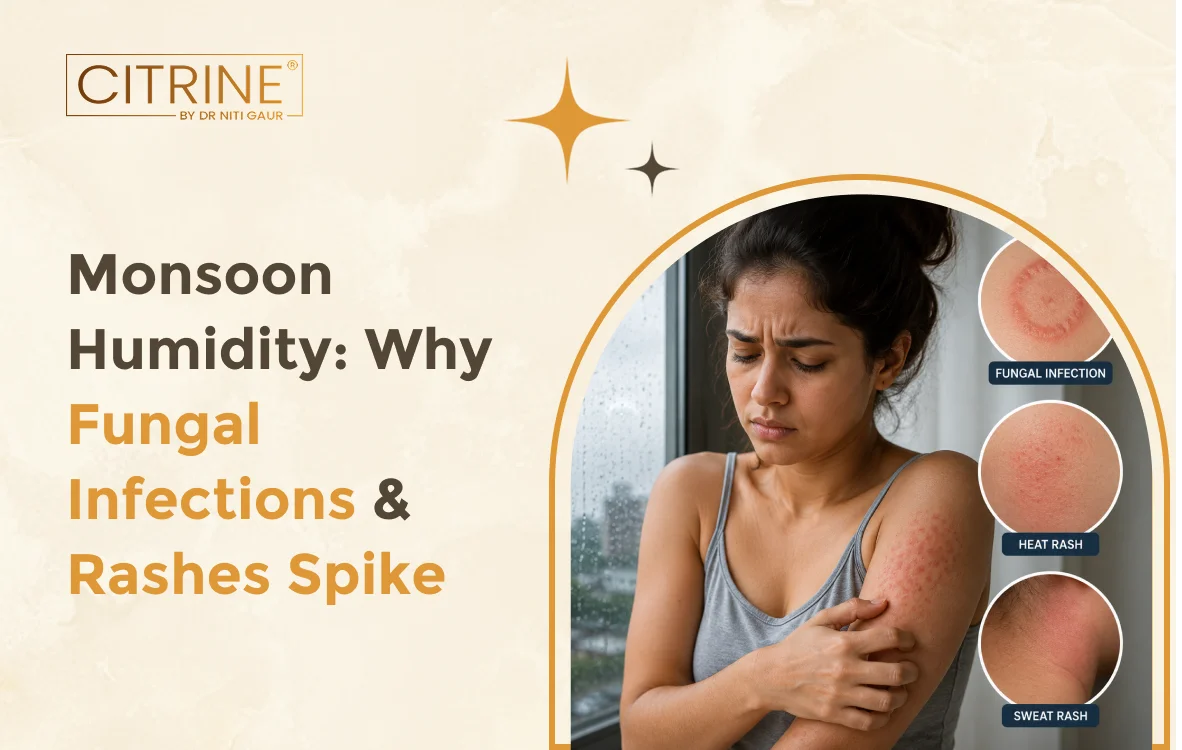
Quick Summary
- Monsoon humidity often leads to the growth of fungi and bacteria.
- Excessive sweating increases the chances of fungal infections and rashes.
- The commonly affected areas include groin, armpits, foot, skin folds, and genitals.
- The common symptoms of a fungus infection include itching, irritation, scaling, and burning sensation.
- It is possible to treat most fungus infections with proper hygiene and medical intervention.
Introduction
Every year, as the monsoon sets in across India, dermatology clinics see a sharp rise in patients dealing with itchy, red, scaly skin. The rains bring relief from the heat, but the humidity they carry creates something far less welcome: the ideal environment for fungal infections to thrive.
If you have been dealing with persistent itching in your groin, a circular rash on your arm, peeling skin between your toes, or discoloured patches on your back, you are not alone. They are some of the most common skin problems experienced during the monsoon, and all of them occur due to the presence of fungi which thrive in warm and moist environments.
This blog details everything you need to learn about fungal skin infections and rashes in monsoon season, including what causes them to knowing when to seek professional help from a dermatologist.
What Is a Fungal Infection?
A fungal infection is a skin disease that is characterized by an excessive growth of fungi on the skin, nails, or scalp. They exist in the environment, but moist conditions allow them to multiply and cause infection.
Types of fungal infections include:
- Ringworm
- Athlete’s foot
- Jock itch
- Yeast infection
- Skin fold fungal infection
Why Are Fungal Infections and Rashes Common During Monsoon?
High Humidity Weakens the Skin Barrier
- Monsoon heat and humidity leads to increased sweating.
- This sweat contains proteins, oil and dead skin cells which serve as sources for fungi to multiply.
- Underarm, groin, spaces beneath the breasts and areas between the toes remain moist for long hours.
Clothing Trap Moisture Against the Skin
- Wet clothes due to sweating or rain increase humidity.
- Synthetic materials such as nylon and polyester trap moisture.
- Tight clothing, especially waistbands and underwear create friction and damage skin barrier.
Surfaces in Common & Increase of Contamination
- Fungi thrive well in moist environments: used towels, gym floor, wet shoes.
- The usage of public transportation increases skin contact in rainy weather.
- Spread within families is common; especially when they share the same bathroom.
Reduced Skin Exposure
- Ultraviolet rays from sunlight prevent the growth of fungi on the skin.
- During monsoon, there is reduced sun exposure; as a result, fungi survive longer in the skin.
Why Does Humidity Affect the Skin?
| Skin Condition | Effect of Humidity |
| Excess sweating | Increases moisture accumulation |
| Skin friction | Causes irritation and rashes |
| Blocked sweat glands | Leads to prickly heat |
| Damp skin folds | Promotes fungal growth |
| Wet footwear | Increases athlete's foot risk |
Common Symptoms of Fungal Infections and Rashes
Symptoms may differ according to the type of infection.
Common symptoms are:
- Intense itching
- Reddish patches on skin
- Sensation of burning
- Circular or ring-like rashes
- Peeling of skin
- Flakes on skin
- Cracks between toes
- Darkened skin where there is infection
- Small blisters
- Bad smell in areas infected
- Irritation of skin in skin folds
Types of Fungal Infections & Their Specific Symptoms
Not all fungal infections look the same. Here is a detailed look at the most common types seen during monsoon:
| Type | Medical Name | Where It Appears | Key Symptom |
| Ringworm | Tinea Corporis | Body, arms, back | Ring-shaped, itchy red patch |
| Jock Itch | Tinea Cruris | Groin, inner thighs, buttocks | Burning, red rash with defined edges |
| Athlete's Foot | Tinea Pedis | Between toes, soles | Cracking, peeling, intense itch |
| Scalp Ringworm | Tinea Capitis | Scalp, hairline | Scaly patches, hair loss |
| Nail Fungus | Onychomycosis | Fingernails, toenails | Thickened, discoloured, brittle nails |
| Pityriasis Versicolor | Tinea Versicolor | Chest, back, shoulders | Light or dark patches, mild flaking |
| Candidiasis (Yeast) | Candida Infection | Skin folds, groin, mouth | White discharge, raw skin, burning |
Common Monsoon Rashes That Are Not Fungal
Not every rash during the rainy season is caused by fungi.
| Condition | Main Symptoms | Cause |
| Heat rash | Tiny itchy bumps | Blocked sweat glands |
| Contact dermatitis | Red itchy patches | Allergy or irritant |
| Eczema flare | Dry itchy skin | Skin barrier dysfunction |
| Bacterial rash | Painful red swelling | Bacterial infection |
| Fungal infection | Ring-shaped itchy rash | Fungal overgrowth |
This is why an accurate diagnosis is important before starting treatment.
Who Is More Likely to Get Fungal Infections During Monsoon?
The risks are more in the following individuals:
- Individuals with diabetes
- Individuals with obesity
- Athletes
- Individuals who wear tight clothing often
- Individuals with weak immunity
- Individuals who work outdoor for long hours
Treatment for Fungal Infections and Rashes
The type of treatment depends on the type and severity of infection.
Antifungal creams
Most mild cases respond well to topical antifungal medication.
Oral Antifungal Medicines
In case of recurring infections or severe infections, oral medication is prescribed.
Medicated Powders
Very helpful in reducing moisture and prevents recurrence.
Treatment of Secondary Infection
Infections caused due to scratching need further treatment.
Managing Underlying Conditions
Managing diabetes and controlling weight prevents recurrence.
Dermatologists often emphasize that incomplete treatment is one of the biggest reasons fungal infections keep returning.
How Long Does It Take to Recover?
| Severity | Expected Recovery Time |
| Mild infection | 2 to 4 weeks |
| Moderate infection | 4 to 6 weeks |
| Severe or recurrent infection | Several weeks to months |
Stopping medications too early can lead to recurrence.
Common Mistakes That Make Fungal Infections Worse
Many people unknowingly worsen their condition.
Using Steroid Creams Without Medical Advice
Steroid-containing creams can temporarily reduce redness but often make fungal infections spread further.
Stopping Treatment Early
Symptoms may improve before the infection is completely gone.
Wearing Tight Clothes
Tight clothes trap sweat and moisture.
Sharing Towels and Clothes
This increases the chances of spreading infection to others.
Ignoring Repeated Infections
Repeated infections can point to a medical problem.
Prevention Tips: How to Avoid Fungal Infections and Rashes During Monsoon
The single most effective strategy is to keep your skin dry. Beyond that, these habits make a significant difference:
Clothing and Footwear
- Choose loose cotton fabrics that allow air circulation.
- Change wet or damp clothes as soon as possible.
- Avoid tight jeans, synthetic leggings, or non-breathable underwear during humid months.
- Wear waterproof or quick-drying footwear in the rain rather than closed wet shoes.
Personal Hygiene
- Shower daily and dry yourself thoroughly, especially in skin folds (underarms, groin, under breasts, between toes).
- Use a separate towel for different body areas if you have an active infection.
- Never share towels, socks, or footwear with others.
- Trim nails short and keep them clean; long nails trap moisture and debris.
Skin Care During Monsoon
- Use an antifungal powder in areas prone to sweating as a preventive measure.
- Avoid excessive moisturiser in skin folds; these areas need to stay dry, not moisturised.
- If you have had fungal infections before, consider using an antifungal soap or body wash during monsoon.
Also Read: Why Does Skin Get So Oily and Sticky in Monsoon?
Can Home Remedies Cure Fungal Infections?
There are many individuals who try home remedies like:
- Coconut oil
- Tea tree oil
- Aloe vera
- Apple cider vinegar
Though few may offer temporary relief, there is no scientific evidence that such remedies are effective in completely curing fungal infection. However, delaying treatment can worsen infection.
When Should You See a Doctor?
Consult a dermatologist when:
- The rash spreads quickly.
- You have symptoms that persist for more than two weeks.
- You experience severe itching or pain occurs.
- The infection recurs frequently.
- You suffer from diabetes or low immunity.
- There is pus, swelling, or fever.
- Over-the-counter treatments are not helping.
Experienced dermatologists, including Dr. Niti Gaur, often note that recurrent fungal infections require proper diagnosis because similar-looking rashes can have very different causes and treatments.
Expert Insights: Why Recurrence Is So Common
A major reason fungal infections return is that treatment often focuses only on the visible rash and not on the factors that caused it.
Common reasons for recurrence include:
- Stopping medicines early
- Reusing contaminated towels or clothing
- Excessive sweating
- Poor control of diabetes
- Incorrect self-medication
- Misdiagnosis
At dermatology practices such as Citrine Clinic, patient education about hygiene and prevention is considered just as important as medication in reducing recurrences.
Final Takeaway
Monsoon humidity often creates an environment for fungal infections and rashes to occur. While these conditions are common, it is best to not ignore them or self-treat them.
Most fungal infections improve with proper treatment, maintaining hygiene, and preventive measures. Persistent and severe infections need professional evaluation.
If you are dealing with recurring skin infections especially during the rainy season, you can consult Dr. Niti Gaur, an experienced dermatologist with more than two decades of experience at Citrine Clinic. The expert doctor can help you identify the underlying cause and recommend the most appropriate treatment.
Book an appointment with Dr. Niti Gaur, visit Citrine Clinic now.
Check directions to our clinic and go through patient reviews before your visit.
View Citrine clinic location, directions, and reviews on Google Maps
Frequently Asked Questions (FAQs)
1. Why does a fungal infection occur in private parts?
This area always remains warm and moist, especially during sweating and humidity, which creates a favourable environment for the growth of fungi.
2. Can I treat fungal infection with home remedies?
Home remedies soothe symptoms, but they do not eliminate the infection. Recurrent infections often need proper treatment.
3. Can fungal infections spread from one person to another?
Yes. Using someone else’s towel, clothes, shoes, or skin-to-skin contact can spread fungal infections.
4. Is every itchy rash always a fungal infection?
No. Eczema, allergy, heat rash, and bacterial infections can also be itchy.
5. Why do fungal infections recur?
Incomplete treatment, sweating, diabetes, and poor hygiene are some of the common causes of recurrence.
6. Does sweat cause fungal infections?
Sweating itself does not cause infection, but prolonged moisture creates favorable conditions for fungal growth.
7. Are fungal infections dangerous?
Most are not dangerous but can become persistent, spread, and significantly affect quality of life if left untreated.
8. Can I use over-the-counter creams for fungal infections?
Some creams may help, but self-medication, especially with steroid combinations, can worsen the infection.
9. Does monsoon increase the risk of skin allergies too?
Yes. Increased humidity can trigger fungal infections, heat rashes, and certain allergic skin conditions.
10. Can children get fungal infections during monsoon?
Yes. Children are also susceptible, especially if they sweat excessively or remain in damp clothing for long periods.
About the Author