

 11 Jun 2026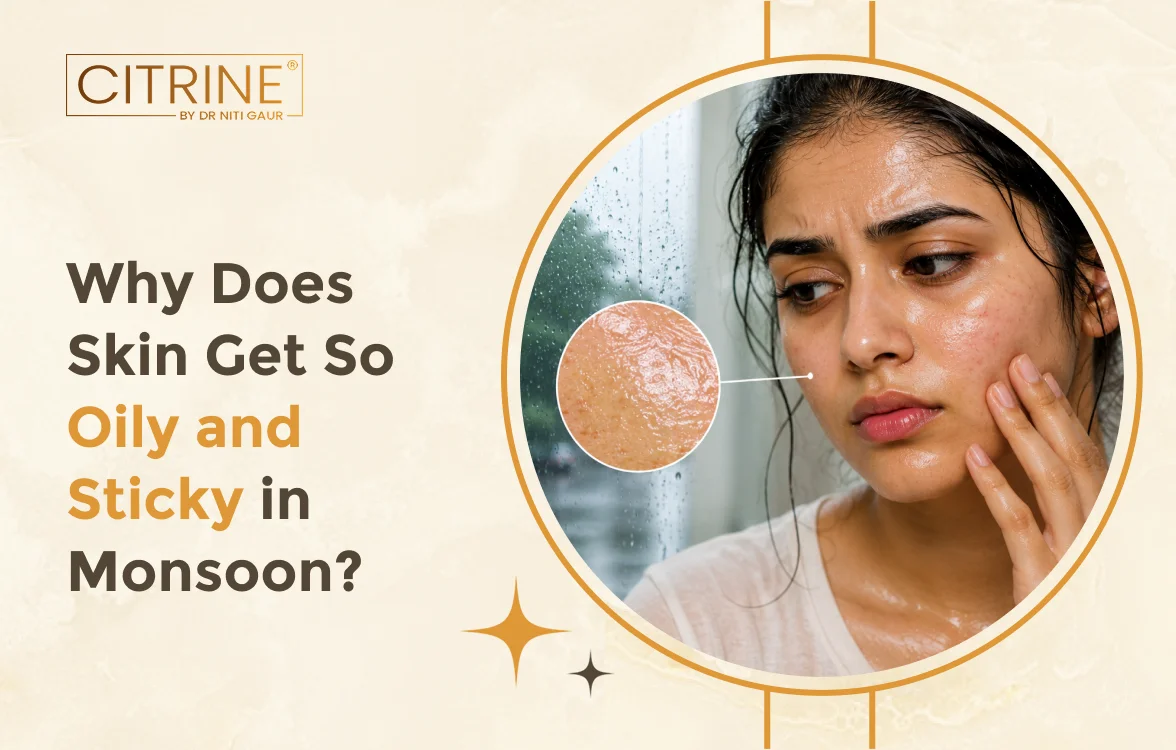
If your skin suddenly feels greasy, sticky, and uncomfortable during the rainy season, you are not alone. This is one of the most common skin complaints people have during monsoon, and it happens every single year.
Most people notice their face turns shiny within a couple of hours of washing. Makeup slides off faster than usual. Breakouts seem to show up out of nowhere. And no matter how many times you blot or rinse, that heavy, oily feeling keeps coming back.
Monsoon creates a very specific kind of environment. High humidity, shifting temperatures, sweat that stays on the skin, and pollution, all work together to change how your skin behaves during this time.
Knowing why our skin gets oily and sticky during monsoons is the first step. Once you are aware of what is actually happening, preventing seasonal concerns becomes easy to manage.
Why Does Skin Become Oily and Sticky During Monsoon?
The short answer is humidity.
It is also the complex interaction between your skin's oil glands, sweat glands, skin barrier, and the environment around you.
During monsoon, the moisture content in the air rises dramatically. The sweat created by our body does not evaporate the same way.
Rather than being dried out naturally, the sweat ends up remaining on the surface of your skin and combines with:
- Natural skin oils i.e. sebum
- Dirt and dust particles in the air
- Pollutants
- Dead skin cells
This is what leads to a greasy layer that builds up on the skin.
The Science Behind Oily Skin in Monsoon
1. High Humidity Slows Sweat Evaporation
Under normal conditions, sweat evaporates and helps cool your body down. That is what it is designed to do.
During the monsoon, the air is already carrying significant moisture. It stays on the skin, and the surface remains damp for longer. This often creates a sticky feeling that individuals complain about during the rainy season.
2. Sebaceous Glands Keep Producing Oil
Many individuals assume that oil production lessens once the weather becomes cool. This is however a myth. Sebaceous glands keep on secreting the sebum whether the humidity level is high or low.
The real problem here is not the sebum secretion but what actually happens when it combines with sweat. The combination often leads to oily skin that builds up during monsoon.
3. Increased Sweating Creates a Sticky Surface
Monsoon weather is often warm and humid. Your body continues to produce sweat, but the high humidity prevents it from drying quickly, leaving your skin feeling oily and sticky. Unlike summer sweat which evaporates quickly, monsoon sweat usually lingers.
As sweat accumulates on the skin, clothing starts sticking to the body, bacteria multiplies and pores become congested.
4. Humidity Alters the Skin Barrier
It is one such aspect that is often ignored, yet it is a lot more significant than many people realize.
The skin barrier is the protective outer layer of your skin that regulates moisture balance and prevents irritants from entering into the skin. When the skin remains exposed to humidity for a long period of time, the barrier can become compromised.
If the skin barrier stops working properly:
- The skin becomes reactive than usual
- Pores clog easily
- Inflammation in the skin tissues increases
- The skin becomes both oily and sensitive
This is why many individuals experience a combination of greasiness and irritation during monsoon.
5. Pollution and Dirt Stick More Easily to Skin
Monsoon does not clean the air. The airborne particles often combine with sweat and oil that sits on the skin’s surface. And, when they combine, it becomes difficult to remove them with a simple rinse.
The following problems may arise:
- Dull skin
- Clogged pores
- More blackheads
- Frequent breakouts
Those who travel outside during monsoon will find out that their skin congestion becomes worse during this period.
6. Heavy Skincare Products Can Make Things Worse
This is yet another factor which is often neglected. People keep using their heavy creams and moisturizers, even makeup products that help in occluding the skin, which they were using before monsoons.
In high humidity, these products do not absorb the same way. They tend to trap sweat and oil against the skin, which adds to the greasy feeling rather than helping it.
Switching to lighter formulations during the rainy season is often one of the simplest changes that makes a noticeable difference.
How to Prevent Oily and Sticky Skin During Monsoon
1. Follow a Balanced Cleansing Routine: Wash your face twice a day to keep oil in check without stripping your skin.
- Use a gentle, sulphate-free face wash suited to your skin type
- Avoid hot water; lukewarm or cool water works better for oily skin
- Pat dry with a clean towel instead of rubbing
2. Choose Lightweight Skincare: Switch to gel-based or water-based products that hydrate without adding heaviness or grease.
- Swap thick creams for lightweight, non-comedogenic moisturizers
- Look for ingredients like niacinamide or hyaluronic acid
- Avoid heavy oils or butter-based products during this season
3. Use Sunscreen Every Day: Cloudy skies don't block UV rays, so sun protection stays non-negotiable even during monsoon.
- Go for a matte-finish or gel-based SPF 30 or higher
- Reapply every 2–3 hours if you're spending time outdoors
- Avoid thick, creamy sunscreens that sit heavily on humid skin
4. Avoid Product Layering: Piling on too many products clogs pores and makes skin stickier faster in humid weather.
- Stick to the basics i.e. cleanser, moisturizer, and sunscreen
- Give each product time to absorb before applying the next
5. Keep Sweat Under Control: Managing sweat buildup through the day goes a long way in preventing that sticky, greasy feeling.
- Carry blotting papers to absorb excess oil without disturbing your skin
- Wear breathable, lightweight fabrics to reduce overall sweating
- Rinse your face with plain water after heavy sweating instead of skipping it
Who Is Most Likely to Experience Oily and Sticky Skin During Monsoon?
While anybody can experience monsoon-induced oiliness, there are some people that are more susceptible to it.
These include:
- Those with oily skin
- Those with acne-prone skin
- Teenagers experiencing hormonal changes
- Individuals living in humid areas
- People who tend to sweat a lot
- People who are constantly exposed to outdoor pollution
Is Oily and Sticky Skin During Monsoon Normal?
Yes, to some extent.
It is entirely natural for your skin to be oily and sticky in response to humid weather. This usually happens to everyone during the monsoon season.
But sometimes, excess oil secretion may indicate issues that go beyond seasonable changes, like:
- Acne-prone skin
- Seborrheic dermatitis
- Hormonal imbalance
- Skincare products that do not work according to your skin type
When Should You Consult a Dermatologist?
Most individuals try various home remedies for months before they realize they need to seek professional help.
You should see a dermatologist if you experience:
- Persistent breakouts
- Painful pimples
- Fungal infections
- Persistent face oiliness even with changes in the skincare regimen
- Persistent itching
- Large pores
- Acne scars developing after the breakout
How Can a Dermatologist Help?
A dermatologist does much more than recommend a face wash.
The first step is identifying the actual cause of excessive oiliness.
A proper evaluation includes:
- Skin type analysis
- Acne severity assessment
- Skin barrier analysis
- Review of skincare products
- Analysis of fungal or inflammatory skin conditions
Based on the results, treatment can include:
Medical-Grade Topicals
- Retinoids
- Salicylic acid formulations
- Azelaic acid
- Prescription acne treatment
Prevention of Acne and Scars
Early treatment will help prevent permanent acne scars from appearing once the acne clears.
Treatment of Associated Conditions
A dermatologist can identify and treat conditions such as seborrheic dermatitis, fungal infections, rosacea, and contact dermatitis that can look like oily skin or make it significantly worse.
Dermatologists such as Dr. Niti Gaur regularly see patients who assume they simply have oily skin when the underlying issue is actually acne, barrier damage, inflammation, or a seasonal skin disorder.
Final Takeaway
Skin becomes oily and sticky during monsoon primarily because humidity traps sweat on the skin while natural oil production continues uninterrupted.
Mild oiliness during this period is normal. But persistent greasiness, acne, clogged pores, itching, or recurring skin infections may point to something that needs professional attention.
A dermatologist can identify the underlying cause, recommend appropriate treatments, and help prevent long-term issues like acne scars and chronic skin irritation from developing.
If monsoon-related skin issues are becoming difficult to manage on your own, consulting an experienced dermatologist such as Dr. Niti Gaur at Citrine Clinic can help you understand what your skin actually needs and build a treatment plan designed around your specific concerns.
From personalized prescription plans and professional in-clinic treatments to seasonal skincare guidance tailored to your skin type, Dr. Niti Gaur can help you achieve skin that feels genuinely balanced, clear, and comfortable, not just through the monsoon season, but year-round.
To book a consultation with Dr. Niti Gaur, visit Citrine Clinic.
You can also check our clinic location and patient reviews before visiting.
View Citrine clinic location, directions, and reviews on Google Maps
Frequently Asked Questions (FAQs)
1. Why does my face become oily within a few hours of washing it during the monsoon?
High humidity stops sweat from evaporating, so oil just sits on your skin. Your skin never stops making sebum, so the grease builds right back up after washing.
2. Does humidity increase oil production in the skin?
No. Humidity just traps sweat on your skin so it can't evaporate.
3. Can oily skin become dehydrated during monsoon?
Absolutely. Your skin can be pumping out oil on the surface while the deeper layers are completely parched at the same time.
4. Is it normal for makeup to melt faster during monsoon?
Yes. Makeup tends to melt faster during this season.
5. Which skin type is most affected by monsoon humidity?
Oily, combination, and acne-prone skin tend are the most affected skin types.
6. Can monsoon weather cause fungal skin infections?
Yes, warm and damp conditions let fungus thrive, especially in skin folds or anywhere that stays moist for too long.
7. Should I use a moisturizer if my skin feels oily during the monsoon?
Please don't skip it. Your skin will overcompensate by producing even more oil without it, just swap to something lightweight and non-comedogenic.
8. How often should I wash my face during the monsoon season?
Twice a day is good. Washing more strips your skin barrier and can actually make the oiliness worse, not better.
9. Can stress make my skin oilier?
Yes, stress hormones directly tell your oil glands to produce more sebum. Ongoing stress means ongoing breakouts and congestion, especially in humid weather.
10. When should I see a dermatologist for excessive oily skin?
If you're dealing with stubborn acne, recurring fungal issues, painful breakouts, or your routine just isn't working anymore, it's worth getting a professional opinion rather than guessing.
About the Author