

 07 Sep 2026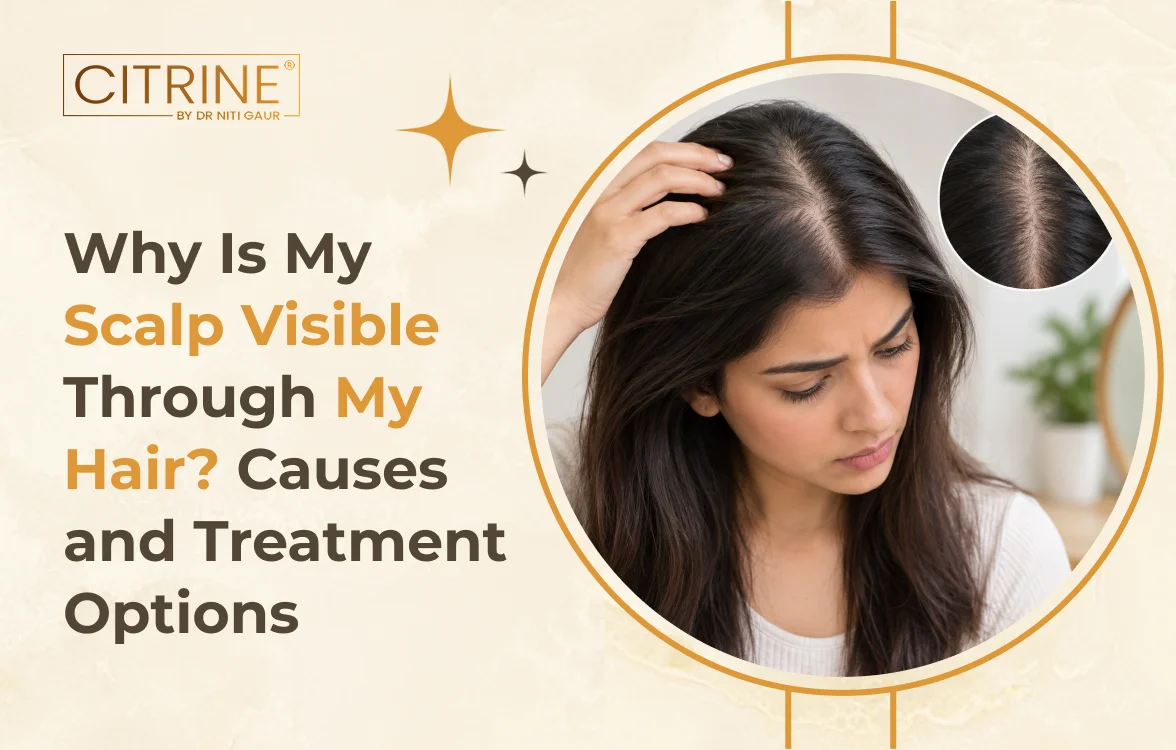
Noticed that your scalp is more visible through your hair, especially around your hairline, crown, or parting in photographs or under bright overhead lighting? You might wonder if it’s your naturally fine hair or an early sign of hair loss.
Some scalp visibility is normal when hair is wet, oily, tightly pulled back, or naturally fine. But if the scalp has slowly become more visible, leading to widening of the hair parting or reduced overall hair density, it may indicate hair thinning or an underlying medical or scalp condition.
According to Dr. Niti Gaur, senior dermatologist and hair treatment doctor in Gurgaon, identifying the reason for increased scalp visibility early is important.
A timely dermatological evaluation can help determine the underlying cause and guide appropriate treatment for hair thinning or hair loss before it progresses further.
Quick Summary
- Some scalp visibility is not a concern, particularly with wet, oily, or fine hair, or natural wide parting.
- Increasing scalp visibility indicates reduced hair density or miniaturization of hair follicles.
- Common causes include genetic pattern baldness, telogen effluvium (a sudden shock or stressor), nutritional deficiency, hormonal shifts, scalp disorders, and excessive hair breakage.
- A widening part or more scalp visibility around the crown can indicate an early sign of pattern hair loss.
- Sudden, diffuse hair thinning can mean an underlying illness, nutritional deficiency, stress, hormonal or weight changes, or certain medications.
- An early professional assessment can prevent further progression in most types of hair loss.
- Depending on the cause and severity, treatment may include medicines, hair regenerative therapies, nutritional correction, stress management, or hair transplantation in advanced cases.
Why is My Scalp Visible Through My Hair?
Some of the scalp surface is naturally visible between individual hair shafts. The extent of scalp visibility varies based on natural hair density, shaft thickness, hair color, hairstyle, lighting, and natural hair growth patterns.
But when scalp visibility suddenly increases or gradually worsens, that’s a cause for concern. It may indicate reduced thickness of individual hair strands in that area or loss of hair.
Here are the potential causes of more scalp visibility through hair:
1. Genetics: Androgenetic alopecia or pattern hair loss shows up first as loss of hair at the temples, hairline, or crown in men and noticeable hair thinning around the central parting and crown in women. Miniaturization of hair follicles leads to gradual thinning and finer hair production, making the scalp more visible even with some hair present. In such cases, a professional treatment that revives hair follicles, regenerates hair, and promotes healthy, strong regrowth is recommended.
2. Telogen Effluvium: It is a sudden, diffuse, increased hair shedding or thinning across the entire scalp, lasting for several weeks to months after a fever, extreme illness, surgery, significant physical or emotional stress, major dietary change, rapid weight loss, certain medications, or childbirth. It happens when a shock or stressor forces a large number of hair follicles into the resting phase. Identifying the trigger and managing it can help stop hair shedding/thinning.
3. Nutritional Deficiencies: Healthy, thick, shiny hair grows naturally when hair follicles are well nourished with essential vitamins, minerals, proteins, and other nutrients. Poor dietary habits, malabsorption, restrictive diets, or other medical issues that interfere with nutrient absorption can increase the risk of scalp visibility. In such cases, dermatologists recommend a blood test to confirm the deficiency and adjust nutrition accordingly.
4. Hormonal Changes: Some hormonal disorders, such as thyroid issues, PCOS, or others, can affect the hair growth cycle and lead to hair thinning or hair loss. Hormonal therapy can help stop further hair thinning/shedding.
5. Hair Breakage: Repeated heat styling, chemical-based hair treatments, bleaching, tight hairstyles, and other mechanical damage can cause breakage of hair shafts, shorter strands, split ends, uneven length, or reduced overall hair volume. This can make the scalp more visible because the hair no longer provides the same level of coverage. Addressing these early can prevent permanent damage to hair follicles and hair loss.
6. Scalp Conditions: Some infectious or inflammatory scalp conditions, such as psoriasis, fungal infections, folliculitis, seborrheic dermatitis, scarring alopecia, or alopecia areata, can interfere with normal hair growth patterns and cause patchy hair loss. If you experience scaling, itching, pain, redness, pustules, or sharply defined bald patches, see a dermatologist immediately to treat your scalp condition and normalize your hair growth pattern.
How Do Dermatologists Identify the Cause of Scalp Visibility?
During consultation, a dermatologist evaluates:
- Hair density
- Thickness of hair shaft
- Pattern of hair growth and hair thinning
- Scalp condition
- Hair breakage
- Hair miniaturisation
- Signs of inflammation
- Recent illness
- Stress
- Hormonal status
- Family history
- Current medications
- Diet and weight changes
- Hair-pull test.
A dermatoscope or trichoscopy is generally used for a closer view of the scalp and individual hair follicles. Blood tests may be ordered when a nutrient deficiency, hormonal issue, or other medical condition is suspected.
What Are the Treatment Options?
Treatment depends on the underlying cause and how much the scalp is visible. A dermatologist usually recommends the following treatments:
- Topical minoxidil- for restoring hair density in selected patients with pattern hair loss
- Oral medications like finasteride or anti-androgens- for pattern hair loss, if topical does not work
- Nutritional correction with supplements- for genuine deficiency of a particular nutrient essential for healthy hair
- Non-surgical hair therapies- like PR-P therapy, GFC hair therapy, low-level light therapy, or hair mesotherapy combined with microneedling in some cases to make hair follicles produce healthier, stronger hair.
- Hair transplant- for restoring advanced hair loss in cases of permanent hair follicle damage and sufficient donor hair.
Read Also: How to Know If Your Hair Loss Is Temporary or Permanent?
Conclusion
Some scalp visibility through hair does not necessarily mean baldness. It could be due to naturally fine hair, wet or oily hair, naturally low hair density, a tight hairstyle, or bright overhead light. But if the scalp visibility is progressively increasing at the temples, hairline, or crown, that is a sign of early hair loss. Androgenetic alopecia, hormonal shifts, nutritional deficiency, traction alopecia, telogen effluvium, or a scalp disorder can cause it.
Want professional help?
Dermatologist Dr. Niti Gaur at Citrine Clinic, can identify the exact cause and help treat it effectively through best hair loss treatments options in Gurgaon like topical or oral medications, nutritional correction, non-surgical hair therapies, or, in some cases, a hair transplant.
Seeing a dermatologist early can allow personalized treatment before hair loss becomes too advanced. Consult now for details!
Learn more about Citrine Clinic through our Google Maps profile and patient reviews.
FAQs on Visible Scalp Hair Loss
Is it normal to see scalp visible through hair?
Yes, in some cases, if there is little scalp visibility, particularly due to naturally fine or low-density hair, wet hair, or oily hair roots. If scalp visibility increases over time, it becomes a dermatological concern.
When should I see a dermatologist for scalp visibility through hair?
Seek a dermatologist's advice if scalp visibility is progressively increasing, particularly when accompanied by a widening part, increased hair shedding, hairline recession, scalp inflammation, bald patches, or sudden hair loss.
Why is my scalp more visible at the crown?
The crown is the usual region for pattern hair loss, especially in men. However, lighting and natural hair whorls can also make the scalp look more visible at the crown. A dermatologist can identify the main reason.
Can I make my scalp hair loss less visible naturally?
A healthy diet, avoiding tight hairstyles and heat/chemical treatments, gentle washing or combing, stress management, and a proper haircare routine can support healthy hair growth but won't treat medical hair loss.
Which is the best treatment to make my scalp less visible through hair?
A dermatologist must first identify the underlying cause and extent of scalp visibility to determine the most appropriate treatment for early or ongoing hair thinning or hair loss.
About the Author