

 13 Sep 2026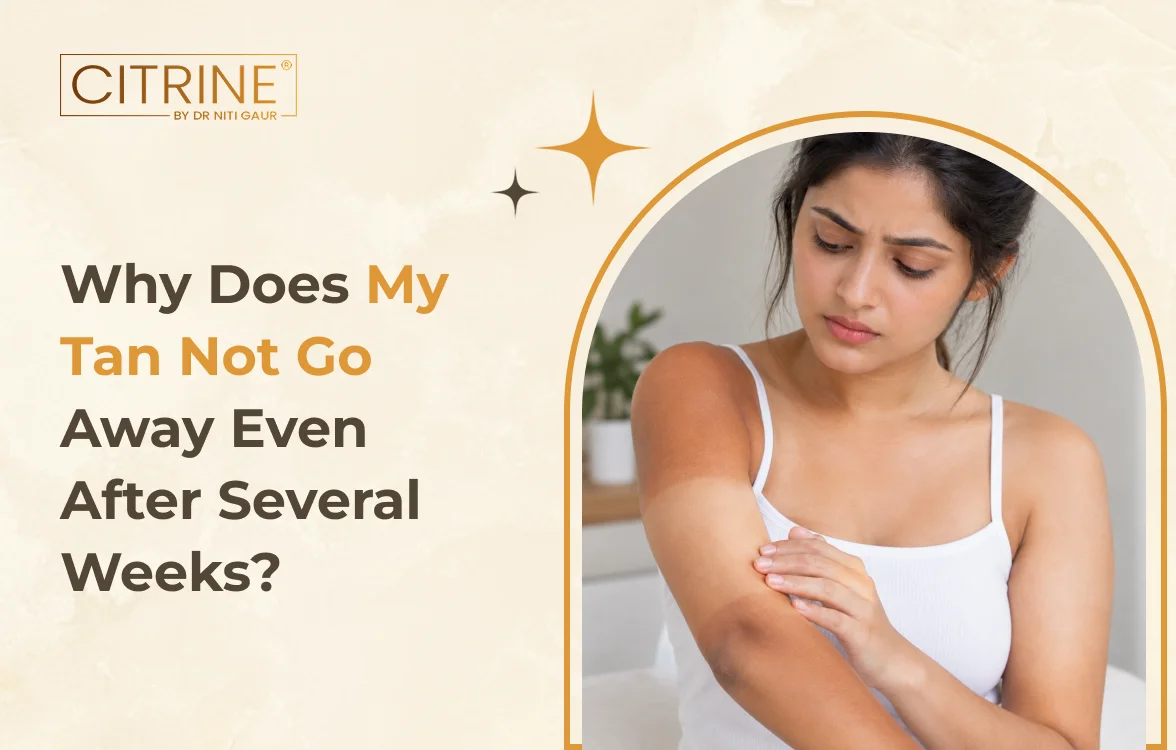
Returned from a holiday where you traveled and spent most of your time outdoors during the day? Your sun-exposed areas of the skin must have developed a tan and appear uneven or dull due to excess melanin. A tan may make you less socially confident, especially when it is on your face, arms, hands, or legs and doesn't fade within a few weeks, even though you're avoiding direct sun exposure.
If you're wondering why your tan isn't disappearing even after several weeks of avoiding sun exposure, you need to understand that a tan can not always fade quickly. The extra melanin deposits in sun-exposed areas gradually decrease as the skin naturally renews itself. During this process, if sun protection is not strictly practiced, the existing skin darkening can persist or deepen, shares pigmentation treatment expert in Gurgaon, Dr. Niti Gaur, and founder of Citrine Clinic.
Sometimes, what shows up as stubborn skin tan may be sun-induced hyperpigmentation (solar lentigines), melasma, freckles, or post-inflammatory hyperpigmentation because they can look similar. Each of them requires a different treatment approach.
Aggressive scrubbing or repeated application of strong home remedies can irritate the skin and worsen the skin darkening. Therefore, before you start removing tan at home, it's important to know the exact reason for the skin darkening, with a dermatologist's help to determine the best-suited treatment.
Quick Summary
- Skin tan naturally fades over several weeks as skin cells renew and excess melanin decreases.
- Ongoing UV exposure can prevent fading and deepen the tan.
- Darker and pigmentation-prone skin is more likely to develop stubborn hyperpigmentation.
- What looks like a tan may actually be a pigmentation concern.
- Gentle skincare, moisturization, and sun protection support skin recovery.
- A dermatologist should evaluate persistent or worsening darkening.
Why Is My Tan Still Noticeable After Several Weeks?
When uncovered skin is repeatedly or for a prolonged period exposed to UV radiation, melanocytes in those areas produce more melanin as the skin’s natural protective response to prevent damage.
More melanin, the colored pigment, in the sun-exposed area makes the skin look darker or tan.
The tan cannot disappear immediately, as melanin stays in the skin until the pigmented layers gradually shed and are replaced with fresh, clear skin during the natural skin renewal process. This usually takes several weeks.
Why Does My Tan Take Longer to Fade than Others?
Everyone’s skin is different. The duration for which the original tan remains is influenced by:
- Ongoing daily sunlight exposure while walking outdoors, driving or riding to work, exercising outdoors, running errands, or sitting near windows
- Skin’s natural tendency to develop pigmentation concerns like melasma, solar lentigines, or post-inflammatory hyperpigmentation after acne, irritated skin, injuries, rashes, burns, or excessive exfoliation
- Skin irritation caused by harsh home remedies/aggressive skin treatments
- Amount and intensity of direct UV exposure
- Natural skin tone and skin type
- Skin inflammation
- Hormonal imbalances
- Skin renewal process
- Skincare habits/lack of proper, consistent skincare.
Can My Tan Quickly Fade with Exfoliation?
If you have a superficial tan or dullness, gentle exfoliation can help lighten your skin. But it can't instantly remove extra melanin deposits deep within the skin.
Those who over-exfoliate or use harsh scrubs/exfoliating products that aren't suitable for their skin type and condition can experience redness, burning, dryness, increased sensitivity, skin barrier damage, and post-inflammatory hyperpigmentation, especially if their skin is sensitive or pigmentation-prone.
Can Moisturizing Help Lighten My Tanned Skin?
Moisturizing does not directly bleach the skin or remove pigmentation. It supports a healthy skin barrier and reduces irritation, flaking, or dryness that can make tan more noticeable. So, applying a suitable moisturizer is a must.
Can Skincare Products Help Fade My Tan?
Some skincare actives can fade uneven skin darkening and support natural skin renewal. Depending on the type and severity of the skin darkening, a dermatologist may recommend topicals containing Vitamin C, niacinamide, azelaic acid, ret-inoids, or other pigment-reducing ingredients. Usually, multiple strong actives are not recommended for simultaneous use, as they may irritate the skin and worsen the pigmentation. A dermatologist can provide a personalized skincare routine.
How Can a Dermatologist Help Treat My Stubborn Tan or Pigmentation?
If your sun-exposed areas remain dark despite daily UV protection and proper skincare, a dermatologist will assess the underlying reason and then recommend the most appropriate treatment.
Options may include:
- Prescription creams or serums, as suited to skin type, pigmentation cause/type/severity, area being affected, and skin’s sensitivity
- Chemical peels for superficial pigmentation or dullness
- Laser toning for some types of pigmentation.
Usually, a dermatologist recommends a combination approach. With patience, proper UV protection (sunscreen and physical protection), gentle skincare, topical treatment, and dermatological procedures, the existing tan can fade sooner and prevent further tanning.
What To Avoid If Having Persistent Tan?
- Use of multiple, strong skincare actives at a time
- Picking at peeling or flaky skin
- Excessive or harsh scrubbing or exfoliation
- Harsh or irritating home remedies
- Strong bleaching products
- Repeated chemical peels
- Direct sun exposure.
Read Also: How to Remove Tan from Hands and Legs: Effective Treatments & Tips
Conclusion
A true sun tan stays noticeable for several weeks because more melanin deposits in UV-exposed areas. Normally, skin renewal takes time, so pigmented cells shed.
But for those with ongoing daily sunlight exposure, pigmentation-prone skin, or inflamed or irritated skin, skin darkening can last much longer.
Aggressive exfoliation, strong multiple skincare actives, or harsh home remedies are not the safest way to remove tan. Dermatologist Dr. Niti Gaur recommends consistent, proper sun protection, a gentle skincare routine, and suitable topical or in-clinic procedures to fade dark skin after determining the underlying cause.
You can consult her at Citrine Clinic to explore more about tan removal treatments in Gurgaon. She and her team offer advanced dermatological treatments that are effective in tan removal. Visit for details.
Locate Citrine Clinic easily and explore verified patient experiences.
FAQs on Stubborn Skin Tanning
Why is my tan not fading after a month?
You may have had intense or excessive sun exposure, are still exposed to UV rays, or your skin may not be tanned but affected by another hyperpigmentation concern.
How long does a tan usually take to disappear?
A tan naturally fades over several weeks. The exact timeline depends on the individual’s skin type, skincare, skin renewal, and the skin’s UV exposure.
Can any treatment get rid of my tan in a day?
No. A real sun tan cannot fade instantly through any means. If you think of scrubbing or bleaching, that could damage the skin further and cause deeper pigmentation.
Does sunscreen help remove tan?
No. Using broad-spectrum sunscreen daily can help prevent further UV-induced skin darkening and allow natural skin renewal and the provided treatments to work more effectively and safely.
When should I see a dermatologist for tan?
Consider seeking a professional evaluation and personalized treatment if your skin has been dark for several months, becomes patchy, darker, or uneven; becomes itchy, irritated, or painful; and does not improve with proper skincare, sun protection, and over-the-counter remedies.
About the Author