
 22 Oct 2026

You've got your acne breakouts under control, but suddenly your acne scars look more prominent? This may be alarming.
As your skin clears and redness fades, acne-caused uneven texture and pigmentation become more apparent. This doesn't necessarily mean acne scars are getting more severe. The acne scars were likely already present but were hidden by active acne and associated redness and inflammation.
Dr. Niti Gaur, dermatologist in Delhi and founder of Citrine Clinic, can help you determine whether you have post-inflammatory hyperpigmentation or true acne scarring once active acne settles. Based on your skin and scar type, she can recommend a suitable treatment plan.
Quick Summary
- Inflammatory acne affects the underlying skin texture and tone.
- After acne, dark marks/redness or permanent scars can develop.
- True acne scars are depressed (ice-pick/boxcar/rolling) or raised (hypertrophic/keloid)
- Acne scars appear worse due to noticeable previous inflammation and skin damage.
- The best approach is professional, personalized combination treatment.
Why Do Acne Scars Become More Noticeable After Clearance?
During active acne, the affected skin may look swollen, red, uneven, or covered with multiple lesions.
Once the acne clears, the skin surface looks calmer. But as the skin heals, indentations, raised scars, leftover pigmentation, and uneven texture become more noticeable. Just like when you remove objects from a textured surface, the texture becomes more visible.
Other common identified reasons that make acne scars look worse after skin stops breaking out are:
- Wrong lighting: Sometimes, side light or strong overhead light on healing skin can make acne scars more prominent. They create shadows inside the depressed acne scars, which highlights them and makes skin texture look deeply uneven.
- Dry Skin: If acne-scarred skin stays dehydrated or irritated, the surface looks more uneven and the scars more prominent.
- Tanning or uneven pigmentation: When the skin around acne-affected areas tans or becomes pigmented, it creates contrast between the scars and the surrounding skin, making them more visible.
- Loss of facial volume: With age or weight fluctuations, facial volume can decrease. This may change the shadows that fall across existing indented scars, making scars more noticeable.
- Stopping acne treatment: When active acne is no longer the main skin concern, you can shift the focus to improving uneven skin texture and prominent acne scars.
What is Really Causing the Acne Scars?
Acne scars develop as a long-lasting consequence of severe, inflamed acne breakouts.
When acne inflames pores and damages underlying tissue, the body responds by stimulating collagen remodeling. However, when the skin repairs itself, it produces either less or more collagen. Collagen deprivation leads to indented acne scars, while excess collagen causes raised acne scars, making the skin uneven in texture.
Cystic or nodular acne flare-ups usually cause deep, prolonged inflammation and damage, which can lead to acne scars. True acne scars can develop when active acne is irritated or not treated early and appropriately. Some people inherit the tendency to develop acne scars.
What Kind of Acne Scars Appear After Acne Clearance?
After inflammatory acne is under control, most people notice the following:
-
Post-inflammatory hyperpigmentation or erythema:
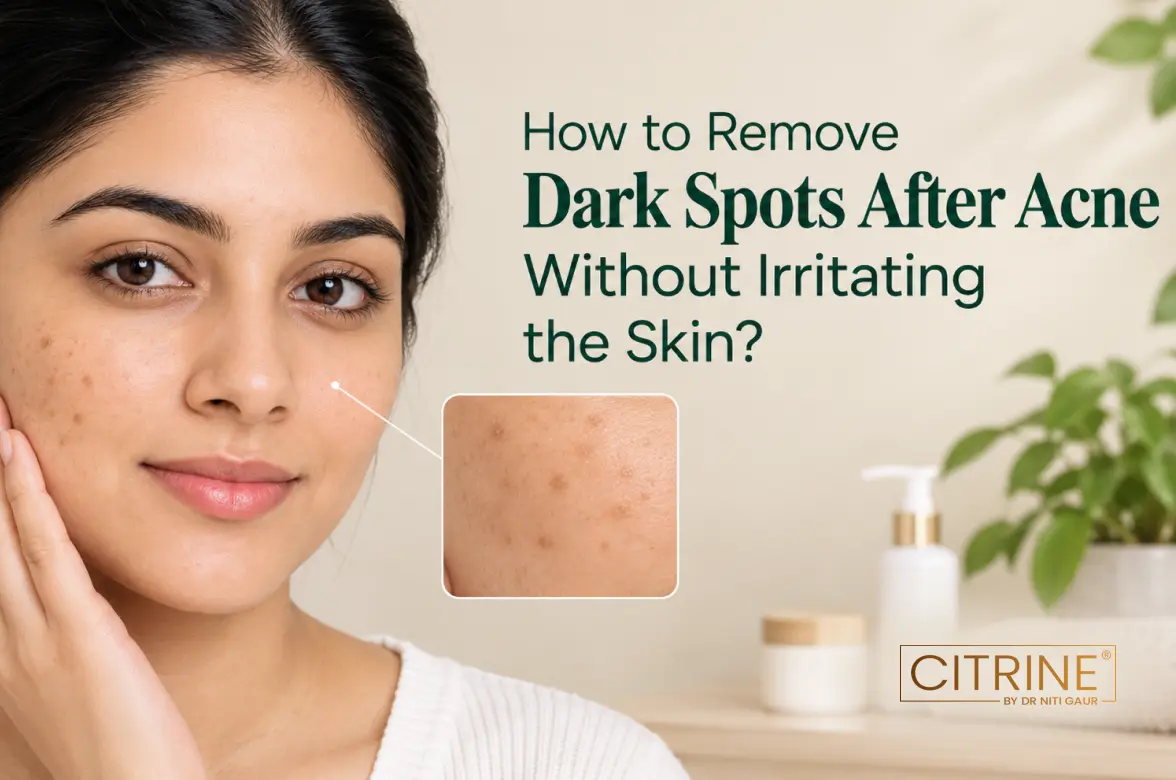
These are flat, dark brown or greyish marks that represent pigmentation changes left behind by acne. Often, they gradually fade and become less visible after acne stops. Sometimes, persistent pink or red marks, a condition called erythema, develop. Both need different treatment approaches.
-
True acne scars:
These are indented or raised scars caused by structural changes in the skin, either less or more collagen growth.
-
Indented acne scar types include:
- Ice pick scars: These appear as deep, tiny holes in the skin with a wide shaft that narrows to a point, usually on the forehead and cheeks, areas with thinner skin.
- Rolling scars: These have sloping edges that make the skin surface wavy and uneven, usually in areas with thicker skin, like the lower cheeks and jaw.
- Boxcar scars: These have sharper edges and go deep into the skin of the lower cheeks and jaw.
-
Raised acne scar types include:
- Hypertrophic scars: These appear within the original boundaries of the healing acne.
- Keloid scars: These grow beyond the original boundaries of the healing acne.
- Often, they develop on the jawline, chest, back, and shoulders and may be tender, itchy, or painful.
How Can You Prevent New, Worse Acne Scars?
Dermatologists recommend:
- Early, appropriate treatment of inflammatory acne
- No manipulation of existing acne or intentional tissue injury
- Proper sun protection
- No excessive scrubbing, aggressive exfoliation, or harsh at-home remedies.
How Can Your Acne Scars Be Improved?
Dermatologists offer the best approach to treating acne scars, tailored to the scar type, depth, and number. Most procedures stimulate collagen remodeling.
Here are the most effective treatments available:
- Microneedling with radiofrequency- for selected, shallow to moderate acne scars
- Fractional laser treatment- tailored to the scar type/depth and skin characteristics
- Subcision- for lifting rolling scars/tethered scars
- Chemical reconstruction techniques- for ice pick scars.
Final Thoughts
Acne scars often look more visible once active acne is under control because you're no longer distracted by the red, inflamed, unevenly textured/pigmented skin caused by inflammatory acne.
A mark on the skin after acne clearance is not a true scar. Flat, brown, or dark marks gradually fade, and that is post-inflammatory hyperpigmentation. True acne scars are either depressed or raised, resulting from structural changes, and require targeted correction.
If your acne has stopped showing up but your skin still looks uneven for a long time, home remedies may not help.
You can visit acne scar treatment doctor in Delhi Dr. Niti Guar to get an appropriate treatment plan for clearer, smoother, more appealing skin. She can help identify your acne scar type and its depth/severity with her experience and treatments.
You Can Also Meet Us At Both Locations:
SCO- 19, Huda Market Road, Sector 15 Part 2, Market Gurugram, Haryana
C-70, Ground Floor, Sudesh Kumar Marg, Rajouri Garden, West Delhi, New Delhi
FAQs on Preventing Acne Breakouts in Your 20s and 30s
Can acne scars get worse after acne stops?
Not necessarily. Acne scars can change over time, not suddenly, depending on how well active acne is controlled. Skin aging, ongoing sun exposure, loss of facial volume, inflammation, and changes in skin texture can make acne scars more visible. If acne isn't properly controlled, new inflammation, marks, and scars can develop.
When should I see a dermatologist for acne scars?
See a dermatologist if acne has stopped but uneven texture remains, scars aren't fading and are affecting your confidence, you're developing new scars, or you’re unsure whether the marks are true scars or post-inflammatory hyperpigmentation.
Will acne scars naturally become less visible?
Post-acne marks or erythema may gradually fade. But indented and raised acne scars, or uneven texture, can remain visible.
Can moisturizer help reduce acne scars?
Moisturizer supports the skin barrier and helps improve skin texture by providing hydration. But it won't fix an established acne scar.
Can uncontrolled acne cause more visible acne scars?
If active inflammatory acne isn't properly managed, new breakouts can keep appearing and creating marks and scars, making the skin look more uneven. That’s why proper acne management matters before you pursue acne scar treatment.
About the Author