If acne has cleared but the scars are still visible, you may feel frustrated with uneven skin, dark marks, or a rough texture that doesn’t seem to improve. Ice-pick, boxcar, and rolling scars can be difficult to manage with skincare and makeup alone. At Citrine Clinic, we offer acne scar treatment in Delhi with dermatologist-led treatments such as microneedling, laser resurfacing, and chemical peels.These treatments help improve skin texture, reduce the appearance of scars, and restore smoother, clearer, and healthier-looking skin.
Start with a skin consultation to understand your acne scar type and find a treatment approach suited to your skin.
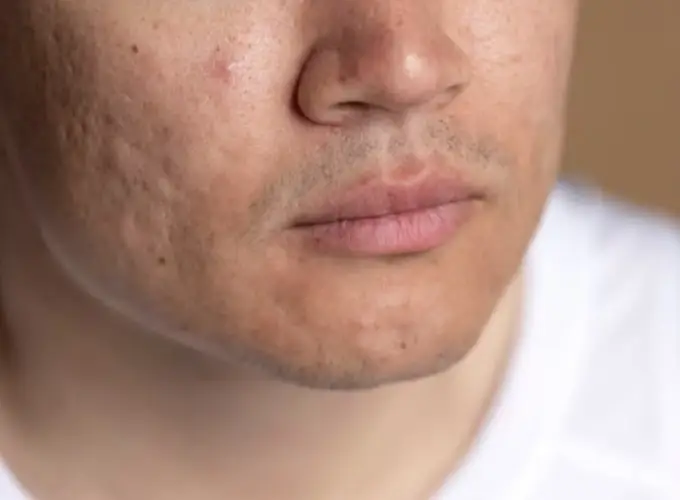

Acne scar treatment refers to a group of dermatological procedures used to reduce the appearance of scars, improve uneven skin texture and stimulate the skin's natural collagen-remodelling process. Depending on the scar, treatment may work by resurfacing damaged skin, creating controlled micro-injuries, releasing scar tissue beneath the surface or stimulating new collagen formation.
At Citrine Clinic, the choice of procedure is based on the morphology of the scar rather than using a single treatment for every patient. Deeper tethered scars may require a different approach from superficial boxcar scars or pigmentation left behind after acne. This individualised approach is particularly important when planning acne scar treatment in Delhi for Indian skin.
| Treatment | How It Helps Acne Scars |
| Fractional CO₂ Laser | Creates controlled microscopic columns of thermal injury to stimulate collagen remodelling and improve depressed scars and texture. |
| RF Microneedling | Combines controlled needle penetration with radiofrequency energy to stimulate collagen at targeted depths. |
| Microneedling / DermaPen | Creates microchannels in the skin to activate wound-healing and collagen production. |
| Subcision | Releases fibrous strands tethering depressed scars to deeper tissue, particularly useful for selected rolling scars. |
| Chemical Peels | Removes damaged superficial layers and can improve post-acne pigmentation, texture and selected superficial scars. |
| Dermal Fillers | Adds temporary volume beneath selected depressed scars to create a more even surface. |
| PRP Therapy | Uses concentrated platelets and growth factors to support tissue repair and collagen formation. |
| TCA CROSS | Applies high-strength TCA precisely inside selected deep, narrow scars to stimulate localised collagen production. |
| Microdermabrasion | Provides controlled superficial exfoliation and may benefit mild textural irregularities. |
| Punch Excision | Removes selected deep scars individually and closes the defect to create a smoother surface. |
| PRF | Uses a fibrin matrix that can provide a more gradual release of platelets and growth factors. |
| Skin Boosters | Improve hydration and overall skin quality, which may make mild textural irregularities less prominent. |
Acne scar treatment cost in Delhi ranges from ₹4,000 to ₹20,000 per session, although the actual price varies according to the procedure and the extent of correction required.
| Cost | Approximate Price |
| Minimum | ₹4,000/session |
| Average | ₹12,000/session |
| Maximum | ₹20,000/session |
Factors That Affect the Cost of acne scar treatment in Delhi
Adults with persistent acne scarring after active acne has settledIndividuals with rolling, boxcar or ice-pick scarsPeople with uneven skin texture following acneThose with post-acne pigmentation or residual marksIndividuals with enlarged pores associated with acne-prone skinPatients seeking minimally invasive alternatives to surgical scar correctionPeople willing to follow appropriate pre- and post-treatment skincareIndividuals with realistic expectations regarding the degree of improvement possibleSkin and scar assessment: The dermatologist evaluates scar morphology, depth, pigmentation and skin type.
Treatment planning: One or more procedures are selected according to the characteristics of the scars.
Skin preparation: The treatment area is cleansed and prepared.
Numbing: Topical anaesthesia may be applied when required.
Targeted procedure: Laser, RF microneedling, subcision, peel or another selected treatment is performed.
Post-treatment care: Soothing and protective products may be applied.
Aftercare guidance: Sunscreen and a personalised skincare routine are recommended to support recovery.
Recovery varies according to the treatment intensity and individual healing response.
| Recovery Stage | What to Expect |
| Immediately After Treatment | Redness, warmth, mild swelling or sensitivity may occur. |
| 1–3 Days | Redness generally begins settling; dryness or mild peeling may occur with resurfacing treatments. |
| 3–7 Days | The skin gradually recovers and surface texture begins to look more settled. |
| Following Weeks | Collagen remodelling continues beneath the skin, with improvement developing progressively. |
Since these concerns can coexist, dermatologists may use a combination approach, matching each procedure to the specific structural problem it is intended to address.
Atrophic acne scars
Rolling scars
Boxcar scars
Ice-pick scars
Post-acne pigmentation
Uneven skin texture
Enlarged pores associated with acne
Mild textural irregularities
Dull or damaged skin following prolonged acne
Scar-specific treatment planning - Treatment is selected according to scar morphology rather than following a standard protocol for every patient.Combination approach - Different modalities can be considered when a patient has mixed scar types requiring collagen stimulation, resurfacing and scar release.Controlled energy-based treatments - Laser and RF-based procedures can be calibrated according to skin type, scar depth and treatment objective.Attention to Indian skin - Treatment parameters and recovery planning need to account for the higher tendency towards post-inflammatory pigmentation in Indian skin.Subcision for tethered scars - Selected depressed scars may require mechanical release beneath the skin rather than surface resurfacing alone.Depth-specific collagen stimulation - RF microneedling and microneedling can deliver controlled injury at targeted depths rather than relying only on superficial exfoliation.Dermatologist-led care - Treatment selection, procedural settings and post-treatment management are guided by dermatological assessment.Acne scar treatment cost in Delhi ranges from ₹4,000 to ₹20,000 per session, depending on scar severity and technology used. At Citrine Clinic, your skin is assessed first so you can understand the treatment options and expected cost.
Acne scars cannot always be completely removed, but the right treatment can significantly reduce their appearance and improve skin texture. At Citrine Clinic, treatment may involve a combination of procedures based on your scar type and skin condition.
There is no single best treatment for everyone. Options may include laser resurfacing, microneedling, chemical peels, or a combination based on your scar type.
Yes, CO2 laser resurfacing is a highly effective treatment for certain acne scars, as it boosts collagen production and improves skin texture. Results depend on the scar type, depth, and individual skin response.
Some acne scars may appear more noticeable over time as collagen and skin elasticity naturally decline. Changes in skin volume can make pre-existing depressions more apparent, although this does not mean that every acne scar will worsen.
Skincare can support skin health and may help pigmentation, but established depressed scars involve structural changes within the skin. Procedures are often considered when the primary concern is significant textural scarring.
Directional or overhead lighting creates shadows within depressions, making atrophic scars appear more pronounced. This is one reason scar assessment should be performed under appropriate clinical lighting rather than relying only on photographs.
Yes. Ongoing inflammatory acne can continue to create new scars. Dermatologists may therefore recommend controlling active breakouts alongside or before beginning an intensive scar-correction protocol.
Acne can damage the skin at different depths and trigger varying patterns of collagen loss and fibrosis. This can result in rolling, boxcar or narrow ice-pick scars, each requiring a different therapeutic strategy.
Two people may both describe their concern as "acne scars" while having completely different scar structures. Clinical assessment helps determine whether the primary issue is tethering, volume loss, collagen damage, pigmentation or a combination of these factors, allowing treatment to be selected accordingly.
Acne scars can often be significantly reduced, but no treatment can guarantee their permanent removal. Depending on the type and depth of scars, treatments such as CO₂ laser, microneedling, chemical peels or other procedures may help improve their appearance. Expert dermatologist like Dr. Niti Gaur at Citrine Clinic can assess the scars and recommend the most suitable treatment plan.
Dermatologists recommend scar treatment based on the type, depth and location of the scar. Options may include chemical peels, microneedling, laser treatments or other procedures, and Dr. Niti Gaur at Citrine Clinic can assess your skin and recommend the most appropriate approach.
The number of sessions needed for acne scars depends on the type, depth and severity of the scars and the treatment chosen. Some improvement may be visible after a few weeks, while more noticeable results usually develop gradually over multiple sessions as the skin produces new collagen. Dr. Niti Gaur at Citrine Clinic can recommend a personalised treatment plan after assessing your scars.
Acne scar treatments are generally well tolerated, with numbing cream often used to keep discomfort manageable. Downtime depends on the treatment—some procedures may cause mild redness and sensitivity for a few days, while more intensive treatments can require longer recovery.
Yes, acne scar treatments can be safely performed on Indian and darker skin when the procedure and settings are carefully customised. Temporary darkening or pigmentation can sometimes occur, but the risk can be minimised with an experienced dermatologist.