

 15 Jul 2026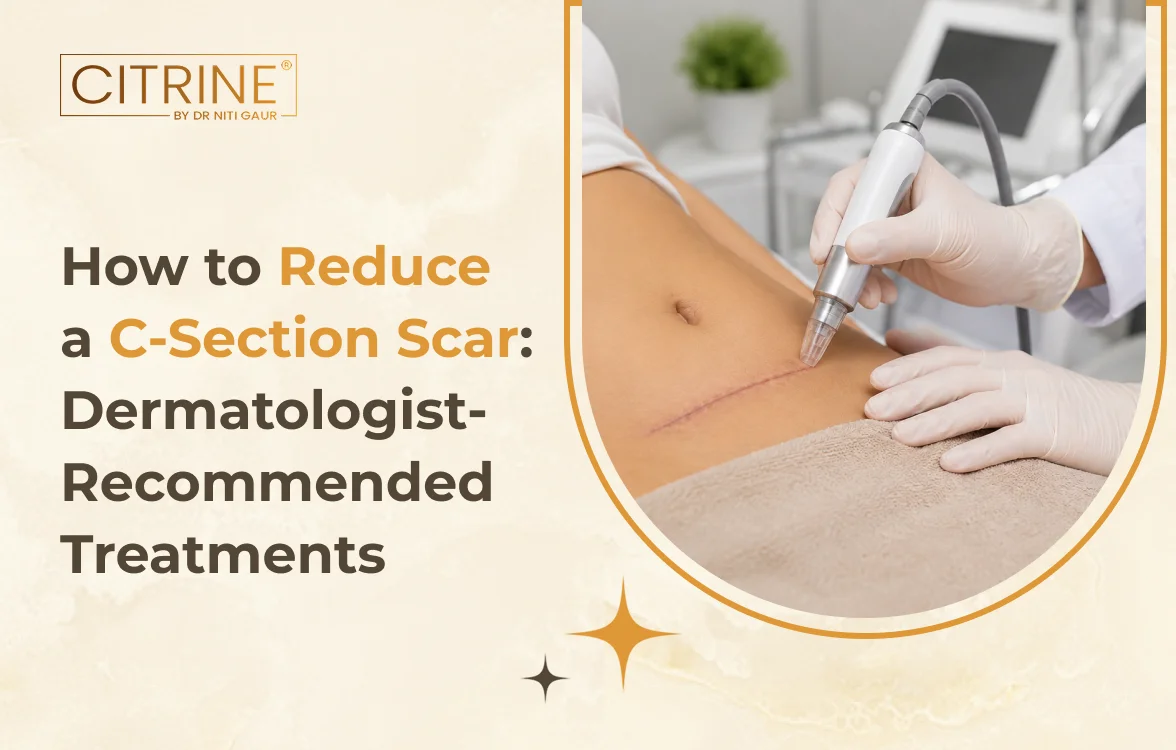
A C-section scar is a normal part of healing after a cesarean delivery, but its appearance varies from person to person. While some scars gradually fade into a thin, pale line, others may remain raised, dark, uneven, or feel tight and uncomfortable. Although no treatment can erase a C-section scar completely, several dermatologist-recommended options can improve its texture, colour, and overall appearance.
The most suitable treatment depends on the type of scar, how long ago the surgery was performed, your skin type, and how the scar has healed. A flat scar with pigmentation requires a different approach than a thick hypertrophic scar, a keloid, or a scar that has become tethered to the underlying tissue. Before starting any treatment, the incision should be fully healed with no signs of infection or open wounds.
Quick summary
- C-section scars fade, but complete removal is not realistic.
- Silicone gel or sheets can help after the wound has healed.
- Fractional CO2 laser and microneedling may improve selected mature scars.
- RF microneedling reaches deeper tissue but has important safety risks.
- PRP is usually an add-on, while chemical peels mainly treat surface pigmentation.
- A growing, painful or itchy keloid often needs injections or combination treatment.
What is a C-section scar?
A C-section scar is the mark left after the skin and deeper abdominal tissues heal following caesarean delivery. It is separate from the uterine scar, and the abdominal scar cannot reveal which uterine incision was used.
Scar tissue forms when the body lays down collagen to close the wound. During remodelling, collagen gradually reorganises and softens. This can continue for 12 to 24 months.
What does a C-section scar look like?
Most scars are horizontal and sit low on the abdomen. In the first weeks, the line may look pink, red or purple and feel firm, numb, itchy or slightly swollen. A normally maturing scar gradually becomes flatter and paler.
Have it checked if it keeps growing, spreads beyond the incision, becomes increasingly painful, drains fluid, smells unpleasant, opens or develops a new lump.
What are the different types of C-section scars?
| Scar type | Typical appearance | Usual treatment direction |
| Normal mature scar | Flat, pale or slightly darker | Time, silicone, sun protection |
| Hypertrophic scar | Raised but within the incision | Silicone, injections, selected lasers |
| Keloid scar | Thick and extends beyond the wound | Early combination treatment |
| Atrophic scar | Thin, indented or sunken | Microneedling, fractional laser or revision |
| Tethered scar | Pulled inward, stiff or puckered | Physiotherapy, scar release or remodelling |
| Pigmented scar | Flat but brown, grey or red | Pigment-safe treatment |
Which dermatologist treatments can reduce a C-section scar?
A dermatologist should assess the scar’s height, colour, firmness, mobility, age and symptoms before choosing a procedure.
| Treatment | Best suited to | Main limitation |
| Fractional CO2 laser | Thick, or uneven mature scars | Downtime and pigmentation risk |
| Microneedling | Mild indentation, puckering or texture | Multiple sessions; not for active keloids |
| RF microneedling | Selected deeper or firm scars | Burns, fat loss and scarring if misused |
| PRP | Add-on to laser or needling | Limited standalone evidence |
| Chemical peels | Surface pigment around a flat scar | Cannot flatten or release deep scar tissue |
| Steroid injections | Hypertrophic and keloid scars | May thin or lighten skin |
1. Fractional CO2 laser
Fractional CO2 laser creates microscopic treatment columns that encourage collagen remodelling. It can soften a firm scar, improve uneven texture and increase flexibility. Several sessions may be required. Redness, crusting and temporary darkening are possible.
2. Microneedling
Medical microneedling uses sterile needles at controlled depths to stimulate collagen repair. It may improve a mildly depressed, or uneven scar. It uses less heat than an ablative laser, but poor technique can still cause infection or pigmentation. At-home rollers should not be used on a C-section scar. People prone to keloids need specialist assessment first.
3. RF microneedling
RF microneedling delivers radiofrequency heat through needle tips beneath the skin. It may help select firm, uneven or mildly tethered mature scars through deeper collagen remodelling. Safety depends on energy, depth and operator skill.
4. Platelet-rich plasma therapy
PRP is prepared from the patient’s blood and contains concentrated platelets that release growth factors. It may be injected or applied after microneedling or laser to support healing and remodelling. Evidence specifically for C-section scars remains limited, so PRP is better considered an adjunct than a guaranteed standalone solution. Bruising, swelling and infection are possible.
5. Chemical peels
Chemical peels use a controlled acid solution to exfoliate superficial skin. A carefully selected superficial peel may improve brown discolouration around a flat, fully healed scar. It will not flatten a keloid, soften deep fibrosis or release tethered tissue. Stronger peels can cause burns, irritation and pigment changes, especially in melanin-rich skin. Never apply a peel to a recent or inflamed incision.
How is the right treatment selected?
The best treatment is based on the problem. A raised scar may need steroid injections before resurfacing, while an indented scar may need collagen stimulation or scar release.
Also consider scar age, skin tone, symptoms, pregnancy or breastfeeding, keloid tendency and downtime. Most procedures require several sessions, and none guarantees complete removal.
Do C-section scars go away?
C-section scars usually fade but do not vanish. The biggest changes often happen during the first year. Older scars can still improve, although they may need an in-clinic procedure.
What can you do at home?
After your doctor confirms that the wound is fully healed:
- Use silicone gel or sheets consistently. Improvement is gradual and varies.
- Apply broad-spectrum SPF 30 or higher when the scar may be exposed.
- Begin gentle massage only after the incision is closed, dry and scab-free.
- Reduce waistband friction and keep the area dry if a skin fold covers it.
- Support healing with adequate protein, iron, sleep, diabetes control and no smoking.
Do not place oils, acids, scar creams or home remedies on an open incision. Vitamin E and onion-based products may also irritate skin.
How can you prevent a keloid scar after a C-section?
Keloids cannot always be prevented. Tell your doctor before delivery if earlier cuts, piercings or operations produced keloids. Infection prevention and reduced wound tension may help.
Once the incision is closed, ask whether silicone is suitable. Seek early review if the scar becomes progressively raised, itchy, painful or wider than the incision. A dermatologist may use corticosteroid injections, sometimes with other treatments. Surgery alone has a high recurrence risk, so keloid removal is usually paired with preventive therapy.
Common mistakes that can worsen a scar
- Starting massage, silicone or active skincare before wound closure.
- Using lemon, strong acids, harsh scrubs or DIY microneedling.
- Treating every raised scar with a laser without checking for a keloid.
- Expecting one procedure to erase a mature scar.
Common misconceptions
“Laser removes the scar completely.” It can improve colour and texture, but cannot recreate unscarred skin.
“Natural oils are always safe.” They may irritate skin or trap moisture and should never be used on an open wound.
“A dark scar has not healed.” Pigmentation can remain after structural healing, particularly in deeper skin tones.
“A keloid should simply be cut out.” Excision without prevention can lead to recurrence.
Final takeaway
Improving the appearance of a C-section scar begins with understanding the type of scar and how it has healed. While simple measures such as silicone-based scar therapy and sun protection may be sufficient for a well-healed scar, concerns like raised scars, keloids, skin tethering, depressions, or persistent pigmentation often require more targeted treatment.
Depending on the scar, options such as fractional CO2 laser, microneedling, RF microneedling, PRP, chemical peels, or a combination of treatments may be recommended.
Dr. Niti Gaur, an MBBS and MD Dermatologist with over 20 years of experience in clinical and aesthetic dermatology, provides personalised scar assessments at Citrine Clinic in Gurugram. By evaluating your scar type, skin tone, symptoms, and treatment goals, she can recommend an evidence-based plan designed to improve the scar's appearance while setting realistic expectations about the results.
To book a consultation with Dr. Niti Gaur, visit Citrine Clinic now.
View Citrine clinic location, directions, and reviews on Google Maps
Frequently asked questions
1. When can I start massaging my C-section scar?
Start when it is closed, dry and free of scabs or infection, and after your doctor approves. This is often around six weeks.
2. Why does my C-section scar itch years later?
Dryness, friction, nerve changes or a raised scar may cause itching. Persistent itch with growth may indicate a keloid.
3. Why does my C-section scar hurt years later?
Nerve sensitivity, adhesions, hernia or endometriosis are possible causes. New, severe or cyclical pain needs review.
4. What causes a lump under a healed scar?
It may be thick scar tissue, a suture reaction, hernia, fluid or endometriosis. Examination and sometimes imaging are needed.
5. Can scar cream remove an old C-section scar?
No cream can erase it. Silicone may soften some scars, while colour or texture may need medical treatment.
6. Is laser treatment safe while breastfeeding?
The procedure, numbing medicine and aftercare products need individual review by your dermatologist.
7. Can a C-section scar open after three months?
A fully healed incision should not normally open. Separation, bleeding or discharge needs assessment.
8. Why is my C-section scar darker than my skin?
Inflammation can trigger excess pigment, particularly in melanin-rich skin. Sun protection and gentle treatment can help.
9. Can exercise remove a C-section scar shelf?
Exercise can strengthen the core, but it cannot release tethered scar tissue or remove loose skin.
About the Author