

 16 Jul 2026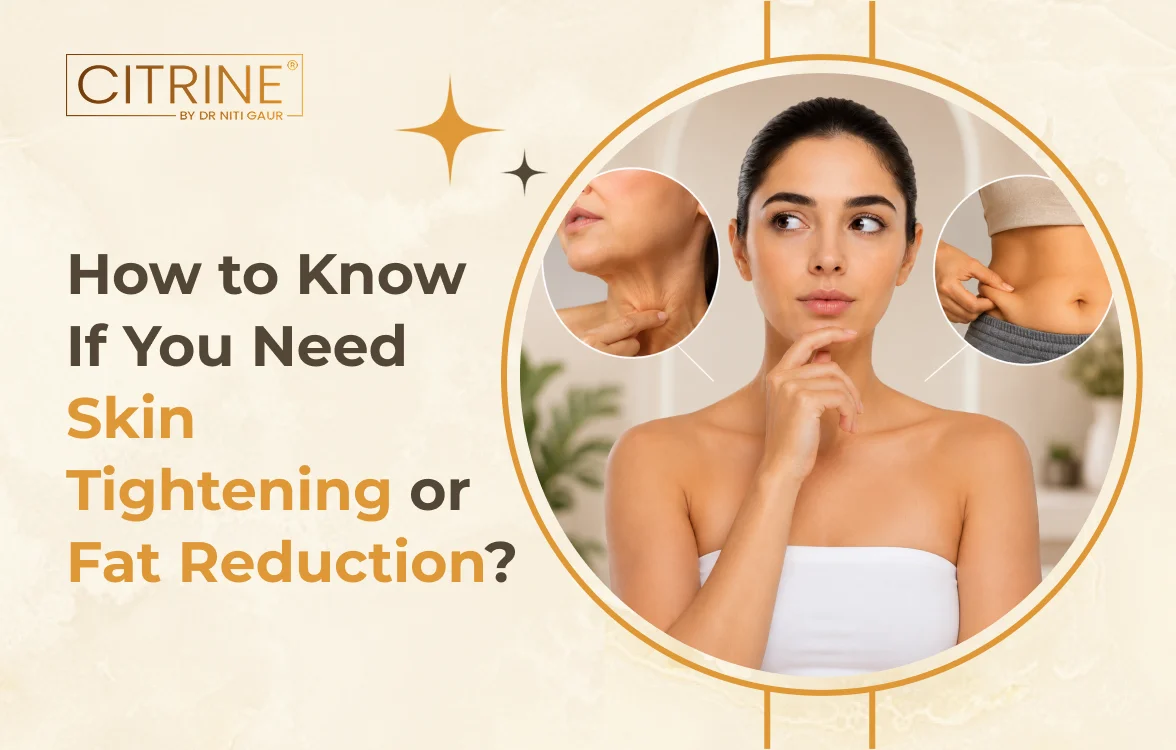
A loose jawline, lower-belly pouch, sagging arms, or heavy-looking thighs may appear to be the same problem. In reality, these concerns can be caused by loose skin, stubborn fat, reduced muscle support, cellulite, or a combination of issues.
Identifying the actual cause is important because skin tightening and fat reduction do different jobs.
Skin tightening treatments aim to improve firmness and reduce mild sagging. Fat reduction treatments target localised fat beneath the skin. Using a fat-reduction procedure on an area with poor skin elasticity may make the looseness more visible. Similarly, tightening treatments may produce little change when the main problem is a thick fat pocket. This blog helps you understand whether you need skin tightening, fat reduction, or a combination of both.
Quick Summary
- Loose, thin, wrinkled, or crepey tissue usually indicates skin laxity.
- A thick, soft, pinchable bulge is more likely to be subcutaneous fat.
- A firm, rounded abdomen may be caused by visceral fat, bloating, or muscle separation.
- Some people need both fat reduction and skin tightening.
- Non-surgical treatments usually create gradual and moderate improvements.
- Significant hanging skin usually requires surgical removal for a major change.
- Body contouring is not a treatment for obesity or substantial weight loss.
- The right procedure depends on skin quality, fat thickness, medical history, age, and expectations.
What Is Skin Tightening?
Skin tightening is used to improve skin that has lost firmness and elasticity. This loss of firmness is known as skin laxity.
Healthy skin contains collagen and elastin, which help it remain firm and flexible. As people age, collagen production declines. Sun exposure, smoking, pregnancy, weight fluctuations, genetics, and rapid weight loss can also weaken the skin’s support structure.
Loose skin may appear:
- Thin or crepey
- Wrinkled when pinched
- Droopy around the jawline or neck
- Folded over the abdomen
Non-surgical skin tightening treatments may use radiofrequency, focused ultrasound, laser energy, or radiofrequency microneedling. These procedures aim to stimulate collagen remodelling.
However, they cannot remove large amounts of excess skin. A person with a significant abdominal fold after major weight loss is unlikely to achieve a surgical-level result with an energy-based device.
What Is Fat Reduction?
Fat reduction targets subcutaneous fat, which is the soft fat located between the skin and muscle.
This type of fat can commonly collect around the:
- Lower abdomen
- Flanks or love handles
- Inner and outer thighs
- Upper arms
- Back
- Bra line
- Double chin
- Knees
Non-surgical fat reduction treatments may use controlled cooling, ultrasound energy, heat, radiofrequency, or injectable medicines approved for specific areas.
Liposuction is a surgical option that physically removes fat through small incisions. It can create a more noticeable reduction than non-surgical methods, but it involves anaesthesia, swelling, recovery time, and surgical risks.
Neither surgical nor non-surgical fat reduction is intended to treat obesity. These procedures are designed to reshape specific areas in people whose weight is relatively stable.
Skin Tightening Vs Fat Reduction
| Assessment Point | Skin Tightening | Fat Reduction |
| Main concern | Loose or sagging skin | Localised fat pocket |
| Typical appearance | Wrinkled, folded, crepey, or deflated | Rounded, bulky, or protruding |
| Pinch test | Thin and loose fold | Thick and cushioned fold |
| Common areas | Face, neck, abdomen, arms, thighs | Abdomen, flanks, thighs, chin, arms |
| Best candidates | Mild to moderate laxity | Small stubborn fat deposits |
| Main limitation | Cannot remove large skin folds | Does not reliably tighten loose skin |
| Typical result | Improved firmness and texture | Reduced volume and better contour |
How Can You Tell Whether The Problem Is Loose Skin Or Fat?
A simple self-check can provide clues, although it cannot replace a medical examination.
Check The Thickness Of The Fold
Gently pinch the area between your fingers. A thin, wrinkled fold that feels almost empty may indicate loose skin. A thicker, padded fold usually suggests subcutaneous fat.
When the fold feels thick but the surface also looks wrinkled or hangs downward, both fat and loose skin may be present.
Check Whether The Area Changes With Position
Loose skin often hangs more noticeably when you bend forward, sit down, or lift your arms. It may form folds that flatten when the skin is stretched.
Fat generally maintains more volume in different positions, although the shape may shift slightly.
Check The Skin Texture
Crepey texture, fine lines, and rippling are signs of reduced skin quality. Smooth but bulky tissue is more consistent with excess fat.
Cellulite may create dimpling, but cellulite is not simply loose skin or ordinary fat. It also involves fibrous bands beneath the skin.
Consider Your Weight History
Loose skin is more likely after:
- Pregnancy
- Significant weight loss
- Rapid weight loss
- Repeated weight gain and loss
- Age-related collagen decline
A stubborn fat pocket is more likely when your weight is stable but one area remains fuller than the surrounding body.
Notice Whether Exercise Changes The Area
Exercise can reduce overall body fat and build muscle, but it cannot control where fat is lost first. Strength training may improve the appearance of mild laxity by increasing muscle support beneath the skin. It cannot remove genuinely stretched or hanging skin.
When Is Skin Tightening The Better Option?
Skin tightening may be more suitable when:
- The skin looks thin or crepey.
- The area wrinkles when pinched.
- There is mild sagging without a large fat pocket.
- Your weight is stable.
- You want gradual improvement rather than a dramatic lift.
- You are willing to undergo multiple sessions.
- You understand that maintenance may be needed.
When Is Fat Reduction The Better Option?
Fat reduction may be more appropriate when:
- You have a defined and pinchable fat pocket.
- The skin over the area remains reasonably firm.
- Your weight has been stable.
- Diet and exercise have not changed the specific area.
- You want contour improvement rather than weight loss.
- You have realistic expectations about the degree of reduction.
When Do You Need Both Treatments?
A combination approach may be considered when both a fat pocket and loose skin are present.
This situation is common in the:
- Lower abdomen after pregnancy
- Upper arms after weight loss
- Inner thighs
- Jawline and under-chin area
- Flanks
- Back and bra-line area
Treatment may be performed in stages. The doctor may reduce the fat first and reassess the skin afterwards, or may select a technology intended to improve both layers.
However, combined treatment does not guarantee a surgical result. The amount of excess skin, collagen quality, age, and treatment depth still affect the outcome.
Which Treatments May Help?
The right treatment depends on whether your concern is loose skin, stubborn fat, or both.
If Loose Skin Is the Main Concern
- RF Skin Tightening: Stimulates collagen to improve skin firmness.
- RF Microneedling: Tightens skin while improving texture and quality.
- Other Collagen-Stimulating Treatments: May be recommended based on the treatment area and degree of skin laxity.
If Stubborn Fat Is the Main Concern
- Non-Surgical Fat Reduction: Targets localised fat pockets in areas such as the abdomen, thighs, arms, flanks, and double chin.
- Body Contouring Treatments: Help reduce stubborn fat but are not intended for weight loss.
If You Have Both Loose Skin and Fat
- Combination Treatment: Addresses both skin laxity and localised fat for more balanced body contouring.
- Staged Approach: In some cases, fat reduction may be followed by skin-tightening treatment.
Remember: A dermatologist will recommend the most suitable treatment based on your skin quality, fat distribution, medical history, and treatment goals. Similar-looking concerns may require different treatment approaches.
Also Read: Non-Surgical Lower Belly Fat Removal: Which Treatment Works Best in 2026?
What Results Can You Realistically Expect?
| Treatment Type | Likely Improvement | Main Limitation |
| Non-surgical skin tightening | Mild to moderate firmness improvement | Cannot remove hanging skin |
| Non-surgical fat reduction | Modest reduction in a selected fat pocket | Little change in body weight |
| Surgical skin removal | Significant removal of excess skin | Scars, recovery, anaesthesia risks |
| Combined treatment | Better balance of volume and firmness | May require several sessions or surgery |
Results vary between individuals. Factors such as age, skin thickness, smoking, sun damage, hormones, weight changes, device quality, treatment settings, and practitioner experience all matter.
How Does A Dermatologist Decide Which Treatment You Need?
A proper consultation should include an assessment of:
- Skin thickness and elasticity
- Amount and depth of fat
- Weight stability
- Pregnancy and weight-loss history
- Abdominal muscle separation
- Previous surgery or scars
- Medical conditions
- Medicines and supplements
- Smoking history
- Pigmentation and scarring tendency
- Tolerance for downtime
- Expectations about scars and results
Dr. Niti Gaur, founder and medical director of Citrine Clinic, works in clinical and aesthetic dermatology. A dermatologist-led evaluation can help distinguish loose skin from fat, cellulite, muscle separation, or another condition before treatment is selected.
Although Citrine Clinic offers technologies used for skin tightening and localised fat reduction, the appropriate option still depends on examination, medical suitability, and realistic goals.
Final Takeaway
The best treatment depends on what is creating the visible concern.
Thin, wrinkled, or crepey tissue usually points towards skin laxity. A soft, thick, localised bulge is more likely to be subcutaneous fat. When both are present, a combined or staged treatment plan may be needed.
A firm abdomen, significant skin fold, cellulite, hernia, muscle separation, or facial hollowing should not be treated as a simple fat problem.
For an individual assessment, patients may consult Dr. Niti Gaur at Citrine Clinic to identify whether the concern is caused by skin laxity, localised fat, or another condition, and to discuss the realistic benefits, risks, limitations, and alternatives before choosing treatment.
To schedule a consultation with Dr. Niti Gaur, visit Citrine Clinic.
Explore our clinic location & reviews.
View Citrine clinic location, directions, and reviews on Google Maps
Frequently Asked Questions
1. Can loose skin look like belly fat?
Yes. Loose abdominal skin may fold or hang and can be mistaken for fat. A pinch test and physical examination can help identify the difference.
2. Does fat freezing tighten skin?
Fat freezing mainly reduces fat cells. Any skin tightening is usually limited and unpredictable.
3. Can radiofrequency treat fat and loose skin together?
Some radiofrequency systems may affect both tissue layers. The result depends on the device, energy depth, settings, and severity of the concern.
4. Will loose skin improve naturally after weight loss?
Mild laxity may improve over several months, particularly in younger skin. Significant hanging skin often does not fully retract.
5. Can exercise remove loose skin?
Exercise can build muscle and improve body shape, but it cannot remove excess skin that has lost elasticity.
6. How long do skin-tightening results last?
Results vary. Ageing continues, so sun protection, stable weight, healthy habits, and occasional maintenance may be needed.
7. Can fat return after fat reduction?
Destroyed or removed fat cells do not grow back, but remaining fat cells can enlarge if you gain weight.
8. When should you consider skin-removal surgery?
Surgery may be more appropriate when skin hangs in a large fold, causes irritation, or requires a significant lift that devices cannot provide.
About the Author