

 12 Jul 2026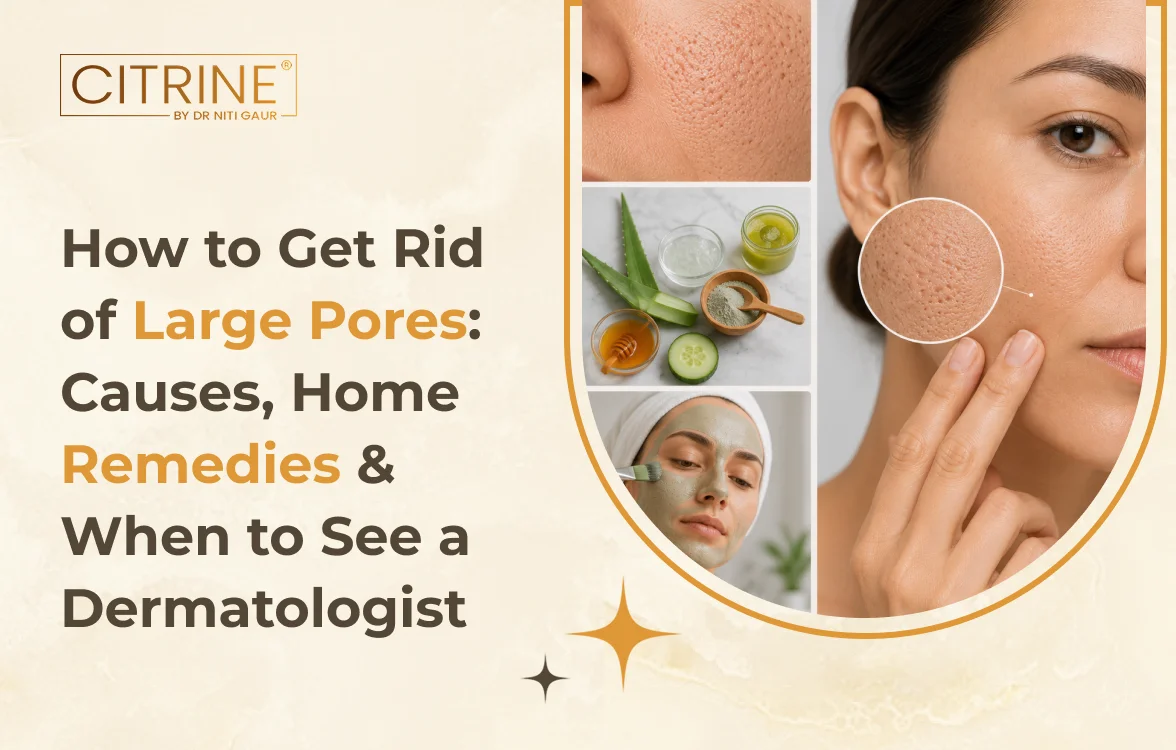
Quick Summary
- Large pores are normal skin openings, but they can look bigger due to oil, clogged debris, aging, sun damage, acne, genetics, and loss of collagen.
- You cannot permanently close pores because pores do not have muscles or doors.
- You can make pores look smaller by controlling oil, clearing buildup, protecting collagen, and improving skin texture.
- Helpful ingredients include salicylic acid, niacinamide, retinoids, glycolic acid, azelaic acid, clay masks, and sunscreen.
- Dermatology treatments such as chemical peels, microneedling, radiofrequency microneedling, and certain lasers may help selected patients.
- Harsh scrubs, lemon juice, toothpaste, baking soda, squeezing, and over-exfoliation can make pores, acne, and pigmentation worse.
- See a dermatologist if pores are linked with acne, blackheads, scars, sudden skin changes, pigmentation, or no improvement after 8 to 12 weeks.
Introduction
Large pores are one of those skin concerns that can feel more noticeable to you than to anyone else. They often show up on the nose, cheeks, forehead, and chin, especially in people with oily or acne-prone skin. The truth is that pores are not a disease. They are part of healthy skin. They release oil and sweat, helping your skin stay protected and balanced.
The problem begins when pores become stretched, clogged, oily, or surrounded by weakened skin. You cannot permanently shrink pores, but you can reduce their appearance with consistent skincare and the right treatments.
Dermatologists often see patients who have tried multiple “pore closing” hacks before getting a proper skin assessment. The most useful approach is not chasing instant pore closure. It is understanding why your pores look large and treating that cause safely.
What Are Large Pores?
Pores are tiny openings on the skin connected to hair follicles, oil glands, and sweat glands. When people say “open pores,” they usually mean pores that look more visible than usual.
Clogged pores and enlarged pores are related but not identical. Clogged pores contain oil, dead skin cells, dirt, or bacteria. Enlarged pores may look wide because of oil, aging, sun damage, thick hair follicles, or reduced skin elasticity.
Common Causes of Open Pores
| Cause | How It Makes Pores Look Larger | What May Help |
| Genetics | Some people naturally have larger pores | Realistic expectations, maintenance skincare |
| Oily skin | Excess sebum fills and stretches pores | Salicylic acid, niacinamide, clay masks |
| Clogged pores | Oil and dead skin collect inside pores | Gentle cleansing, BHA, retinoids |
| Acne and blackheads | Repeated inflammation can stretch pore openings | Acne treatment, avoid squeezing |
| Sun damage | UV exposure breaks down collagen and elastin | Daily sunscreen, antioxidants, procedures |
| Aging | Skin loses firmness around pores | Retinoids, sunscreen, collagen-stimulating treatments |
| Hormonal changes | Puberty, periods, PCOS, or androgen shifts may increase oil | Dermatologist-guided treatment |
| Heavy cosmetics | Comedogenic products can clog pores | Non-comedogenic makeup and cleansing |
| Over-washing | Irritation can trigger more oil and barrier damage | Gentle cleanser, moisturizer |
Can Open Pores Be Closed Permanently?
No. Open pores cannot be closed permanently. Ice, cold rollers, masks, and primers may temporarily tighten or blur the skin, but they do not change your natural pore structure.
This does not mean nothing works. You can make pores look smaller by keeping them clear, reducing excess oil, preventing sun damage, and improving collagen support around them.
How to Minimize Pores on Your Face?
The best pore care routine is simple, consistent, and matched to your skin type.
1. Cleanse gently twice a day
Use a mild, non-comedogenic cleanser in the morning and evening. Cleansing helps remove sweat, sunscreen, makeup, pollution, and extra oil. Avoid harsh foaming cleansers that leave your skin tight or squeaky.
2. Use salicylic acid for oily and clogged pores
Salicylic acid is a beta hydroxy acid that helps exfoliate inside oily pores. The American Academy of Dermatology states that salicylic acid helps open clogged pores and exfoliate the skin, making it useful for whiteheads and pimples.
Start with a salicylic acid cleanser or leave-on product 2 to 3 times a week. Using it too often can cause dryness, burning, or peeling.
3. Add niacinamide for oil balance
Niacinamide can help reduce oiliness, support the skin barrier, and improve uneven texture. It is usually well tolerated, including by sensitive skin. Look for 4 to 5 percent niacinamide if you are new to it.
4. Use a retinoid at night
Retinoids help improve cell turnover, reduce clogging, support collagen, and improve acne-prone texture. It helps clear dead skin cells, unclog pores, and support collagen production.
Start slowly, such as twice a week at night. Do not use retinoids during pregnancy unless your dermatologist specifically approves a safe option.
5. Moisturize even if your skin is oily
Skipping moisturizer can make the skin barrier weak and irritated. Choose a light, gel-based, oil-free, non-comedogenic moisturizer.
6. Wear sunscreen daily
Sun damage weakens collagen and elastin, making pores look wider over time. Use broad-spectrum SPF 30 or higher every morning. Sunscreen is not just for pigmentation. It is also one of the best long-term pore prevention steps.
Home Remedies for Open Pores: What Helps and What Does Not
Home care can improve the appearance of pores, but only when it is gentle and realistic.
| Home Approach | Can It Help? |
| Clay mask once weekly | Yes, may absorb excess oil temporarily |
| Aloe vera gel | May soothe irritation |
| Green tea compress | May calm oily, inflamed skin |
| Ice roller | Temporarily tightens appearance |
| Honey mask | May feel soothing for some |
| Lemon juice | No |
| Baking soda scrub | No |
| Toothpaste | No |
Treatments That Help Reduce Open Pores
| Treatment | Best For | Benefits |
| Salicylic acid | Oily, clogged, blackhead-prone skin | Clears oil and dead cells |
| Glycolic or lactic acid | Rough texture, dullness | Smooths surface buildup |
| Niacinamide | Oily, sensitive, barrier-weakened skin | Oil control and barrier support |
| Retinoids | Acne, aging, clogged pores | Supports turnover and collagen |
| Chemical peels | Texture, blackheads, oily skin | Deeper exfoliation |
| Microneedling | Pores with acne scars or laxity | Collagen stimulation |
| RF microneedling | Enlarged pores with laxity or scars | Collagen remodeling and tightening |
| Lasers | Texture, sun damage, pores | Can improve collagen and tone |
| Oral medications | Severe acne, hormonal oiliness | Treats underlying acne or oil |
For Indian and other deeper skin tones, treatment selection matters. Chemical peels, lasers, and energy-based devices can sometimes trigger post-inflammatory hyperpigmentation if settings are too aggressive or aftercare is poor. A dermatologist experienced with different skin types can lower this risk.
Which Treatment Is Right for You?
Choose treatment based on the main reason your pores look large.
| Your Main Concern | Better First Step |
| Oily T-zone and shiny skin | Salicylic acid, niacinamide, light moisturizer |
| Blackheads on nose | BHA, retinoid, professional extraction if needed |
| Acne with open pores | Acne treatment plan, avoid squeezing |
| Pores with acne scars | Microneedling, RF microneedling, lasers |
| Pores with aging or sun damage | Retinoid, sunscreen, collagen-based procedures |
| Sensitive skin with pores | Barrier repair first, then gentle actives |
| Dark spots after acne | Azelaic acid, sunscreen, dermatologist review |
Lifestyle Tips to Prevent and Reduce Large Pores
- Remove makeup and sunscreen before sleeping.
- Use only non-comedogenic skincare and makeup.
- Clean makeup brushes weekly.
- Avoid thick oils on acne-prone areas.
- Do not pick blackheads or squeeze sebaceous filaments.
- Wash your face after sweating.
- Sleep well and manage stress, especially if acne flares with stress.
- Eat a balanced diet. High-glycemic foods and dairy may worsen acne in some people, though triggers vary.
- Avoid smoking, which can affect collagen and skin healing.
- Reapply sunscreen if outdoors.
When to See a Dermatologist
See a dermatologist if:
- Large pores are paired with painful acne, cysts, pustules, or scars.
- Blackheads keep returning despite proper skincare.
- You notice sudden change in skin texture, a growing dark spot, or an unusual lesion.
- Your skin burns, peels, or darkens after home remedies.
- You have PCOS symptoms, irregular periods, or sudden oily acne.
- You are considering peels, microneedling, RF, or laser.
- You have a deeper skin tone and are worried about pigmentation.
- You used skincare for 8 to 12 weeks with no improvement.
A dermatologist can identify whether you are dealing with enlarged pores, sebaceous filaments, blackheads, acne scars, rosacea, or sun damage.
At Citrine Clinic, Dr. Niti Gaur evaluates skin type, oil pattern, acne history, pigmentation tendency, and previous product use before suggesting treatment. This matters because the wrong treatment can worsen the very texture you are trying to improve.
Final Takeaway
Large pores are normal, but they can become more visible because of oil, clogging, acne, sun damage, aging, hormones, and genetics. You cannot close pores permanently, and any product promising that is overselling. What you can do is make pores look smaller with consistent skincare, sun protection, oil control, and collagen-supporting treatments.
Start simple: cleanse gently, moisturize, use sunscreen, and add one proven active such as salicylic acid, niacinamide, or a retinoid.
Avoid harsh DIY remedies and squeezing. If pores are linked with acne, scars, pigmentation, or stubborn blackheads, a dermatologist can help you choose a safer and more effective plan.
For a personalized assessment, you can consult Dr. Niti Gaur at Citrine Clinic, especially if you have sensitive skin, acne-prone skin, pigmentation, or are considering peels, lasers, or microneedling.
To book a consultation with Dr. Niti Gaur, visit Citrine Clinic now.
Explore our clinic location & reviews.
View Citrine clinic location, directions, and reviews on Google Maps
FAQs
1. What causes large pores on the face?
Large pores are commonly caused by genetics, excess oil, clogged pores, acne, aging, sun damage, and reduced collagen around the pore.
2. Can ice shrink pores permanently?
No. Ice may temporarily tighten the skin, but it does not permanently reduce pore size.
3. Which ingredient is best for open pores?
Salicylic acid is helpful for oily and clogged pores, while retinoids help with texture, acne, and collagen support.
4. Are nose pores different from cheek pores?
Nose pores often look bigger because the nose has more active oil glands and commonly develops sebaceous filaments.
5. Does sunscreen help large pores?
Yes. Sunscreen helps protect collagen and elastin, which support the skin around pores and prevent them from looking wider over time.
6. Can makeup make pores larger?
Makeup does not permanently enlarge pores, but heavy or comedogenic makeup can clog pores and make them look more visible.
7. How long does it take to reduce pore appearance?
Most skincare routines need 6 to 12 weeks. Procedures may need multiple sessions, depending on skin type and severity.
8. Is retinol good for open pores?
Yes, retinol can help reduce clogging and improve collagen support, but it should be introduced slowly to avoid irritation.
9. Can drinking water close pores?
Hydration supports overall skin health, but drinking water alone will not close pores or change pore size.
10. Are large pores a medical problem?
Usually no. But if they come with acne, pain, infection, scarring, pigmentation, or sudden skin changes, consult a dermatologist.
About the Author