
 11 Jul 2026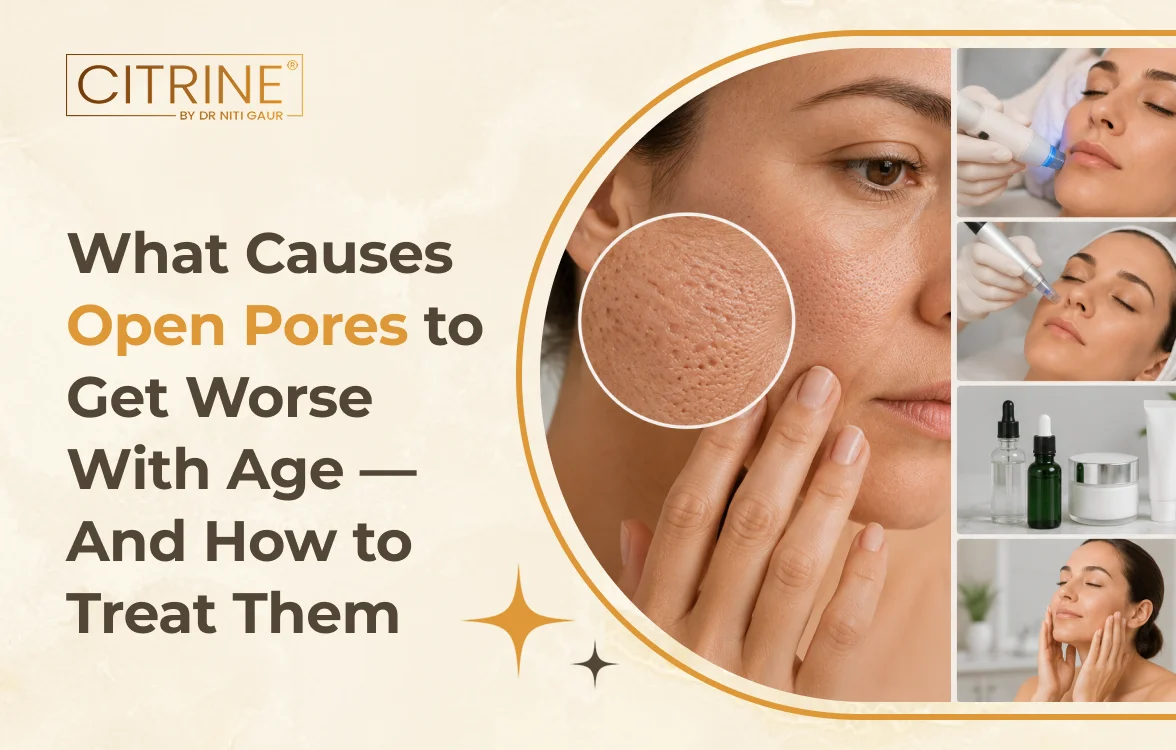
Have you ever observed that your pores were not always this noticeable, but your skincare routine hasn’t changed? You are regularly cleansing, moisturising, and applying sunscreen, yet the skin around the nose and cheeks doesn’t look smooth anymore. The internet is full of advice to promote ice cubes, masks, pore strips, serums, etc., claiming to close open pores.
In reality, pores don’t actually open and close; it is just that the skin undergoes several natural changes with age that make pores appear more prominent than they once did. The pores cannot be erased, but their appearance can be significantly improved with the right skincare habits and dermatologist-recommended treatments.
Let's understand why open pores become more visible over time and what actually works if you're hoping for smoother and healthier-looking skin.
Quick Summary
- Pores are a natural part of healthy skin and cannot be permanently "closed"
- Ageing causes a gradual loss of collagen and elastin, which makes the pores appear larger
- Sun damage is one of the biggest contributors to enlarged pores over time
- Oily skin, previous acne, and genetics also influence pore size
- Skincare ingredients like retinoids and niacinamide can improve the appearance of pores, while professional treatments often deliver more noticeable results
- According to Dr. Niti Gaur, understanding why pores look enlarged is the key to choosing the right treatment
Do Pores Actually Become Larger With Age?
The short answer to this concern is yes, but not in the way most people think. One of the skincare myths people have is that pores are like doors that open with heat and close with cold water. This is the reason so many people rub ice cubes on their faces to shrink their pores. Pores are the tiny openings in the skin connected to hair follicles and oil glands, and they release the natural oil (sebum) to keep the skin hydrated and protected.
The skin that supports the pores changes over time, which makes them appear larger as people age. When the surrounding skin loses elasticity, collagen, and firmness, the pore walls stretch slightly.
Why Do Open Pores Become More Noticeable With Age?
There is not a single reason behind enlarged pores but a result of several changes:
1. Decline in collagen: Collagen keeps the skin firm and well-supported, and it provides strength and structure to keep the skin smooth. As people age, collagen gradually declines, and the skin begins to lose support. Due to this, the tiny openings become more visible, as the surrounding tissue is not as firm as it used to be.
2. Skin loses elasticity: Elastin is an important protein that allows the skin to stretch and bounce back into place. With age, elastin fibres also begin to weaken. Due to less elastic skin, it doesn’t hold the pore walls tightly any longer.
3. Oily Skin: The enlarged pores are often most visible around the nose, cheeks, and forehead because these areas contain more oil glands. When sebaceous glands produce excess oil, the pores become more prominent. That’s why some younger people with oily skin may also experience enlarged pores.
4. Sun exposure: Sun damage may also contribute to enlarged pores, as skin without sun protection may be affected by ultraviolet (UV) rays that gradually break down collagen and elastin.
5. Acne: Inflammation caused by acne stretches the pore walls and damages the collagen. The structural changes may remain even after the acne has cleared.
6. Genetics: Some people naturally have larger pores simply because of their genetics, passed down from their parents with oily skin or visible pores.
While genetics determine your baseline pore size, lifestyle factors like sun exposure, smoking, skincare habits, and acne can influence how noticeable those pores become over time.
Can You Actually Shrink Open Pores?
The answer to this question surprises many people; no treatment can permanently shrink the physical size of your pores. But the thing is, it is not untreatable. Most effective treatments may not target the pore itself; they improve the skin around it.
When excess oil is controlled, collagen production increases, and dead skin cells are removed, the pores appear less visible. People should aim to achieve healthier skin with a smoother texture, instead of focusing on poreless skin.
How to Improve the Appearance of Open Pores at Home
A skincare routine won’t help with pores miraculously, but it can make them look less visible by keeping them clean and improving overall skin texture. Some skincare routines that may help:
1. Retinoids: Dermatologists recommend retinoids to improve skin texture. It is derived from vitamin A, which encourages faster cellular regeneration and boosts collagen production. This action helps keep the pores clean while also improving the surrounding skin.
2. Niacinamide: This skincare routine helps regulate oil (sebum) production, improves overall skin texture, and strengthens the skin barrier.
3. Salicylic Acid: Pores appear more visible because they are filled with oil and dead skin cells. Salicylic acid is oil-soluble and can penetrate inside the pores to dissolve excess oil. It makes pores cleaner and less visible.
4. Sunscreen: Since UV exposure gradually breaks down collagen, applying sunscreen every day helps protect the pores from becoming more visible with age.
According to a dermatology expert, Dr. Niti Gaur, many people spend on expensive skincare products while overlooking sun protection, even though it is one of the most effective long-term strategies for maintaining smooth skin.
Home Remedies: Helpful or Hype?
Some home remedies may be helpful, but some can be damaging, thanks to social media trends.
- Ice cubes: Ice may reduce puffiness temporarily and make the skin tighter, but it doesn’t shrink pores.
- Lemon Juice: Applying lemon juice directly to the skin may cause irritation and dryness, as it is a natural astringent.
- Baking soda: Despite its popularity, baking soda has an alkaline pH that may disrupt the skin barrier and lead to irritation.
- Clay masks: Clay masks may be helpful for oily skin, as it absorbs excess sebum and reduce surface oil, which makes the pores appear cleaner.
When Skincare Isn't Enough
Even the best skincare routine stops working after a point, when enlarged pores are mainly caused by collagen loss, acne scarring, or significant sun damage. This is where a dermatologist-approved procedure becomes valuable. These treatments focus on improving the quality and structure of the skin rather than just masking the visibility of pores.
Dermatologist Treatments That Actually Work
Dr. Niti Gaur explains that people with different concerns require different approaches. Understanding the root cause helps determine which treatment is suitable to deliver desired results.
- Chemical Peels: It gently exfoliates the skin, enhances cell regeneration, and reduces oil production. This treatment is useful for people with oily skin and uneven texture.
- Microneedling: Microneedling boosts collagen production, which helps improve skin firmness, making enlarged pores less noticeable.
- Laser Skin Rejuvenation: Laser treatments boost collagen beneath the skin’s surface while improving texture and sunburn areas. This treatment works best when the enlarged pores are associated with long-term sun damage.
- Radiofrequency (RF) Microneedling: It combines traditional microneedling with radiofrequency to boost collagen. It targets multiple layers of the skin and is often considered for patients with uneven skin texture, enlarged pore appearance, and mild skin laxity.
Why One Treatment Doesn't Suit Everyone
The reason why every person requires a completely different treatment plan is the structure of their skin. Someone with active oily skin may benefit from oil-regulating treatments, while someone with acne scars may require collagen-boosting procedures like microneedling.
This is why a personalised skin assessment is often more valuable than simply following the latest skincare trend.
At Citrine Clinic in Gurgaon, treatment planning begins with evaluating factors such as oil production, sun damage, skin quality, etc. Dr. Niti Gaur recommends treatments based on the assessment instead of advocating for a one-size-fits-all approach.
Conclusion
Open pores are a normal and natural part of healthy skin, but the way they appear can certainly change over time. Ageing, sun exposure, excess oil production, and acne contribute to enlarged pores, making them more visible.
Proper skincare and dermatological procedures can improve skin texture and enlarged pores by offering a range of treatments that boost collagen and reduce the appearance of enlarged pores in a way that home remedies simply cannot.
Dr. Niti Gaur believes that treating the underlying cause and not just the visible concern is what leads to healthier-looking skin over the long term.
Explore our clinic location & reviews.
View Citrine clinic location, directions, and reviews on Google Maps
Frequently Asked Questions (FAQs)
Do pore strips permanently remove blackheads and reduce pore size?
Pore strips may remove blackheads temporarily, but they don’t change the actual size of the pores.
Can dehydration make pores look larger?
Yes, dehydrated skin may appear rougher, which makes pores more visible even if their size hasn’t changed.
Can makeup enlarge pores?
Makeup doesn’t enlarge pores, but not cleansing properly can clog pores, which makes them appear more visible.
Why are enlarged pores more common around the nose and cheeks?
These areas contain more oil glands, making pores more visible, especially in people with oily skin.
Can collagen supplements reduce open pores?
Collagen supplements may support overall skin health, but only to some extent. Professional treatments generally produce more noticeable improvements.
At what age do pores usually start becoming more noticeable?
Many people begin noticing changes in their late 20s or 30s as collagen gradually declines.
How long does it take to see improvement after professional treatment?
It depends on the procedure and the skin’s condition. Treatments that boost collagen show gradual improvement.
About the Author