
 08 Aug 2026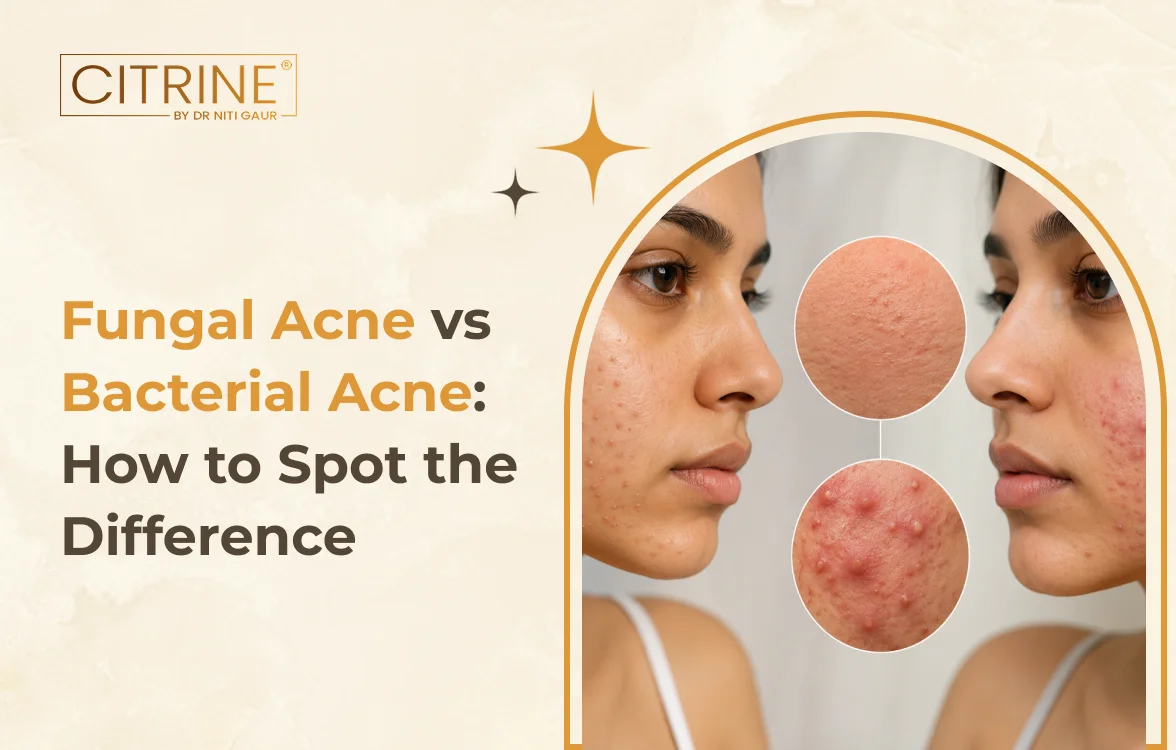
Not every inflammatory acne breakout is the result of bacterial growth. Some people have stubborn bumps on their face, back, or chest and think that’s regular acne (acne vulgaris) that can be cleared with acne medications or skincare topicals. Their assumption is wrong when their consistently used over-the-counter products provide no improvement. That could mean the underlying reason is different, most probably an overgrowth of fungus/yeast.
Whether it’s regular bacterial acne or fungal acne, properly identifying the cause/type of acne is very important. In this article, Dr. Niti Gaur, dermatologist in Gurgaon at Citrine Clinic explains how to spot the difference so the sufferer knows which treatment and skincare routine will work properly and can follow them without delay. A personalized acne assessment by a dermatologist is essential to make no mistakes in diagnosis and treatment.
Quick Summary About Fungal Acne vs Bacterial Acne
- Fungal acne is caused by Malassezia yeast, while Cutibacterium acnes causes bacterial acne.
- Fungal acne arises as uniform itchy bumps.
- Bacterial acne can present with papules, pustules, nodules, and cysts.
- Fungal acne typically affects the forehead, chest, back, and shoulders.
- Bacterial acne is more common on the face, jawline, chest, and back.
- The right treatment depends on the dermatologist's diagnosis.
What Causes Fungal Acne?
Fungal acne is not a typical acne breakout, but its appearance may mimic bacterial acne. In fact, it is an inflammatory dermatological concern that is clinically referred to as Malassezia folliculitis. The condition is caused by an overgrowth of naturally occurring fungus/yeast called Malassezia inside the hair follicles. Under hot and humid environmental conditions, Malassezia rapidly multiplies and causes itchy, follicular bumps.
Things to know about Fungal Acne
- It is clinically known as: Malassezia folliculitis.
- Caused by: Overgrowth of Malassezia yeast in the hair follicles that leads to inflamed follicles
- Triggers: Hot humid weather, excessive sweating, tight clothing, oily skincare products, prolonged use of antibiotics, and a weakened immune system
- Symptoms: Uniform, itchy bumps
- Affected areas: Forehead, chest, shoulders, back, and upper arms
- Treatment: Oral or topical antifungals and proper skincare/healthy lifestyle.
What Causes Bacterial Acne?
Bacterial acne is the regular/true acne breakout, clinically referred to as acne vulgaris. It results from clogged pores with extra sebum, skin cell debris, impurities, and acne-causing bacteria. Oily skin is a major contributor to such acne, while other triggers include hormonal fluctuation, genetic predisposition, diet, stress, and certain cosmetics. Unlike fungal acne, this acne can manifest as various forms of inflammatory lesions at the same time. It ranges in severity from red, inflamed bumps to cystic lesions, so each type needs a targeted treatment.
Things to know about Fungal Acne
- It is clinically known as: Acne vulgaris.
- Caused by: Overgrowth of Cutibacterium acnes in pores plugged with excess sebum, dead skin cells, and impurities that lead to inflammation
- Triggers: Hormonal imbalance, oily skin, some dietary choices, genetics, stress, and exposure to pollutants
- Types: Papules, pustules, nodules, and cysts
- Common symptoms: Redness, inflammation, painful discomfort
- Affected areas: Face, chin, jawline, back, and chest
- Treatment options: Topical retinoids, benzoyl peroxide, salicylic acid, antibiotics, and oral medications for moderate to severe acne.
Fungal Acne vs Bacterial Acne: Quick Comparison
Here are the key distinguishing factors to consider:
| Feature | Fungal Acne | Bacterial Acne (Inflammatory acne breakouts) |
|---|---|---|
| Appearance and texture | Clusters of uniform, small, itchy bumps | Papules: Small, red or discolored tender bumps Pustules: Pus-filled papules Nodules: Large, firm, solid, deep-seated lesions Cysts: Pus-filled nodules |
| Location of Occurrence | Areas where oil and sweat build up, like the forehead, cheeks, and upper back | Oily areas like the face, back, chest, and shoulders |
| Triggers | Hot and humid environment, excessive sweating, use of heavy/occlusive skincare products | Excessive oil production, hormonal imbalance, and certain stressors |
| Response to acne medications | Usually, poor | Lesions improve (if consistent with treatment) |
Diagnosis of the Type of Acne
Self-diagnosis can be difficult, especially when fungal acne and bacterial acne have overlapping symptoms and both are present at a time. Most over-the-counter products or acne medications work on bacterial acne, not fungal acne. So, random treatments based on assumptions can worsen the lesions instead of clearing the skin if the acne type is misdiagnosed.
Consulting a dermatologist can lead to an accurate diagnosis and an appropriate treatment plan for clear skin.
The diagnosis is usually based on:
- Patient’s medical records- the symptoms' duration, sweating, recent use of antibiotics, and previous acne treatments
- Skin examination- the appearance and location of the breakouts
- Additional tests (if needed)- like skin scraping, microscopic examination, and laboratory testing.
Also Read: Monsoon Humidity: Why Fungal Infections & Rashes Spike
Most Effective Treatment and Preventive Strategies Based on Acne Type
Treatments for fungal acne aim for reducing the overgrowth of Malassezia. Dermatologists may recommend:
- Antifungal creams, cleansers, or shampoos- for direct application on acne to inhibit fungal growth and calm inflammation
- Prescription oral antifungal- for moderate to severe, stubborn cases
- Opting for lighter formulations of skincare products in hot and humid weather
- Lifestyle modifications- including regular cleansing and wearing breathable clothes to avoid conditions that exacerbate fungal growth.
For bacterial acne, the treatment plan is customized based on the type and severity of lesions. Dermatologists may recommend:
- Topical treatments containing retinoids, salicylic acid, benzoyl peroxide, or antibiotics to inhibit bacterial growth, calm inflammation, and encourage skin cell turnover in mild cases
- Hormonal therapy in selected women with hormonal imbalance
- Oral antibiotic or isotreti-noin in moderate to severe cases
- Proper, consistent skincare regimen involving twice-daily gentle cleansing and avoidance of harsh/comedogenic products.
Final Takeaway
Many people confuse fungal acne with bacterial acne, but they are two different skin conditions with different causes and treatments. Understanding the causes, triggers, and symptoms can lead to effective acne management. From accurate diagnosis to lifestyle modifications and professional guidance, everything about a skincare routine should be tailored to meet unique needs.
Still unsure whether it’s fungal acne or bacterial acne?
Get a professional skin assessment at Citrine Clinic, Gurgaon, for an accurate diagnosis and a personalized treatment plan.
Book your consultation with Dr. Niti Gaur for clearer, healthier skin. Dr. Niti Gaur is a top-notch dermatologist with expertise in medical and cosmetic skin treatments. Get a personalized, budget-friendly fungal and bacterial acne treatment plan in Gurgaon for clearer, healthier skin.
Check our clinic location and verified Google reviews before your visit.
FAQs About Fungal Acne vs Bacterial Acne
Does fungal acne itch?
Yes, itching is the main distinguishing characteristic of fungal acne.
Can fungal acne turn into bacterial acne?
Fungal acne does not directly turn into bacterial acne, but both conditions can occur together. If one scratches itchy fungal acne it can irritate the skin, and damage its barrier, and increase the risk of secondary bacterial infection.
Why is my acne not improving with acne creams?
If you have consistently tried acne creams, then probably the acne is fungal, not bacterial. See a dermatologist for confirmation and proper treatment.
Can antibiotics make fungal acne worse?
Yes, prolonged use of certain antibiotics may disrupt the normal balance of skin’s microflora, thus making it easier for Malassezia yeast to multiply and cause fungal acne.
Can I have fungal acne and bacterial acne at the same time?
Yes, it's possible, and then a combination approach will only work.
When should I see a dermatologist for acne?
Itchy, persistent, and recurring acne breakouts should be shown to a dermatologist for precise diagnosis and proper treatment.
About the Author