
 13 Jun 2026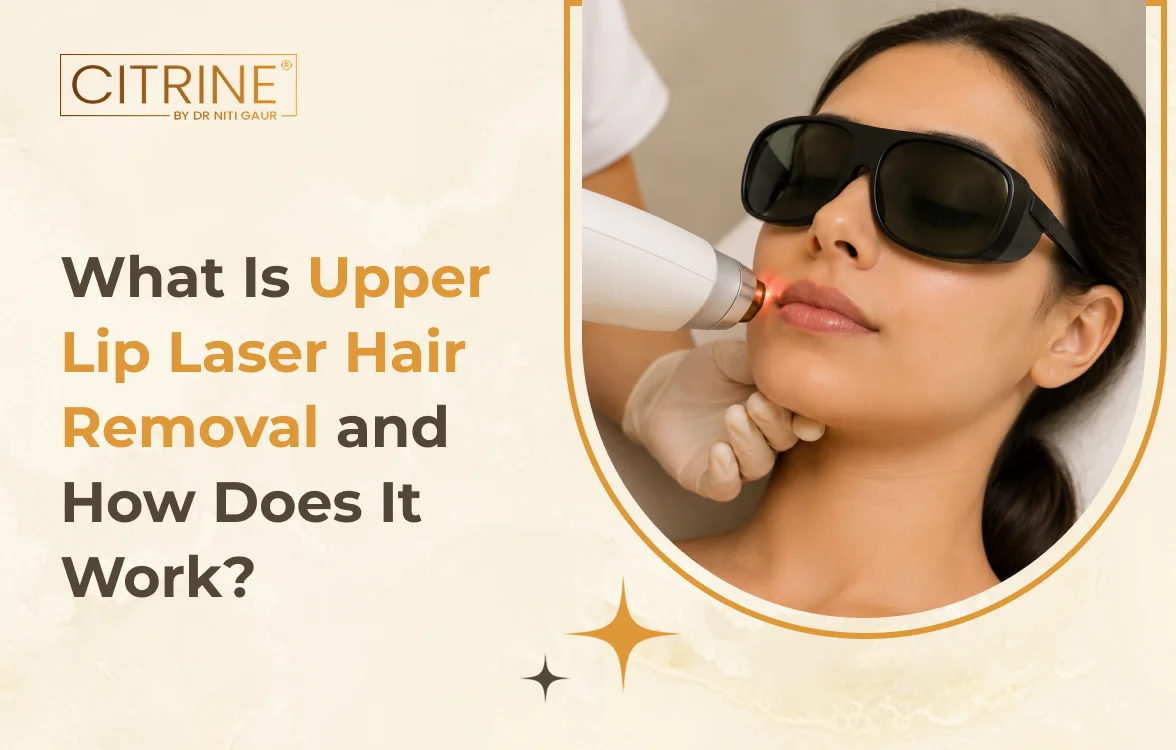
Quick Summary
- Upper lip laser hair removal uses focused light energy to destroy hair follicles at the root.
- Sessions take under 10 minutes with no downtime required afterward.
- Most patients need 6 to 8 sessions spaced 4 to 6 weeks apart.
- Works on all skin tones when the correct laser type is selected.
- Achieves up to 85 to 90% long-term hair reduction after completing the full treatment course.
What Is Upper Lip Laser Hair Removal?
The upper lip hair removal procedure involves the use of highly concentrated light that specifically targets hair follicles under the skin’s surface. The procedure is performed by expert professionals who make use of lasers made specifically for facial skin.
Unlike shaving and waxing that pulls hair from the surface, this advanced procedure goes much deeper. It destroys the follicle which is responsible for producing hair. With each session, fewer follicles remain active, and the hair that does grow back is much thinner, and lighter.
It is one of the most requested facial treatments globally, and for good reason. It is not a large area on the body, but any hair that grows here becomes highly noticeable, hence, may cause discomfort.
Upper Lip Laser Hair Removal at a Glance
| Feature | Details |
| Area treated | Upper lip (small, precise area) |
| Duration of session | 5 to 10 minutes |
| Number of sessions needed | 6 to 8 (depends on hair type and skin tone) |
| Interval between sessions | Every 4 to 6 weeks |
| Level of pain | Mild (like a rubber band snap) |
| Downtime | None to minimal |
| Results visible from | Session 3 onward |
| Hair reduction | Up to 85 to 90% after completing sessions |
| Laser types used | Diode, Nd:YAG, Alexandrite |
| Skin types suitable | All skin types with the right laser |
| Maintenance | 1 to 2 touch-up sessions per year if needed |
How Does the Upper Lip Laser Hair Removal Procedure Work?
Here is what happens during upper lip laser hair removal procedure:
- Light targets the pigment: The device releases light which is absorbed by the melanin, i.e. the pigment in the hair.
- The light energy converts into heat: Once the light gets absorbed by the hair, it instantly turns into heat energy.
- Heat reaches the root of hair: Heat energy penetrates deeper to reach the hair follicles where cells responsible for hair growth get destroyed.
- Surrounding skin hair stays unaffected: The laser is aimed at the pigment in the hair, leaving surrounding tissue intact.
- Multiple sessions required: The hair grows in cycles, but this procedure is effective only when hair follicles are in the growing stage. Since not all hairs are in this phase at the same time, several sessions are required to treat them all.
- Regrowth reduces over time: With each session, more follicles are disabled. Hair grows back finer and sparser, for most patients, growth stops almost entirely.
The Three Phases of Hair Growth (And Why They Matter)
| Growth Phase | What Happens | Laser Effectiveness |
| Anagen (Active Growth) | Hair is connected to the blood supply at the root | High as laser can destroy the follicle |
| Catagen (Transition) | Hair detaches from blood supply | Low as follicle is not active |
| Telogen (Resting) | Hair is dormant before shedding | Minimal as no target for the laser |
At any given time, only about 20 to 30% of your upper lip hairs are in the anagen phase. This is precisely why 6 to 8 sessions are the clinical standard.
Which Laser Is Right for You?
Not all lasers work equally well across skin tones. This is one of the most important things to discuss with your dermatologist before starting.
| Laser Type | Wavelength | Best For | Key Note |
| Alexandrite | 755 nm | Light to medium skin tones | Fast, effective for fine hair |
| Diode | 800 to 810 nm | Light to olive skin tones | Good balance of speed and depth |
| Nd:YAG | 1064 nm | All skin tones, including darker skin | Safest option for Indian skin tones |
| IPL (Intense Pulsed Light) | Broad spectrum | Light skin with dark hair | Not a true laser; less precise |
For patients with Indian skin tones, Nd:YAG lasers are generally the most suitable because they carry a lower risk of pigmentation changes. At Citrine Clinic, Dr. Niti Gaur evaluates each patient's skin type and hair before deciding on a laser and protocol.
Step-by-Step: What Happens During Upper Lip Laser Hair Removal Procedure
- Consultation and patch test: During consultation, the doctor reviews your skin tone, hair type, and medical history. Patch test determines whether your skin can react well to the procedure before proceeding further.
- Preparation: The area will be cleansed, and cooling gel might be used to protect the skin.
- Protecting eyes: Protective eyewear will be worn during the entire process.
- Application of laser: The device is used on the upper lip, and pulses of energy are delivered in the follicles beneath the skin’s surface.
- Post-treatment care: A cold compress or gel will be used after the process, and instructions will be provided before going back home.
This whole process will take less than 10 minutes, and no recovery period is needed.
Benefits of Upper Lip Laser Hair Removal
- Long-lasting results: Once all sessions are completed, hair growth reduces.
- Better skin texture: The laser procedure helps eliminate the skin discoloration that waxing causes.
- No ingrown hair: The follicle will be targeted, therefore, there will be no broken hair strands left within the skin.
- Discomfort reduces: Cooling technology ensures that sessions are more comfortable than waxing.
- Quick procedure: The session takes 10-15 minutes.
- Precised treatment: Only the hair follicle is treated and not the surrounding skin.
Limitations of Upper Lip Laser Hair Removal
- Several sittings are always required; there is no quick fix.
- Best suited for dark hair; lighter shades such as grey or blonde don’t work well with it.
- Hormonal disorders like PCOS might require more maintenance sessions.
- Exposure to sunlight is to be avoided both before and after the treatment.
- Should not be done during pregnancy
What Results Can You Realistically Expect With Upper Lip Laser Hair Removal?
Session 1 to 2: Some hair might shed in the weeks after each session. Skin feels smoother but reduction is not much noticeable yet.
Session 3 to 4: Noticeable reduction in hair density. New hair growth is thinner and lighter. Patients start noticing a difference here.
Sessions 5 to 6: Significant reduction. Several patches may show no regrowth at all.
After completing all sessions: Most patients achieve 80 to 90% long-term hair reduction. Those with hormonal hair growth may benefit from one or two maintenance sessions a year.
Factors That Influence the Cost of Upper Lip Laser Hair Removal
Upper lip laser hair removal cost varies from person to person. The total depends on:
- Type of laser technology used
- Number of sessions required based on hair and skin type
- Clinic location and whether treatment is supervised by a dermatologist
- Whether maintenance sessions are needed down the line
The upfront cost is higher than waxing or threading, but when you factor in how often those need to be repeated, the laser often works out to be more economical over time.
Pre-Treatment and Post-Treatment Care
Before Your Session
- Stop waxing, threading, or plucking at least 3 to 4 weeks before (shaving is fine)
- Avoid sun exposure and tanning 48 hours before each session
- Skip retinoids, AHAs, and BHAs on the area a few days before treatment
- Share your full medication list with your dermatologist, especially hormonal medications
After Your Session
- Use a cool compress for any redness or swelling
- Apply a gentle, fragrance-free moisturiser
- Use SPF 30 or higher sunscreen every day
- Avoid heat, steam, and exercise for 24 to 48 hours
- Do not pick at any crusting or scabbing
Who Is a Good Candidate for Upper Lip Laser Hair Removal?
You are likely a good candidate if you:
- Have dark, coarse hair on the upper lip
- Have a light to medium skin tone (Alexandrite or Diode works well)
- Have a darker skin tone (Nd:YAG is the recommended option)
- Are tired of constant waxing, threading, or dealing with ingrown hairs
- Have hormonal hair growth and want a longer-term management option
Consider consulting first if you:
- Are pregnant or breastfeeding
- Have an active skin infection or open wound in the area
- Take photosensitising medications
- Have a history of keloid scarring
Final Takeaway
Upper lip laser hair removal is a practical, well-tolerated option for anyone dealing with recurring facial hair. The sessions are short, the downtime is minimal, and the results build gradually over a few months into something genuinely long-lasting.
It is not a single-session fix, and it works better for some hair and skin types than others. But when it is done right, by a qualified dermatologist using appropriate technology for your skin, it consistently delivers results that no threading appointment or waxing strip ever can.
As dermatologists such as Dr. Niti Gaur often emphasize, achieving the best outcomes requires an individualized approach that considers your skin type, hair characteristics, and treatment goals. At Citrine Clinic, the focus is on thorough evaluation and evidence-based treatment planning, helping patients make informed decisions about their laser hair removal journey.
Start with a proper consultation, ask the right questions, and go in with realistic expectations. To book a consultation, contact Citrine Clinic now.
You can also check our clinic location and patient reviews before visiting.
View Citrine clinic location, directions, and reviews on Google Maps
Frequently Asked Questions
1. How many sessions does upper lip laser hair removal require?
Patients usually require 6 to 8 sessions at 4 to 6 week intervals. This will depend on the hair density, color, and hormone factors.
2. Does the upper lip laser hair removal treatment hurt?
It feels like a quick rubber band snap against the skin. Modern devices with built-in cooling make it much more comfortable than waxing.
3. Can upper lip laser hair removal be performed on Indian skin?
Yes, but it needs to be performed using the right lasers. Nd: YAG lasers should be used for Indian skin and darker skin as it will not cause pigmentation concerns.
4. Can lasers cause skin darkening on the upper lip?
Incorrect settings can cause temporary darkening, but with proper technique and the right laser this risk is very low. In fact, lasers often reduce the darkening left behind by years of waxing.
5. How long does an upper lip laser hair removal session take?
Upper lip sessions typically take 5 to 10 minutes. It is one of the fastest laser treatments available.
6. What if I have PCOS or a hormonal imbalance?
Laser still works, but hormonal conditions may trigger new follicle activity over time. You may need periodic maintenance sessions to stay on top of regrowth.
7. Can I wear makeup after laser hair removal?
Wait at least 24 hours before applying anything to the area. If you need coverage sooner, a gentle mineral product is the safer choice.
8. Will I need maintenance sessions after the upper lip laser hair removal process?
Not necessarily. Those patients whose hormones are stable generally do not require it, while those with hormonal hair growth patterns can benefit from it once or twice annually.
9. Is laser good for upper lip hair removal?
Yes, it is one of the most effective options for removing unwanted hair on the upper lips.
10. Can men get upper lip laser hair removal?
Yes, the procedure works the same way for men. Results may vary slightly depending on hair thickness and density.
About the Author