
 19 Jun 2026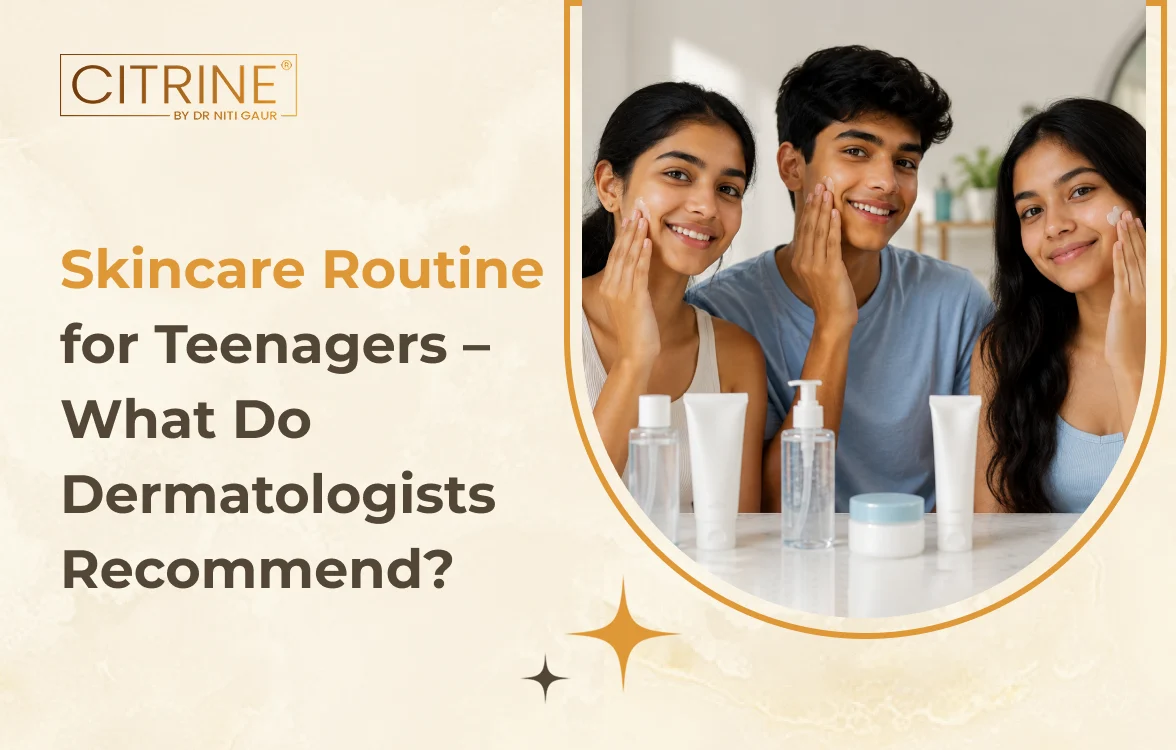
Quick Summary
- Teenage skin differs from that of an adult and requires a simpler approach.
- The 3 simple steps dermatologists recommend for teenagers include cleanser, moisturizer, and sunscreen.
- Hormonal changes often lead to skin concerns such as acne and oily skin in teenagers.
- There are many skincare ingredients available online that might be quite harsh on teenage skin.
- Boys too need skincare, and their regimen is simple.
- The night time skincare routine is just as important and tends to be overlooked by most teens.
- Knowing when to see a dermatologist can prevent long-term skin damage and scarring
Introduction
Teenage years bring several changes to the skin. Hormonal changes during puberty increases production of oil, making teenagers more prone to blackheads, acne and whiteheads. Nowadays, social media trends and influencer-driven skincare routine does more harm than good.
Dermatologists such as Dr. Niti Gaur advise keeping a skincare routine simple and it should be based on individual skin needs. Instead of adopting every trending product suggestion, it is essential for teenagers to understand their skin type, and adopt healthy skincare practices early.
This blog details what dermatologists recommend for teenage skin, skin problems faced by teens, skincare routine for teenagers, ingredients to avoid, and when to consult a dermatologist.
How Is Teen Skin Different from Adult Skin?
Teen skin is not just "younger adult skin." It behaves differently, and that matters when choosing products.
| Feature | Teen Skin | Adult Skin |
| Sebum (oil) production | Higher, especially during puberty | Declines with age |
| Skin thickness | Thinner and more sensitive | Thicker, but loses collagen over time |
| Cell turnover | Faster | Slower |
| Primary concerns | Acne, oiliness, blackheads, sensitivity | Fine lines, dullness, pigmentation, dryness |
| Barrier function | Can be easily disrupted by harsh products | More stable but loses moisture with age |
| Hormonal influence | Strong (testosterone, estrogen surges) | Less dramatic hormonal swings |
Because teen skin produces more oil and has a faster cell turnover, it is more prone to clogged pores and breakouts. It is also more reactive, which means it can get irritated faster when exposed to harsh actives.
Why Is Teenage Skincare Important?
- Aids in reducing the excessive amount of oil
- Reduces acne breakouts
- Prevents clogged pores
- Protects against sun damage
- Maintains skin barrier health
- Promotes overall health of your skin
- Avoids risk of acne marks
Implementing these early helps teenagers learn healthy habits that continue into adulthood.
Understanding Different Skin Types in Teenagers
Knowing the skin type will assist in choosing the most effective product.
1. Oily Skin
Features:
- Shiny appearance
- Large pores
- Pimples and blackheads often
Emphasis should be on:
- Mild cleansers
- Light moisturizers
- Non-comedogenic products
2. Dry Skin
Features:
- Feeling tightness
- Flakiness
- Uneven skin texture
Emphasis should be on:
- Hydrating cleansers
- Moisturizers
- Ingredients that strengthen the barrier
3. Combination Skin
Features:
- Oily “T-zone”
- Dry to normal cheeks
Emphasis should be on:
- Balanced skincare products
- Lightweight moisturizers
4. Sensitive Skin
Features:
- Redness
- Burning/stinging sensation
- Irritability
Emphasis should be on:
- Products without fragrance
- Minimum Ingredients
- Gentle skincare
5. Normal Skin
Features:
- Normal oil production
- Little sensitivity
- Acne free
Concerns:
- Maintain consistency
- Sunscreen every day
Common Skin Concerns Faced by Teenagers
Several skin concerns become more common during adolescence.
Acne
- Whiteheads
- Blackheads
- Pimples
- Cystic acne
Excess Oil
Hormonal changes stimulate sebaceous glands, leading to oily skin.
Enlarged Pores
Increased oil production can make pores appear larger.
Skin Sensitivity
New skincare products may trigger irritation or redness.
Uneven Skin Tone
Post-acne marks and inflammation can leave temporary pigmentation.
Dandruff and Scalp Oiliness
Many teenagers experience scalp-related skin concerns alongside facial issues.
Dermatologist-Recommended Morning Skincare Routine for Teenagers
Keep it simple. There are only three steps that will cover almost everything that teenagers need.
Step 1: Cleanser
- Use a non-fragranced cleanser.
- Always wash your face with lukewarm water.
- For oily and acne-prone skin: look for salicylic acid (0.5%-2%) or benzoyl peroxide (2.5%-5%)
- For dry skin: use a moisturizing soap-free cleanser with ceramides or glycerin.
- Wash for 30-60 seconds and pat dry.
Step 2: Moisturizer
- Individuals with oily skin also require moisturizer, skipping that leads to more oil production.
- It is essential to select non-comedogenic (that does not clog pores) products and light-weight formulas.
- Oily skin requires gel-formulas or water-based moisturizers.
- Dry skin needs light-cream formulas containing hyaluronic acid or ceramides.
Step 3: Sunscreen (Absolutely Mandatory)
- Use SPF 30 or above every morning without fail.
- Look for mineral sunscreens with zinc oxide or titanium dioxide for sensitive skin.
- Oil-free, matte or gel sunscreens are recommended for oily skin.
Night Care Routine for Teenagers
Step 1: Cleanse Again
- Clean sunscreen, sweat, and pollution you’ve accumulated during the day.
- Do this with the same gentle cleanser.
Step 2: Treatment (If Required)
- Apply any treatment products only if recommended by a dermatologist.
- For treating acne, benzoyl peroxide and salicylic acid can be used.
- Don’t use a lot of active ingredients at once, as this damages your skin’s barrier.
Step 3: Moisturize
- Skin is most receptive to hydration at night time.
- For dry skin, apply a thicker moisturizer compared to the one you use during daytime.
- If you have oily skin, use light-weight moisturizers.
What teens do NOT need at night:
- Retinol (which is known to cause irritation; use only if recommended by a dermatologist)
- Face oils
- Multiple layered serums
- Vitamin C at night (it is more effective when used in the morning)
Skincare Routine for Teenage Boys
Boys are often left out of skincare conversations, but their skin has distinct needs, especially because testosterone drives higher oil production.
- Boys experience more oil and shine, particularly on the nose and forehead.
- Shaving introduces micro-cuts and irritation, making barrier care even more important.
- Many boys skip moisturizer assuming oily skin does not need it, this is a common mistake.
Simple Routine for Boys:
| Step | Morning | Evening |
| Cleanse | Gentle gel cleanser | Same cleanser post-shaving |
| Moisturize | Lightweight, oil-free moisturizer | Light moisturizer or balm after shaving |
| Sun protection | SPF 30+ (oil-free formula) | Not needed |
| Shaving tip | Use a clean razor, shave after washing | Apply a fragrance-free aftershave balm |
Best Skin Care Products for Teens
There is no single best skincare product for every teenager.
Product selection depends on:
- Skin type
- Acne severity
- Skin sensitivity
- Existing skin conditions
Categories commonly recommended by dermatologists
| Product Type | Purpose |
| Gentle cleanser | Removes dirt and oil |
| Moisturizer | Supports skin barrier |
| Sunscreen | Protects from UV damage |
| Acne treatment | Helps manage breakouts |
| Lip balm | Prevents dry lips |
Skincare Ingredients for Teens to Avoid
Many trending products contain ingredients that are simply not appropriate for teenage skin.
| Ingredient | Why Teens Should Avoid It |
| Retinol / Retinoids (OTC) | Very irritating to young skin; can damage barrier; only use if prescribed |
| Alpha Hydroxy Acids (AHAs) | Glycolic and lactic acid increase sun sensitivity; too harsh for daily use in teens |
| High-strength Vitamin C | Can irritate sensitive skin; rarely needed unless addressing hyperpigmentation |
| Alcohol-based toners | Strip natural oils and disrupt skin barrier |
| Physical scrubs | Micro-tears in skin; worsen acne and sensitivity |
| Heavy essential oils | Can clog pores and trigger reactions in acne-prone skin |
Common Skincare Mistakes Teenagers Make
- Avoid over-washing the face: The face should not be washed more than twice a day as it triggers oil production and makes acne worse.
- Not using sunscreen: Do not forget to apply sunscreen.
- Popping pimples: This drives the bacteria into your skin, leading to inflammation, which causes scars that take years to heal.
- Using adult anti-aging products: Products formulated for aging skin have actives that are far too strong for teenage skin.
- Skipping moisturizer with oily skin Dehydrated skin overcompensates by producing more oil. Moisturizer is not optional.
- Sharing products with friends Sharing face products transfers bacteria and can spread infections or trigger breakouts.
- Using dirty phone screens and pillowcases These are breeding grounds for bacteria that transfer directly onto skin throughout the day.
Lifestyle Habits That Improve Teenage Skin
- Drink enough water
- Sleep 8 to 10 hours every night
- Eat a balanced diet and limit sugary, high-glycemic foods
- Cleanse your face after exercising
- Manage stress
- Avoid touching your face throughout the day
Common Misconceptions About Teen Skincare
"Oily skin does not need moisturizer." It does. Skipping moisturizer causes dehydration, which signals the skin to produce even more oil.
"Popping a pimple makes it go away faster." It makes it worse. Popping a pimple increases inflammation, introduces new bacteria, and significantly raises the risk of scarring.
"More products mean better results." More products mean more chances for irritation, breakouts, and barrier damage.
"Teen acne always goes away on its own." While some acne resolves after puberty, moderate to severe acne should not be left untreated. The scarring is permanent; the acne eventually resolves.
When Should a Teenager See a Dermatologist?
A basic routine handles mild skin concerns, but some situations genuinely need professional care.
See a dermatologist if:
- Acne is moderate to severe (large, painful, cystic breakouts)
- Over-the-counter products have not helped after 8–12 weeks of consistent use
- Breakouts are leaving dark marks or scars
- The skin condition is affecting self-confidence or mental health
- There are signs of eczema, psoriasis, or unusual rashes
- A teen is considering starting retinoids or prescription-strength treatments
- Sudden or unusual skin changes occur
Starting prescription treatment early for conditions like cystic acne can prevent permanent scarring. Waiting too long is one of the most common and avoidable mistakes dermatologists see.
Final Takeaway
Teenage skin requires a simple skincare routine rather than aggressive treatments. Fluctuations in hormones often lead to acne, excess production of oil, and blackheads. However, these skin concerns can be managed with a simple skincare routine that includes cleansing, moisturizing and sunscreen.
Knowing your skin type, avoiding common skincare mistakes, and maintaining a healthy lifestyle can improve skin health. When acne becomes painful and causes scars, seeking advice from a dermatologist is essential.
Renowned dermatologists like Dr. Niti Gaur at Citrine Clinic offers personalized skincare plans because no single routine would work for all teenagers. The most effective skincare routine is the one that is simple and tailored to individual skin needs.
To get a personalized treatment plan according to your skin type, book a consultation with Dr. Niti Gaur at Citrine Clinic.
You can read patient reviews before visiting the clinic.
You can also check our clinic location and patient reviews before visiting.
View Citrine clinic location, directions, and reviews on Google Maps
FAQs – Teenage Skincare: What People Ask Most
1. What is the best skincare routine for a 13-year-old?
A gentle cleanser, a lightweight non-comedogenic moisturizer, and a mineral SPF 30 sunscreen. That is all that is needed at 13.
2. Should teenagers use toner?
Most teens do not need toner. If used, it should be alcohol-free and hydrating. Many alcohol-based toners strip the skin barrier and worsen acne.
3. Can teenagers use retinol?
Not over-the-counter retinol products. Retinoids in teenage skin should only be used under dermatologist supervision, typically for acne treatment, not general skincare.
4. How often should teenagers wash their face?
Twice daily, once in the morning and once at night. Washing more often strips natural oils and worsens breakouts.
5. Can diet cause acne in teenagers?
Research suggests high-glycemic diets and, in some individuals, dairy can worsen acne. But diet alone is rarely the sole cause. A dermatologist can help evaluate this.
6. Should teenagers use face masks?
Occasionally, a simple kaolin clay mask for oily skin can be helpful. Daily or frequent masking is unnecessary and can be irritating. Skip anything with harsh beads or heavy fragrance.
About the Author