

 17 May 2026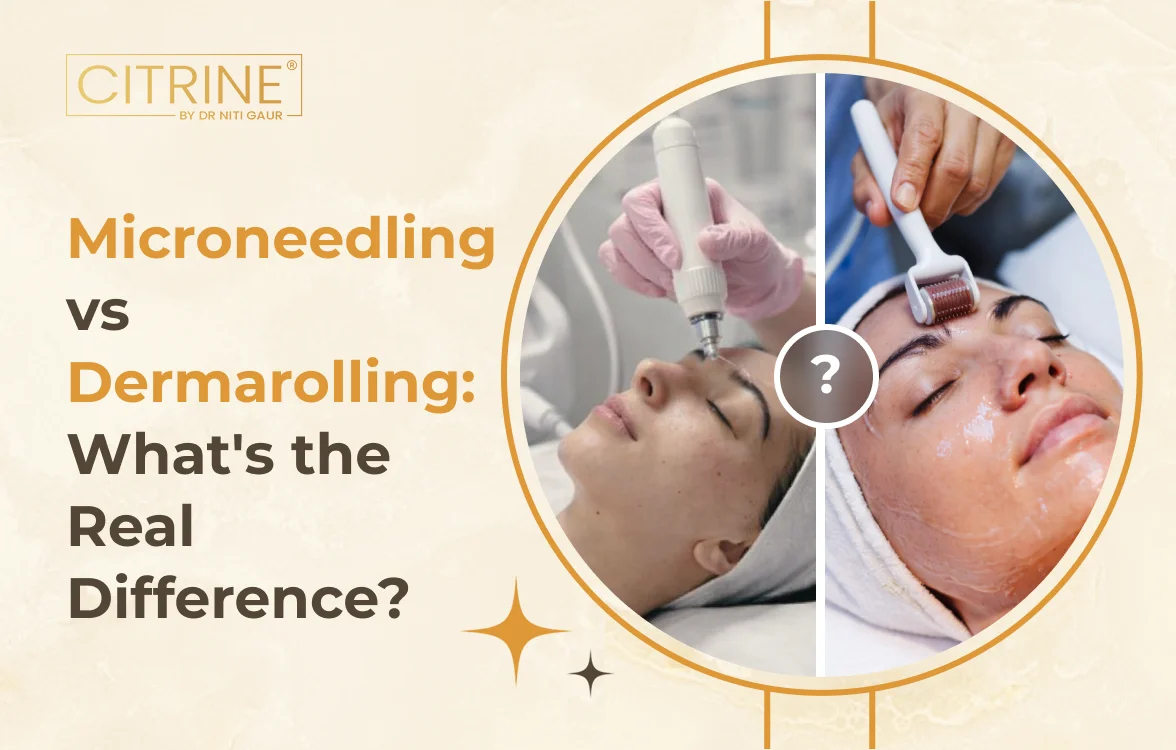
Skin rejuvenation treatments have evolved rapidly in recent years. Among the most searched skin procedures today, microneedling and dermarolling continue to dominate conversations around acne scars, open pores, pigmentation, fine lines, and collagen stimulation. Many people assume they are the same treatment. They are not.
While both procedures involve controlled skin needling, the technology, precision, safety, and results can differ significantly. Choosing the right treatment depends on your skin condition, downtime expectations, and long-term goals.
At Citrine Clinic, Dr. Niti Gaur often sees patients confused between dermarollers and clinical microneedling procedures. The wrong choice can sometimes worsen inflammation, trigger pigmentation, or delay visible improvement.
This blog explains the real difference between microneedling and dermarolling. If you are considering collagen induction therapy, acne scar treatment, anti-aging procedures, or skin texture correction, this guide will help you make an informed decision.
Quick Snapshot: What Are These Treatments?
Microneedling
- Uses a motorised pen with disposable sterile tips
- Needle depth: 0.5mm to 2.5mm (adjustable per zone)
- Reaches the dermis — the skin's collagen layer
- Numbing cream applied before the session
- Clinical-grade, sterile, single-use environment
- Best for: acne scars, wrinkles, pigmentation, large pores, skin laxity
Dermarolling
- Uses a manual handheld roller with fixed needles
- Needle depth: 0.25mm to 0.5mm (surface-level only)
- Works primarily on the epidermis
- No numbing and mild discomfort possible
- Sterility depends entirely on user care and habit
- Best for: improving product absorption, mild texture upkeep
What is Microneedling?
Microneedling is a minimally invasive dermatology treatment that creates controlled micro-injuries in the skin using a motorized device with sterile fine needles.
These tiny punctures stimulate the body’s natural healing response.
Consequently, the body's production of collagen and elastin gets stimulated.
Microneedling is commonly indicated for:
- Acne scarring
- Large pores
- Fine lines
- Uneven skin texture
- Hyperpigmentation
- Stretch marks
- Skin revitalization
- Hair regrowth
At Citrine Clinic, Dr. Niti Gaur tailors microneedling procedures according to the client's skin type, sensitivity, and severity of concern. This is particularly essential for Indian skin, which is more susceptible to post-inflammatory hyperpigmentation.
What Is a Dermaroller?
Dermaroller uses a handheld roller covered with tiny needles. The device is manually rolled over the skin to create superficial microchannels.
It is one of the earlier forms of collagen induction therapy.
Most dermarollers are used for:
- Skin maintenance purposes
- Product absorption
- Skin texture improvement
But there are some drawbacks associated with dermaroller treatment:
- Uneven pressure application
- Lack of precision
- Risk of skin tearing
- Hygiene concerns
- Difficulty treating sensitive areas
Microneedling vs Dermarolling: Difference Between the Two
| Factors | Microneedling | Dermaroller |
| Device Type | Motorized pen with disposable sterile tips | Manual roller with fixed needles |
| Needle Depth | 0.5mm – 2.5mm (fully adjustable) | 0.25mm – 0.5mm (fixed) |
| Skin Layer Targeted | Dermis (deep layer) | Epidermis (surface layer) |
| Collagen Stimulation | Significant — reaches the collagen layer | Mild — mostly surface stimulation |
| Customization | Fully adjustable for skin type and concern | No customization available |
| Pain Level | Minimal — numbing cream applied beforehand | Mild discomfort, no numbing |
| Sterility | Clinical sterile setting, single-use tips | Depends entirely on user hygiene |
| Risk Level | Very low when performed by a professional | Moderate |
| Downtime | 24 to 72 hours of redness | A few hours of mild redness |
| Results Timeline | Visible in 4–8 weeks; peak at 3 months | Gradual over 3–4 months of consistent use |
| Best For | Acne scars, wrinkles, pigmentation, laxity | Product absorption, mild texture improvement |
Dermarolling vs. Microneedling: What’s the Real Difference?
Both dermarolling and microneedling work by creating tiny micro-injuries in the skin to stimulate collagen and improve texture. But the way they’re done and the results they deliver can feel quite different.
1. Precision & Consistency
Microneedling is usually performed with a motorized pen device, which allows the needles to move vertically and at a controlled depth. This makes the treatment more precise, even, and generally safer for the skin.
Dermarolling, on the other hand, uses a handheld roller covered with tiny needles. Because it’s manually rolled across the skin, pressure can vary, making it easier to accidentally go deeper than intended.
2. Comfort During the Treatment
During professional microneedling, a numbing cream will be applied before treatment starts to ensure the treatment is more comfortable.
Dermarolling is done without the application of any numbing creams and as such may seem a little uncomfortable at first, if too much pressure is applied.
3. Results & Effectiveness
If your goal is to improve skin texture gradually or enhance the absorption of active ingredients, dermarolling can be a good starting point.
But for concerns like acne scars, deeper pigmentation, enlarged pores, fine lines, or stronger collagen stimulation, microneedling tends to deliver more noticeable results because it reaches deeper layers of the skin.
Are At-Home Dermarollers Safe?
No. Dermarollers are widely available online, in pharmacies, in beauty stores. But easy access does not mean risk-free use.
- Open micro-channels in the skin mean any bacteria on the device goes directly in
- Dull, reused needles drag and tear the skin rather than puncture it cleanly
- Wrong needle depth or too much pressure can worsen pigmentation and scarring
- Indian skin is particularly prone to post-inflammatory hyperpigmentation and incorrect needling makes this worse
Dr. Niti Gaur at Citrine Clinic regularly sees patients with increased breakouts, sensitivity, or worsened scarring following unsupervised dermaroller use.
Which One Is Right for You?
The answer depends entirely on what you are trying to achieve.
- Choose dermarolling if: You want to enhance serum absorption, maintain skin between professional sessions, and have realistic expectations about surface-level improvement
- Choose professional microneedling if: You are dealing with acne scars, visible wrinkles, large pores, pigmentation, or significant texture concerns and you want results that actually last
- Do not use either if: You have active acne, open wounds, rosacea, eczema, or any active skin infection and wait until these conditions are managed before beginning
Aftercare: What to Do After Each Treatment
Aftercare directly determines the quality of your results and how your skin heals.
After professional microneedling:
- Avoid direct sun exposure for at least 5 days
- Skip retinol, AHAs, BHAs, and vitamin C for 48 to 72 hours
- Apply only gentle, fragrance-free moisturiser and broad-spectrum sunscreen
- Hyaluronic acid serums are safe and beneficial immediately after treatment
- Avoid swimming pools, steam rooms, and intense exercise for 48 hours
- Avoid applying makeup for at least 24 hours
After dermarolling:
- Avoid retinol, exfoliating acids, and strong actives for at least 24 to 48 hours
- Apply a calming, hydrating serum — hyaluronic acid or niacinamide works well
- Use a gentle, fragrance-free moisturiser to support skin recovery
- Apply broad-spectrum sunscreen
Final Takeaway
Microneedling and dermarolling both use the same core principle but they are not interchangeable, and they do not deliver the same results. Dermarolling works on the surface and serves well as a maintenance tool when used correctly and consistently. Professional microneedling works deep within the dermis, where real skin remodelling actually happens.
If you are dealing with acne scars, open pores, uneven skin tone, or visible signs of aging, dermarolling will not get you the results you are looking for. Professional microneedling, performed by a trained and experienced specialist, is the evidence-backed route to visible, lasting change.
The key is not just the treatment, it is who performs it and how. Skin is not one-size-fits-all. That is exactly why every patient at Citrine Clinic receives a treatment plan customised by Dr. Niti Gaur, built specifically around their skin's concerns, tone, history, and goals.
Ready to stop guessing and start seeing real results? Book a one-on-one consultation with Dr. Niti Gaur at Citrine Clinic and receive a personalised microneedling assessment designed for your skin.
Book your consultation today. You can also check our clinic location and patient reviews before visiting.
View Citrine clinic location, directions, and reviews on Google Maps
Frequently Asked Questions
1. Is microneedling the same as dermarolling?
Not quite. Both use needles, but microneedling is a professional procedure with adjustable depth and medical-grade tools. Dermarolling works only on the skin's surface.
2. How many microneedling sessions will I need?
Most people see a visible difference after 3 to 6 sessions, each spaced 4 weeks apart. Dr. Niti Gaur will guide you based on how your skin responds.
3. Does microneedling hurt?
Not really. A numbing cream is applied beforehand, so most patients feel only a light tingling. Dermarolling does not involve a numbing cream, so some sensitivity during the procedure is possible.
4. Can dermarolling remove acne scars?
No. It can slightly improve surface texture over time, but scar remodelling happens deeper in the skin. That is something only professional microneedling can actually do.
5. How often should one use a dermaroller on their face?
If using a 0.25mm dermaroller, two to three times weekly is ideal. If you have a 0.5mm dermaroller, use it once every two to four weeks. This allows your skin adequate time to heal between treatments.
6. Can microneedling be performed on individuals with dark skin?
Yes. Unlike laser therapy, microneedling does not rely on heat, making it a more viable choice for dark skin.
7. What is the downtime after microneedling?
Redness and sensitivity for 24 to 48 hours is normal. Some people notice mild peeling for a few days after. Dermarolling has minimal downtime, just a few hours of redness at most.
8. Is it alright to apply retinol and vitamin C post dermaroller?
No. Retinol should not be applied for 5-7 days before the treatment, while vitamin C and AHAs should be avoided for 24-48 hours.
About the Author