

 20 Jul 2026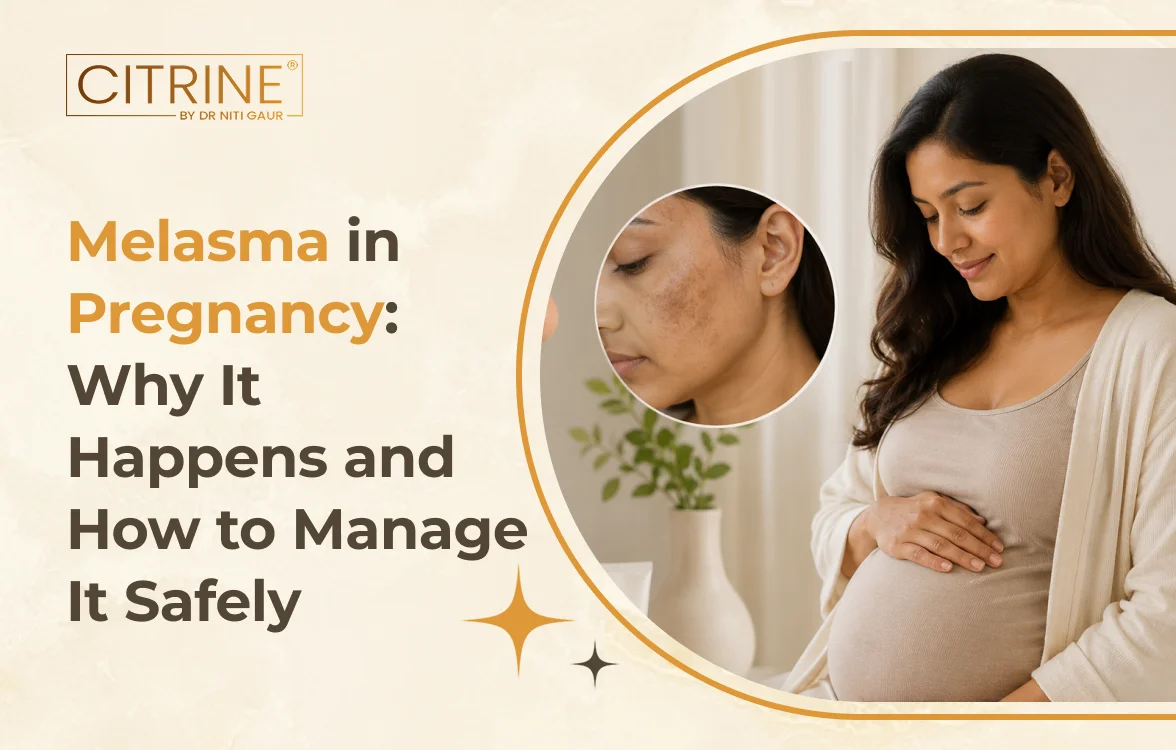
Pregnancy can change the skin in unexpected ways. One of the most noticeable changes is melasma, a pattern of brown or grey-brown facial patches often called the “mask of pregnancy.” It is medically harmless, but it can still affect confidence, especially when it appears quickly.
During pregnancy, the safest approach is usually to prevent worsening, protect the skin barrier and avoid unsuitable ingredients or procedures. A dermatologist can confirm the diagnosis and help plan care for pregnancy, breastfeeding and the postpartum period.
Quick summary
- Melasma is pregnancy-related hyperpigmentation that usually affects both sides of the face.
- Hormonal changes activate pigment-producing cells, while ultraviolet and visible light can deepen patches.
- Daily broad-spectrum, tinted sunscreen is the most important step.
- Gentle skincare and azelaic acid may be considered after medical review.
- Avoid retinoids, hydroquinone and self-prescribed pigment treatments during pregnancy.
- Many cases fade after delivery, but some persist or return.
- Results are gradual, and maintenance is often needed.
What is melasma?
Melasma is an acquired pigmentation condition in which melanocytes, the cells that make melanin, become overactive. It causes flat, irregular patches that may look tan, brown, grey-brown or blue-grey. It most often develops on the cheeks, forehead, nose, chin and skin above the upper lip. Less commonly, it affects the neck or forearms.
When it appears during pregnancy, melasma may also be called chloasma or the pregnancy mask. It is not an infection, allergy or form of skin cancer. Typical melasma does not itch, hurt, crust or become raised.
Melasma versus other facial pigmentation
| Feature | Melasma | Post-Inflammatory Pigmentation | Freckles or Sunspots |
| Pattern | Usually symmetrical patches | Follows acne, rash or irritation | Separate small spots |
| Common areas | Cheeks, forehead, upper lip, chin | Wherever inflammation occurred | Sun-exposed skin |
| Main triggers | Hormones, light, genetics | Skin injury or inflammation | Cumulative sun exposure |
| Pregnancy link | Common | Indirect | Not specific |
A dermatologist usually diagnoses melasma from its pattern and your history. A one-sided, scaly, itchy, raised, rapidly changing or bleeding patch needs medical assessment rather than being assumed to be melasma.
Why does melasma occur in pregnancy?
Pregnancy increases estrogen, progesterone and other signals involved in pigmentation. These changes can stimulate melanocytes to produce more melanin. They also explain why the areolae, freckles, scars and the line down the abdomen may darken.
Hormones are only part of the picture. Ultraviolet radiation encourages further pigment production, and visible light can worsen melasma, particularly in medium to deeper skin tones. Genetics also matters, so a family history increases susceptibility.
Risk may be higher if you:
- Have a medium, olive or deeper skin tone
- Tan easily or live in a high-UV climate
- Have a close relative with melasma
- Had melasma in a previous pregnancy
- Spend time outdoors without consistent protection
- Use products that repeatedly sting or inflame the skin
Melasma often becomes noticeable in the second or third trimester, although it can appear earlier. It is not caused by poor hygiene, and it is not your fault.
What are the signs and symptoms of melasma?
Common patterns include:
- Centrofacial: Forehead, nose, cheeks, upper lip and chin
- Malar: Mainly the cheeks and nose
- Mandibular: Along the jawline
The colour may deepen after sun exposure. Melasma is usually symmetrical and causes no physical symptoms. Seek medical advice if pigmentation comes with itching, scaling, swelling, pain, hair loss, mouth sores or a changing mole. Also get help if the appearance is affecting your emotional wellbeing.
How can melasma be managed safely during pregnancy?
1. Make sunscreen the main treatment
Use a broad-spectrum, water-resistant sunscreen every morning. Choose at least SPF 30, although SPF 50 is often practical in intense sunlight. For melasma, a tinted formula containing iron oxides helps protect against visible light. Mineral filters such as zinc oxide and titanium dioxide are often well tolerated during pregnancy.
Cover the face, ears and exposed neck. Reapply about every two hours outdoors and after heavy sweating or wiping. Add shade, sunglasses and a wide-brimmed hat.
2. Keep skincare gentle
Pregnancy can make skin more sensitive. Use a mild cleanser, fragrance-free moisturiser and sunscreen. Products that burn or sting may trigger inflammation and darken pigmentation.
A practical routine is:
Morning: Gentle cleanse, optional clinician-approved vitamin C, moisturiser and tinted sunscreen.
Evening: Gentle cleanse, moisturiser and only a pregnancy-compatible active recommended for your skin.
3. Ask about azelaic acid
Azelaic acid is sometimes used when a pregnant patient needs help with pigmentation or acne. It may reduce abnormal pigment activity and inflammation, but it can cause dryness, tingling or irritation. Check the strength and frequency with your dermatologist.
4. Limit irritation, friction and excessive heat
Sunlight is a better-established trigger than heat alone, but some patients notice flares after prolonged heat exposure. Avoid aggressive scrubs, rubbing, facial tools and hot treatments that leave the skin red.
There is no need to avoid normal cooking, exercise or warm weather completely. The aim is to reduce unnecessary heat and inflammation rather than create an impractical routine.
Which dermatological treatments are used for melasma?
Treatment depends on pregnancy and breastfeeding status, skin tone, pigment depth, sensitivity, medical history and how much melasma affects you.
| Option | During Pregnancy |
| Tinted broad-spectrum sunscreen | Recommended |
| Barrier-supporting skincare | Recommended |
| Azelaic acid | May be considered medically |
| Vitamin C or low-strength glycolic acid | May be considered after review |
| Hydroquinone | Avoid |
| Retinoids, including retinol and tretinoin | Avoid |
| Tranexamic acid for cosmetic melasma | Avoid unless specifically prescribed |
| Medium or deep peels, lasers and energy devices | Usually postponed |
The American Academy of Dermatology advises pregnant patients to avoid retinoids and hydroquinone. Since melasma may improve after delivery, strong treatment is usually postponed.
Products containing retinol may be marketed as ordinary anti-ageing skincare rather than medication. Pregnant patients should therefore read the complete ingredient list instead of relying only on the product name or front label.
Tranexamic acid also requires caution. It may be used medically for certain bleeding conditions, but that does not make self-prescribed oral or topical tranexamic acid appropriate for cosmetic pigmentation during pregnancy.
After pregnancy, options may include hydroquinone, tretinoin, triple-combination cream, chemical peels or selected laser and light procedures. These are not guaranteed fixes.
Strong creams can irritate, peels may cause post-inflammatory pigmentation, and poorly selected laser settings can worsen melasma, especially in deeper skin tones. Breastfeeding must be discussed before medication.
Does melasma go away after pregnancy?
Many cases lighten as pregnancy hormones settle, often over several months. Complete clearance is not guaranteed.
Continue sunscreen after delivery and allow time for gradual fading. If patches remain bothersome after a few months, see a dermatologist rather than layering several brightening products.
Even after successful treatment, melasma can recur. Sun exposure, hormonal contraception and another pregnancy may trigger new darkening. Long-term light protection is therefore part of treatment, not simply a temporary precaution.
Common mistakes that can worsen pregnancy melasma
- Using lemon juice, baking soda, essential oils or harsh scrubs
- Applying sunscreen only on sunny days
- Using too little sunscreen or missing the upper lip and hairline
- Buying a “pigmentation cream” without checking the ingredient list
- Expecting a peel, facial or laser to permanently remove melasma
- Treating every dark patch as melasma without a diagnosis
- Stopping light protection as soon as the colour improves
Common misconceptions and realistic expectations
Melasma means something is wrong with the pregnancy.
It usually does not. Melasma is a benign skin response to hormonal and light-related triggers.
A stronger product works faster.
It may only cause more inflammation. During pregnancy, safety and consistency matter more than speed.
One procedure can cure it.
Melasma often returns. Treatment can reduce pigment, but no method guarantees permanent clearance.
Sunscreen will remove existing patches.
Sunscreen prevents further darkening and supports fading. It does not bleach skin overnight.
Most patients need weeks to notice change and months for meaningful improvement. Progress is rarely perfectly even. Photographs taken in the same lighting every four to six weeks are more useful than daily mirror checks.
Final takeaway
Melasma in pregnancy is common, harmless and often temporary, but it can be stubborn and emotionally frustrating. The safest plan is daily tinted broad-spectrum sunscreen, gentle skincare, careful ingredient checking and realistic expectations. Avoid self-prescribing strong lightening creams or undergoing cosmetic procedures without medical clearance.
If patches are changing, difficult to identify or not improving after delivery, an individual assessment is worthwhile. Dr. Niti Gaur, an MD dermatologist at Citrine Clinic, can evaluate the pigmentation pattern, review pregnancy or breastfeeding safety, and explain which options are reasonable now and which should be postponed.
The goal is informed, gradual care rather than rushed treatment. Protecting your skin consistently during pregnancy may not remove every patch immediately, but it can reduce worsening and provide a safer foundation for postpartum treatment. Book your appointment today.
View Citrine Clinic on Google for directions, photos, and patient feedback.
Frequently Asked Questions
Can melasma harm my baby?
No. It affects pigment production in your skin and does not harm the baby.
Is pregnancy melasma contagious?
No. It cannot spread through touch, towels, cosmetics or close contact.
Does melasma mean I have a vitamin deficiency?
Usually not. Melasma is mainly linked to hormones, light exposure and genetic susceptibility.
Can food or supplements cure melasma?
No diet or supplement has been proven to cure it. Avoid unprescribed “skin-lightening” supplements during pregnancy.
Can I cover melasma with makeup?
Yes. Use non-irritating concealer or foundation, remove it gently and stop any product that stings.
Can melasma appear somewhere other than the face?
Yes, although less commonly. It may affect the neck, shoulders or forearms.
Does melasma predict whether I am having a boy or girl?
No. There is no scientific link between melasma and the baby’s sex.
Should I get my thyroid checked because of melasma?
Not automatically. Testing may be considered if you also have thyroid symptoms or unusual pigmentation.
Will melasma return in another pregnancy?
It can. Begin consistent photoprotection before conception or early in a future pregnancy.
Can I use melasma treatment while breastfeeding?
It depends on the ingredient, dose and application area. Review every active with your dermatologist and obstetric clinician.
About the Author