
 19 Jul 2026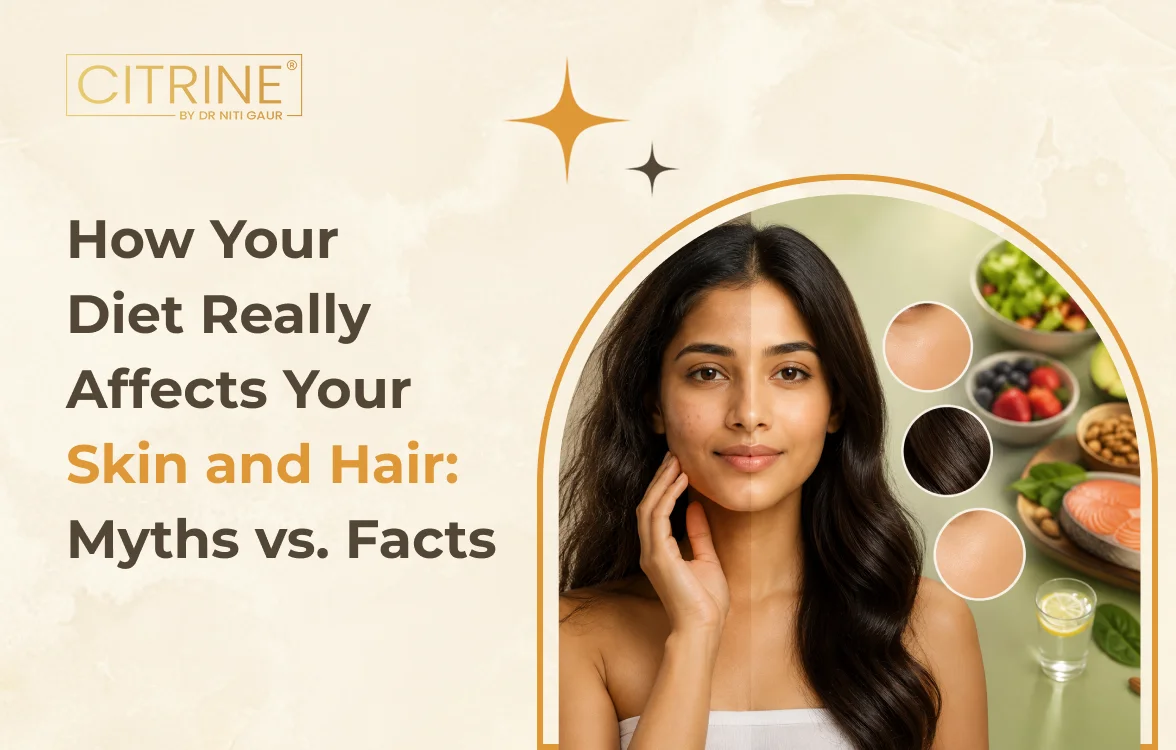
Healthy, appealing skin and strong, healthy hair are believed to be possible only with drugstore skincare products, salon treatments, or dermatologist-led cosmetic procedures. Though these approaches help a lot, many people fail to notice a crucial internal factor that can affect both skin and hair and must be taken care of. That’s their diet plan.
Nowadays, it’s too common to see social media influencers promoting “miracle foods” and making claims like that biotin alone can stop hair fall or that avoiding chocolates can help clear acne lesions. In reality, there is no single food that can be powerful enough to overnight transform skin or hair.
Consistent, healthy dietary habits can only keep skin and hair healthy by ensuring proper nutrition that supports the natural repair of tissues, shares Dr. Niti Gaur, a well-known dermatologist in Gurgaon.
Research consistently proves that a balanced diet can support collagen remodeling, skin barrier functioning, natural wound repair, protection against oxidative damage, and healthy hair growth.
However, diet is just one tool in your skin and haircare toolkit. Other factors that can affect skin and hair includes genetics, hormones, stress, lifestyle, prescriptions, and underlying medical conditions.
In this article, we focus on how diet can affect skin and hair. So, let’s clear up the misconceptions and get to the truth about the link between diet and skin and hair.
Quick Summary About Diet, Skin, and Hair
What Dermatological Influence Does Diet Have?
One’s diet plan affects:
- Level of collagen remodeling
- Skin hydration
- Skin barrier functioning
- Hair growth cycle
- Skin, hair, and scalp health
- Healing and inflammation.
Nutrients Essential for Skin and Hair
To maintain good skin and hair health and appearance, every individual needs to have a diet rich in:
- Proteins
- Vitamin A, B12, C, D, and E
- Iron
- Zinc
- Omega-3 fatty acids
- Biotin (only if deficient).
Skin and Hair Issues Usually Caused by Poor Nutrition
An unhealthy diet plan can, over time, lead to:
- Hair thinning
- Hair fall
- Dull, dry skin
- Slow healing of wounds.
Time Taken by Diet to Improve Skin and Hair
Usually, a consistent, skin-friendly diet provides healthy skin in 4 to 8 weeks, and a hair-friendly diet provides stronger, healthier hair growth in over 3 to 6 months.
Does Diet Affect Skin and Hair?
Honestly, yes. But, not in the same way as most people think.
Skin and hair continually repair themselves, and for their natural growth and repair, adequate nutrition and hydration are needed. So, an improper diet contributes to skin and hair health issues. However, just having a balanced diet will not guarantee perfect skin and strong hair.
Some Common Myths About Diet, Skin, and Hair Debunked
Myth 1: Protein intake is not needed if having a sedentary lifestyle.
Fact: Hair is made up of keratin protein. So, protein deficiency can weaken hair follicles, resulting in severe hair thinning and shedding.
Myth 2: Limiting intake of all fats will provide healthy skin and hair.
Fact: Healthy fats that contain an abundance of omega-3 fatty acids must be incorporated into the diet as they are essential for hydration, radiant skin, and natural hair shine.
Myth 3: Dairy and gluten intake can cause acne.
Fact: It’s oily skin and hormones that mainly contribute to acne, not the dairy- or gluten-rich products. There is limited evidence of skim milk triggering acne and a gluten-free diet helping clear up acne.
Myth 4: Collagen supplements can only help keep the skin firm and elastic.
Fact: There are even foods like Vitamin C-rich foods and amino acids proven to naturally synthesize structural collagen.
Myth 5: Chocolate can directly cause acne.
Fact: Pure cocoa or dark chocolate does not cause acne. It’s the dietary habits and excess sugar and milk that can spike insulin levels and trigger overproduction of the skin’s natural oil, a main contributor to acne breakouts.
Myth 6: A restrictive diet can detox and cleanse the scalp to promote healthy hair and scalp.
Fact: An extreme calorie-restricted diet or food group restrictions can starve hair follicles to trigger telogen effluvium, a temporary hair loss after 3 months of having such a diet.
Myth 7: Drinking gallons of water can cure dryness and provide glowing skin.
Fact: Internal hydration is crucial for skin health. But skin hydration and glow cannot be fixed by water intake alone; they require proper nutrition (more essential fatty acids), a proper skincare routine, and a healthy lifestyle.
Myth 8: Increasing biotin in the diet or through supplements can stop all types of hair loss.
Fact: Not every hair loss is the result of biotin deficiency. So, biotin in the diet or as a supplement must be considered only if a blood test shows a deficiency.
Myth 9: Oily/greasy food can instantly make the skin oily and prone to acne.
Fact: Fried foods cannot directly move to the pores to cause oily skin and congestion. However, the trans fats they contain can increase systemic inflammation, indirectly producing more sebum and causing or worsening acne.
Myth 10: Hair grows quickly by having one “superfood”.
Fact: For healthy hair, there is a need for consistent intake of multiple nutrients. One should be taking a well-rounded, nutritious diet that has eggs, leafy greens, fatty fish, beans and lentils, nuts and seeds, and Vitamin C-rich foods.
When to See a Dermatologist for Skin and Hair?
Though dietary improvements can help improve skin and hair health, a medical evaluation is a must by a trusted dermatologist if there is:
- Sudden hair loss
- Persistent hair fall or hair thinning
- Stubborn acne
- Extreme dandruff
- Non-healing skin
- Pigmentation changes
- Chronic skin dryness/dullness.
A dermatologist can help identify the root causes of skin and hair concerns and, based on medical records and skin type, recommend treatments.
Final Takeaway
Your diet can significantly influence your skin and hair health and appearance, but it is not the only factor.
If you consider trendy superfoods or miracle supplements, they won’t help with your skin and hair instantly as expected. The best is to naturally support skin and hair health with a well-rounded, nutritious diet. When a proper diet is combined with good skincare and haircare, healthy lifestyle habits, and personalized dermatological procedures, healthier skin and hair can be achieved and maintained over time.
Persistent acne, hair fall, or other skin concerns may have more than one underlying cause. At Citrine Clinic, Dr. Niti Gaur, a trusted skin doctor in Gurgaon, can help identify the contributing factors and recommend the most suitable treatment. Schedule your appointment today for expert dermatological care.
View Citrine Clinic on Google for directions, photos, and patient feedback.
FAQs on Diet and Skin and Hair Health
Can eating healthy clear my acne completely?
Not necessarily. Acne flare-ups are also triggered by genetics, hormones, and inflammation, not just some foods.
Does drinking more water make your skin glow?
More water intake can support healthy skin, but for a lasting glow, proper sleep, skincare, and nutrition are a must.
Can vitamin deficiencies cause hair fall?
Yes, Vitamin D and certain B vitamin deficiencies can lead to excessive hair shedding.
Should I take dietary supplements without a prescription to maintain my skin and hair health?
No, best to consult a dermatologist to be evaluated for symptoms and diet, and even undergo laboratory investigations, and receive appropriate recommendations for supplements. Otherwise, unnecessary or excess supplements could be harmful.
How to ensure healthy skin and hair with diet?
Follow these tips: take a well-balanced diet, keep the body well hydrated with enough water intake, limit intake of unhealthy fats, sugar-loaded foods and drinks, and processed foods. Avoid crash dieting, and get nutritional deficiencies and other risk factors evaluated by a dermatologist if skin and hair issues persist.
About the Author