
 10 Sep 2026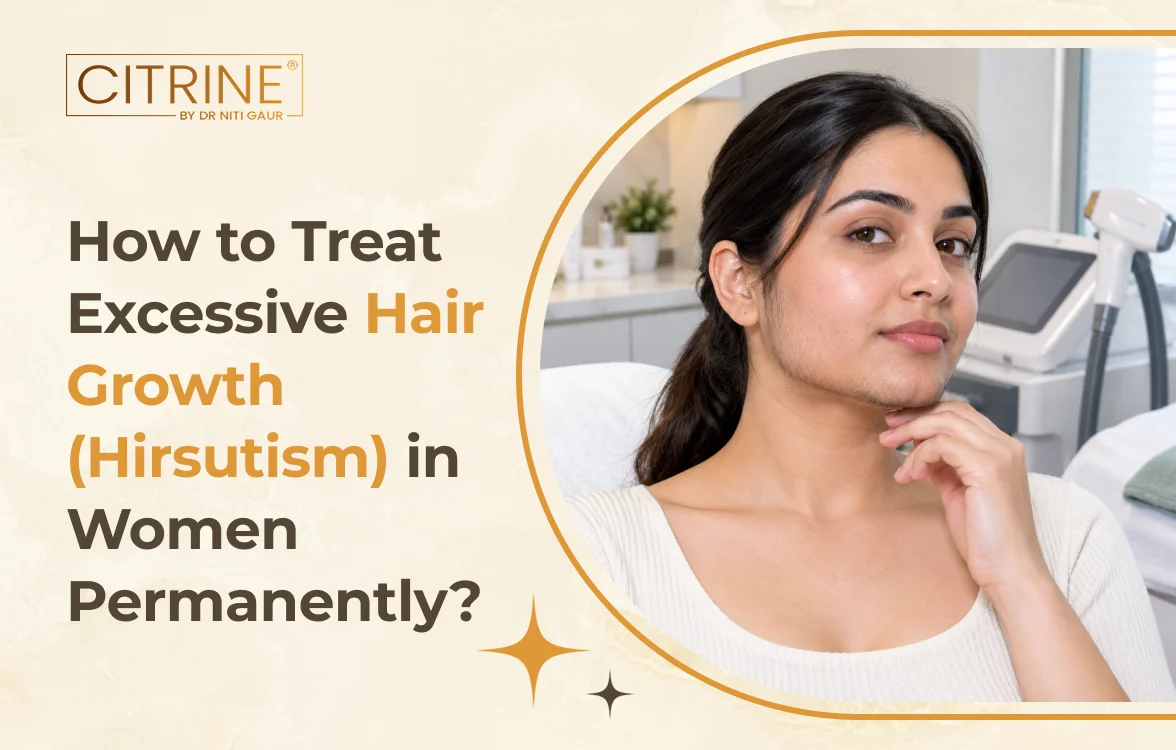
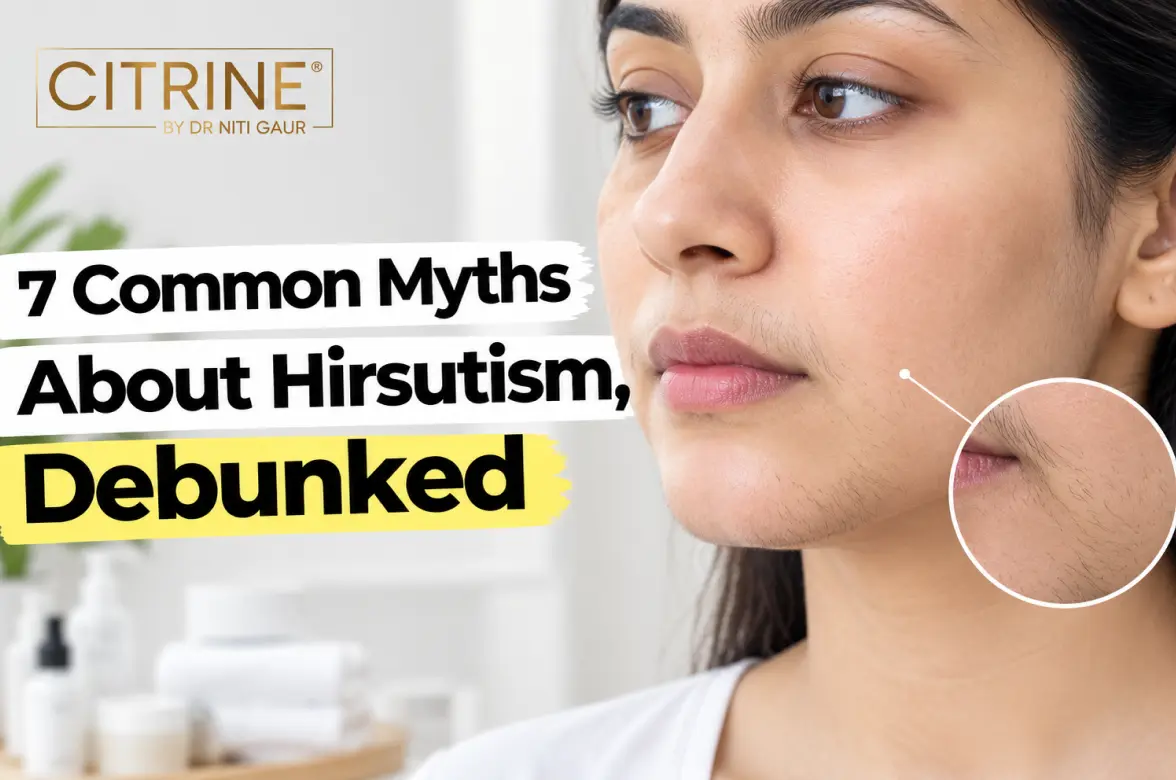
It’s unusual for a woman to have dark, coarse, thick, prominent hair growth all over the face and body, especially where hair is usually less or absent. Excessive hair growth in a male-like pattern on the upper lip, chin, chest, jawline, abdomen, or thighs is a characteristic sign of a medical condition called hirsutism.
Hirsutism doesn’t just affect face and body aesthetics. Sometimes, it indicates hormonal imbalance or a side effect of certain medications. However, some women grow unwanted hair without a recognizable hormonal disorder., quoted Dr. Niti Gaur, dermatologist and hirsutism treatment doctor in Gurgaon at Citrine Clinic.
The good news is that hirsutism can be effectively managed. But there is no one-time permanent cure for every woman. Long-term management of hirsutism often needs a combination of treatments that address the root cause and reduce existing hair through laser or electrolysis.
Quick Summary
- Hirsutism causes excessive, dark, thick, coarse hair to grow in areas like the face, back, chest, and abdomen of a female, in a typical male-like pattern.
- Its primary cause is a high level of and-rogens, the male se-x hormones, which occurs in the case of PCOS (Polycystic Ovary Syndrome).
- Other possible reasons are adrenal disorders, which alter steroid hormone production, and certain medications (anabolic steroids).
- Suddenly appearing, moderate to severe, or rapidly worsening hair growth, probably with irregular/absent periods, acne, or scalp hair loss, requires hormonal evaluation.
- Appropriate laser hair removal, combined with eflornithine cream, hormonal therapy, and lifestyle changes, can help reduce unwanted hair long term.
- A dermatologist, endocrinologist, or gynecologist can help identify the cause of excessive hair growth and provide the most appropriate treatment plan that not only removes unwanted hair long term but also delays further excess hair growth.
Can Hirsutism (Excessive Hair Growth) Be Permanently Treated?
Hair removal options can help considerably reduce existing excess hair for years to come. But the hormonal tendency to produce new hair persists, thus making permanent hair-free skin impossible.
The available treatment options that are capable of permanent hair reduction but not complete, permanent hair removal are:
- Laser or photoepilation
- Electrolysis.
How Does Laser Treat Hirsutism Permanently?
Laser hair removal is an advanced, clinical approach for significantly reducing unwanted, coarse, pigmented hair.
- During sessions, a modern medical-grade laser is used over the unwanted hair growth, causing selective thermolysis of the roots with minimal discomfort and downtime.
- Precisely, the laser energy gets absorbed by the melanin present in the dark, unwanted hair follicle and gets converted to heat, which damages the hair follicle structure. As the treated hair follicles get damaged, they become incapable of producing new hair.
- However, the laser works only on active hair follicles, and at any given time, not every unwanted hair is actively growing. Therefore, to target the maximum number of unwanted hairs, several sessions are needed with a 6-8 week gap. Over multiple laser hair removal sessions, the active hair follicles produce less to no hair while the remaining hair becomes finer and lighter.
- The number of sessions that are needed for maximum reduction in unwanted hair depends on an individual’s unwanted hair color, thickness, skin tone, hormonal status, targeted area, chosen laser technology, and treatment response.
Is Laser Safe and Workable for Every Hirsutism Patient?
Laser hair removal is safe for most skin types and tones, including dark and sensitive skin, if a modern device is used at the right energy setting with suitable technique and skin cooling. However, it does not work as expected for very light, blonde, or white hair, as its mechanism of action relies on the melanin pigment in the hair.
Choosing an experienced practitioner is important to select the right device and settings for your skin type.
When is Electrolysis Considered for Hirsutism Patients?
Electrolysis is another FDA-approved medical method for permanently reducing unwanted hair. Unlike laser, which targets melanin pigment in the hair, electrolysis involves delivering a targeted electrical pulse through a tiny, sterile wire into the natural opening of each hair follicle. The heat generated by the electrical current destroys the targeted hair follicles, one by one. This makes it suitable for people with busy daily schedules.
Can Medical Treatment Help Hirsutism Patients?
Yes.
When excessive hair growth is related to and-rogen activity, new hair growth can be reduced through the following medications:
- Combined oral contraceptives: These are prescribed to premenopausal women who don’t want pregnancy. They work, to some extent, by reducing ovarian and-rogen production and increasing and-rogen binding.
- Anti-and-rogens: These medicines, under medical supervision, can be considered to lower and-rogen hormones in selected patients.
- Eflor-nithine cream: This topical is prescribed to slow excessive facial hair growth. It is usually combined with laser treatment for an early response.
What Do Dermatologists Recommend to Hirsutism Patients?
Dermatologists focus on both existing unwanted hair and the risk of further new, excess hair growth. For this reason, they recommend a combination therapy.
They create a personalized treatment plan for hirsutism patients. During consultation, they provide:
- Hormonal assessment
- Treatment of the underlying cause (hormonal therapy)
- Professional, permanent hair reduction (with laser or electrolysis)
- Maintenance treatment including lifestyle modifications.
Read Also: How Much Hair Loss Is Normal Per Day? Expert Advice
Conclusion
Excessive, male-pattern-like hair growth in women can be very annoying and confidence-shattering.
Thankfully, it can be significantly reduced long-term if the cause is identified and appropriately addressed.
For existing extra hair, permanent hair reduction is possible. Dermatologists use lasers for dark, coarse hair or electrolysis for white, blonde hair. Moreover, as and-rogen excess contributes to hirsutism, medical treatment is also prescribed by a dermatologist to avoid further unwanted hair growth.
Experiencing hirsutism or sudden excessive hair growth? Consult Dr. Niti Gaur, dermatologist in Gurgaon, for a clinical evaluation of androgen-related causes and a personalised treatment plan. Depending on hair characteristics and hormonal factors, she may recommend medical therapy, laser hair reduction, for hirsutism treatment in Gurgaon.
Learn more about Citrine Clinic through our Google Maps profile and patient reviews.
FAQs on Hirsutism Management in Women
Can hirsutism be completely and permanently treated?
Hirsutism is caused by excess and-rogens, which can continue to drive unwanted hair growth. However, long-term management of hirsutism is possible through a combination of laser and medical management.
Can shaving, threading or waxing help hirsutism patients?
No, because they are temporary hair removal methods that do not target and-rogen excess. They remove the visible hair, but the hair follicles remain active and regrow hair.
Which is the permanent treatment for hirsutism?
Both laser and electrolysis can permanently reduce unwanted hair. However, they do not guarantee permanent removal of extra hair. As hormonal stimulation continues, some unwanted hair regrowth still happens.
Can weight management help hirsutism patients?
Women who are obese, have PCOS, or other kinds of hyperand-rogenism can improve metabolic health and sometimes reduce and-rogen hormone and its related symptoms, including excessive hair growth, by maintaining a stable, healthy weight.
How long does hirsutism treatment take?
For maximum, long-term reduction of existing unwanted hair, multiple sessions over months are usually needed. At the same time, medical treatment is needed for months to prevent new unwanted hair growth.
About the Author