
 27 Sep 2026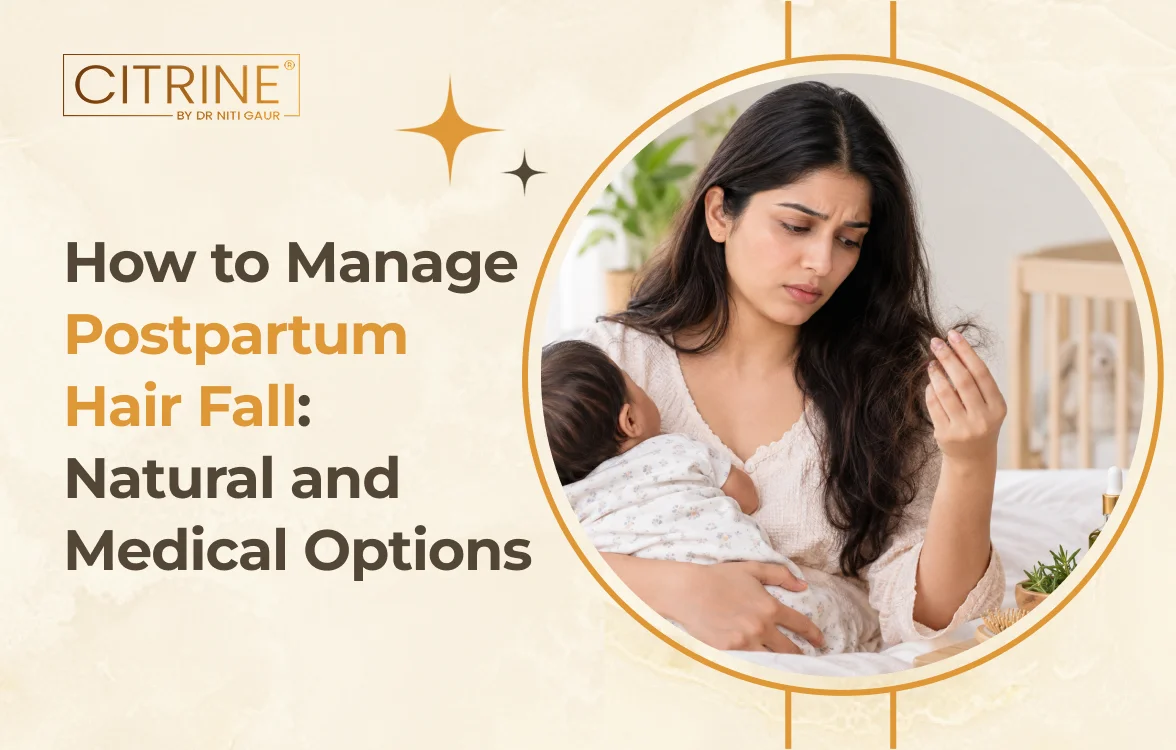
Got healthy, thick hair during pregnancy but hair loss a few months after your child’s delivery? If it’s your first childbirth and you are experiencing hair fall while brushing, shampooing, or even running your fingers through your hair, it can feel dramatic and upsetting. Still, it doesn't necessarily lead to permanent baldness. You have options to manage it.
Postpartum hair fall is common among many women. It is usually a form of excessive hair shedding called telogen effluvium, where the hormonal changes cause most actively growing hair to move to the resting and shedding phase of the hair growth cycle. Mostly, it happens a few months post-childbirth and is expected to peak around four months after childbirth. Thankfully, Citrine Clinic in Gurgaon offers natural and medical postpartum hair fall treatments to help manage it.
If it’s just postpartum hair fall, the hair growth cycle slowly gets back to normal. But you shouldn't blame childbirth for persistent or severe hair loss. Other causes can include thyroid problems, iron deficiency, nutritional deficiencies, or genetics, which may require appropriate treatment.
Quick Summary
- Postpartum hair fall is usually temporary and most noticeable around 2-3 months after childbirth.
- It is telogen effluvium, where hormonal changes after pregnancy impact the normal hair growth cycle.
- Normal, healthy hair growth is gradually restored in several months with a healthy diet and routine.
- Avoid tight hairstyles, chemical treatments, and excessive heat, as these can cause additional damage and more shedding.
- Take hair growth-related supplements only when you have tested for a specific deficiency, and a doctor specifically recommends them.
- Persistent, excessive hair shedding, patchy hair loss, progressive thinning, or baldness may need an early dermatologist assessment for personalized medical treatment.
When and Why Does Postpartum Hair Fall Happen?
Postpartum hair fall does not automatically occur just after childbirth. Most often, it occurs a few months later, with maximum shedding around 4 months postpartum. Its duration varies, but most women recover in about a year.
During pregnancy, high estr-ogen levels keep most of the hair follicles active for a long time, and so thick, fuller-looking hair is present. But after the child's delivery, estr-ogen levels fall. Consequently, most of the hair follicles enter the resting and shedding phase, and so there is noticeable hair shedding. But it's delayed and appears sudden and excessive.
Therefore, more hair you see on your pillow, in the shower drain, or while brushing, and visible, reduced hair volume and scalp are temporary, unless the hair follicles have been actually permanently damaged due to other reasons and so can't grow hair normally again. Over time, the hair shedding will reduce, and hair will regrow.
Top Natural Ways to Manage Postpartum Hair Fall
You don't need to do anything special at home to stop postpartum hair fall. Just a healthy diet and gentle haircare, and you can enjoy healthy hair regrowth without additional hair damage.
Dermatologists generally recommend doing the following during postpartum recovery:
- Have a balanced diet with enough protein, iron, and essential vitamins.
- Avoid crash dieting or restrictive diets, as it can cause more physical stress.
- Handle your hair gently while shampooing, brushing, or styling. Limit excessive heat styling, avoid tight hairstyles, and avoid chemical hair treatments.
Medical Treatments Available for Postpartum Hair Fall
Normally, postpartum hair fall is telogen effluvium that can improve gradually without specific medical treatment.
- A medical treatment is generally recommended when:
- Postpartum hair fall is prolonged beyond the expected recovery time
- Hair density is not restored within around a year after childbirth
- There is some nutrient deficiency identified
- There is suspected thyroid disease
- There is an additional type of hair loss, like pattern hair loss, patchy hair loss, or other.
A dermatologist first identifies the primary cause and extent of hair fall, then prescribes hair-fall-controlling and hair-growth-promoting treatments. Options include prescription topicals, oral medications, and in-clinic procedures.
When to Consult a Dermatologist?
If experiencing any of the following, you need a professional assessment and a detailed hair loss evaluation:
- Progressive widening of the hair part
- Persistent, significant hair thinning
- Extremely heavy hair fall
- Hairline recession
- Distinct bald spots/patches
- Scalp itching, redness, scaling, pain, or inflammation
- Prolonged hair shedding
- Some signs suggesting nutritional deficiency or thyroid issue
- No regain of hair fullness within a year post childbirth.
A dermatologist can confirm whether it's postpartum hair fall or another type of hair loss and recommend appropriate treatment.
Read Also: How to Stop Hair Fall: Causes and Effective Treatments
Conclusion
Postpartum hair fall can be terrifying, but normally it is a temporary response to a decline in estr-ogen hormone after childbirth. It often becomes noticeable a few months after childbirth and gradually improves as the hair growth cycle returns to normal.
With a nutritious diet, gentle haircare routine, and avoidance of tight hairstyles or chemical/heat treatments, more hair loss can be avoided during postpartum recovery.
If postpartum hair fall feels excessive or continues for longer than expected, consulting a dermatologist can help identify whether hormonal changes, nutritional deficiencies, thyroid issues, or another condition is contributing.
At Citrine Clinic, Dr. Niti Gaur can assess your hair and scalp concerns and recommend an appropriate postpartum hair loss treatment in Gurgaon based on your individual needs.
Locate Citrine Clinic easily and explore verified patient experiences.
FAQs on Postpartum Hair Loss Treatment
Can hair oils stop postpartum hair fall?
Hair oils condition the scalp and hair to reduce dryness and the risk of breakage. Gentle scalp oil massage can be a part of haircare but can’t treat hormonal hair shedding after childbirth.
Should I take nutrient supplements to manage postpartum hair fall?
You can if testing shows a nutrient deficiency and your doctor prescribes a supplement. Avoid treating postpartum hair fall with randomly bought high-dose supplements that claim to promote hair growth.
Can minoxidil treat postpartum hair fall?
Normally, postpartum hair fall does not require medication. But if pattern hair loss or another type of alopecia is identified, minoxidil may be prescribed to regrow hair, only if it’s safe for a breastfeeding mother and baby.
What should be my diet to recover from postpartum hair fall?
Your diet should include enough protein, vegetables, iron-rich foods, fruits, whole grains, and healthy fats so your hair gets the nutrients it needs to grow thick and healthy.
What hair care routine can help manage postpartum hair fall?
These hair care measures can help: Use a mild shampoo suited to your scalp type and a lightweight conditioner to reduce tangling and breakage; gently comb to detangle hair; limit or avoid hair straighteners, curling irons, or blow dryers; and avoid hairstyles that constantly pull the hair.
About the Author