Hair fall shows differently in every individual, from increased shedding while washing or brushing to a widening part, reduced hair density, a thinner ponytail, or a gradually receding hairline. Every change has a different cause, hence treating hair fall effectively starts with understanding why the hair is becoming thinner.
Hair fall treatment in Delhi at Citrine Clinic begins with an assessment of the scalp, hair-loss pattern, and factors that may be contributing to the problem. Dr. Niti Gaur may consider medical conditions, nutritional deficiencies, hormonal changes, medications, stress, and hair-care practices before recommending a personalised treatment plan based on the individual's type and extent of hair loss.
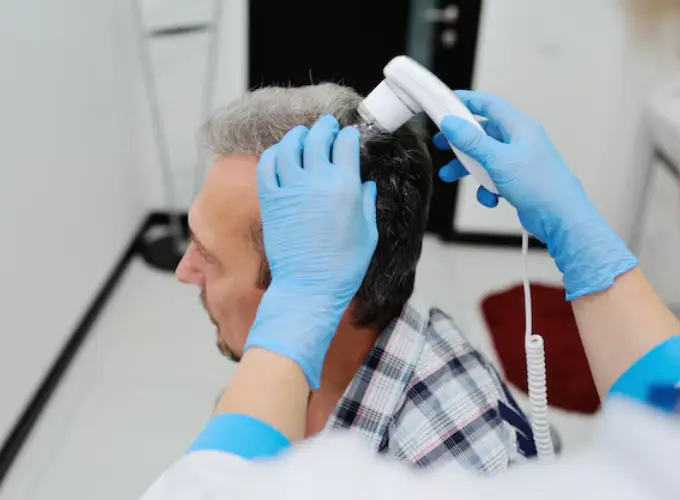

Hair fall treatment refers to a range of medical and procedure-based approaches used to identify the cause of excessive shedding, reduce ongoing hair loss, and support healthier hair growth. It is not a single procedure, because the appropriate treatment depends on the type, pattern, and severity of hair loss.
Hair fall may be associated with factors such as genetic or pattern hair loss, nutritional deficiencies, hormonal changes, illness, stress, scalp conditions, medications, or hair-care practices. A dermatologist first evaluates these factors and may recommend medication, scalp-based procedures, corrective care, or a combination of treatments depending on the underlying cause.
Early assessment can be important, particularly when hair thinning is progressive, because identifying the cause sooner can help determine the most appropriate treatment before the condition becomes more advanced.
Dr. Niti Gaur may recommend:
Online medicines and supplements are not suitable for everyone. Medical history, pregnancy plans, allergies, and current medicines must be reviewed first.
| Treatment | How It Helps |
| Medicines | May help reduce ongoing hair loss, slow follicle thinning, or support hair growth where appropriate for the underlying condition |
| GFC (Growth Factor Concentrate) | Uses concentrated growth factors prepared from the patient’s blood and injected into targeted scalp areas to support weakened hair follicles |
| PRP (Platelet-Rich Plasma) | Uses platelet-derived growth factors from the patient’s own blood to support follicular activity in suitable cases of hair thinning |
| Mesotherapy | Delivers selected vitamins, minerals, enzymes, and other substances into the scalp through multiple small injections, depending on the individual treatment plan |
| Hair Transplant | Moves hair follicles from a suitable donor area to areas affected by established hair loss when sufficient donor hair is available |
The hair fall treatment cost in Delhi at Citrine Clinic may range from ₹10,000 to ₹1,20,000 per session. It depends on the diagnosis, scalp area, consumables, and selected plan.
A suitable plan may control shedding, support weak follicles, and improve scalp health. It can also reduce unhelpful product switching.
Possible benefits include:
Scalp procedures may cause redness, tenderness, swelling, itching, pinpoint bleeding, or tightness. Small crusts can follow injections or microneedling.
Less common risks include:
Hair fall treatment in Delhi may be considered for people with:
A widening centre partA receding hairlineReduced crown densityShedding after fever, surgery, stress, or weight lossOngoing post-pregnancy sheddingHair loss with PCOS or thyroid concernsCircular bald patchesTraction from tight hairstylesScalp scaling with sheddingConsultation with Dr. Niti Gaur: Your concerns, duration of hair fall, and changes in hair density are discussed.
Review of Hair-Loss Pattern: The onset, rate of shedding, affected areas, and progression of hair loss are assessed.
Scalp and Hair Examination: The scalp, hairline, crown, parting, and overall hair density are examined for signs of thinning or follicular changes.
Assessment of Scalp and Hair Health: Dandruff, inflammation, redness, breakage, scaling, or scarring are checked for conditions that may contribute to hair loss.
Review of Contributing Factors: Recent illness, diet, medications, stress, hormonal changes, hair-care practices, and family history are considered.
Diagnostic Tests When Required: Blood tests or other investigations may be recommended when nutritional, hormonal, or medical causes need further evaluation.
Identification of the Underlying Cause: The findings are used to determine the likely type and contributing factors behind the hair fall.
Selection of Treatment: Medical treatment, GFC, PRP, mesotherapy, hair transplant, or a combination may be considered depending on the diagnosis and extent of hair loss.
Treatment Session: The selected treatment is performed according to the planned protocol, with appropriate scalp preparation and hygiene.
Aftercare Guidance: Instructions are provided regarding scalp care, hair washing, medications, and activities to avoid after treatment.
Progress Monitoring: Hair shedding, density, scalp condition, and response to treatment are monitored over subsequent visits.
Treatment Plan Adjustment: Further sessions, maintenance treatment, or changes in the treatment plan may be recommended based on the response.
Recovery after hair fall treatment depends on the method. Medical plans usually have no downtime, while scalp procedures may cause temporary sensitivity.
| Timeframe | What to Expect |
| First 6 to 12 Hours | Mild redness, tenderness, or injection marks may appear. |
| Day 1 | The scalp may feel sensitive. Avoid heavy sweating. |
| Day 2 to 3 | Redness usually settles. Tiny crusts may remain. |
| Day 4 to 7 | Most discomfort improves and gentle care can resume. |
| Week 4 to 8 | Shedding may begin to stabilise in responsive cases. |
| Month 3 Onward | Early thickness or density changes may become visible. |
Treatment may be planned for:
Pattern hair loss
Telogen effluvium
Alopecia areata
Traction-related hair loss
Dandruff-related shedding
Crown thinning
Hair breakage
Scarring alopecia
Fungal scalp infection
Cause-Focused Hair Loss Assessment: Hair fall is evaluated based on its onset, pattern, severity, scalp condition, and possible contributing factors rather than treating all hair loss in the same way.Multiple Treatment Options: Depending on the diagnosis, treatment may include medicines, GFC, PRP, mesotherapy, or hair transplant procedures.Scalp and Hair Evaluation: The scalp, hairline, crown, parting, and areas of reduced density are examined to identify signs that can influence treatment planning.Personalised Treatment Planning: The recommended approach is tailored to the individual's type and stage of hair loss, rather than following a standard treatment protocol.Ongoing Progress Monitoring: Hair fall and changes in density can be reviewed over time so that the treatment plan can be adjusted according to the response.Hair fall treatment can support temporary post-illness shedding. The timeline, scalp condition, diet, and deficiencies are checked before treatment.
Hair fall treatment may help female pattern thinning. Early treatment is more useful while follicles remain active.
Hair fall treatment during breastfeeding requires careful selection. Some medicines are avoided, and any procedure needs review.
Hair fall treatment may give limited results until thyroid levels are managed. The underlying condition also needs treatment.
Hair fall treatment can identify nutritional triggers. Regrowth may stay slow until dietary gaps are corrected.
Hair fall treatment helps true root-level shedding or scalp irritation. Hair-shaft breakage needs gentler care and less chemical exposure.
Hair fall treatment may include minoxidil when suitable. Strength, frequency, early shedding, and long-term use are discussed first.
Hair fall treatment may first control dandruff and inflammation. Injectable procedures can be postponed until the scalp settles.
Hair fall treatment may support active temple follicles. Long-standing smooth areas usually respond less than recently thinned areas.
Hair washing after hair fall treatment depends on the procedure. Waiting until the next day is often advised.