

 22 Sep 2026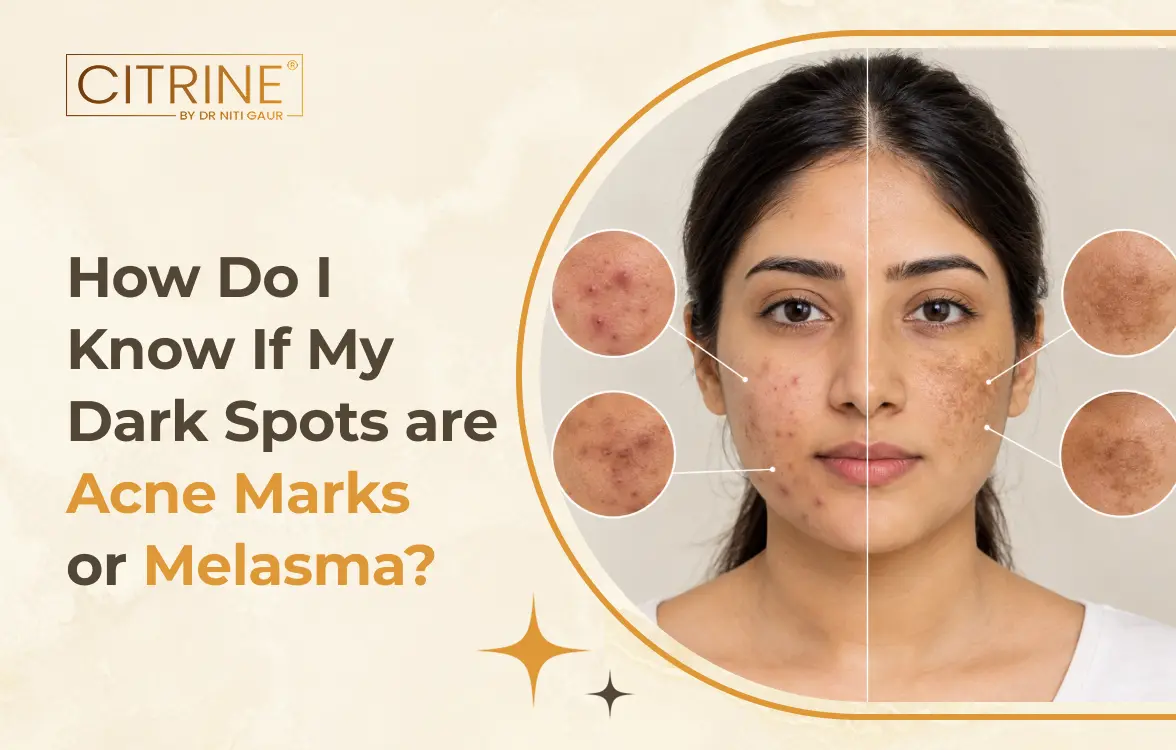
You develop dark spots on your face, but wonder what really caused them. You might think that they are post-acne marks if you had a recent pimple breakout. Or perhaps melasma, if you have brown patches on sun-exposed areas getting darker with UV exposure. But such assumptions could be wrong and lead you to inappropriate treatment.
Some people confuse acne marks with melasma because they look similar. What the dark spots are depends on the cause. Both acne marks and melasma are forms of hyperpigmentation. Acne marks are temporary and result from inflammation, while melasma is chronic and usually driven by hormones and UV exposure, stated acne treatment doctor in Gurgaon, Dr. Niti Gaur.
Understanding the differences between acne marks and melasma is important for choosing the best treatment approach. Self-identifying dark spots and choosing the wrong treatment can lead to unexpected results, sometimes even worsening skin pigmentation.
Quick Summary
- Acne marks are post-inflammatory hyperpigmentation, associated with an inflammatory acne breakout.
- Melasma is a chronic hyperpigmentation disorder that appears as large, irregular, or symmetrical brown to grey-brown spots/patches.
- Acne marks are localized to the area that once had pimples, while melasma spots appear on sun-exposed areas.
- Acne marks can gradually fade with natural skin renewal, but melasma stays and requires long-term maintenance.
- Daily sun protection is essential to manage both acne marks and melasma, as both conditions can become prominent upon UV exposure.
- A dermatologist can help differentiate between post-acne marks and melasma and even provide appropriate treatment.
What Are Acne Marks?
Acne marks, also known as post-inflammatory hyperpigmentation, are a pigmentation concern that can develop after a pimple clears.
When an inflammatory acne heals, the skin naturally produces more melanin as an inflammatory response. This can darken only the acne-affected area, even after the acne clears.
The acne marks can show up as:
- Brown spots
- Dark-brown spots
- Red, pink, or purple spots
- Occasionally darker areas.
The exact appearance and its longevity depend on an individual’s natural skin tone. Other factors that decide how long acne marks persist include severity of the previous acne, depth of pigmentation, ongoing inflammation and UV exposure, and skincare routine.
What is Melasma?
Melasma is a chronic hyperpigmentation disorder characterized by light to dark brown, bluish, or grey-brown patches of skin, mostly on sun-exposed facial sites. Commonly affected areas include the forehead, cheeks, upper lip, chin, and nose.
Usually, melasma patches are symmetrical, meaning similar pigmentation is noticed on both sides of the face. They develop gradually, especially with hormonal fluctuations, such as during pregnancy. Other causes include genetic susceptibility or certain medications. With more UV exposure, the dark spots/patches become more prominent.
How to Know if Dark Spots Are Acne Marks or Melasma?
Here are some clues that can help you recognize your type of facial pigmentation:
- The Pigmentation Pattern
Acne marks typically appear as localized or scattered spots in areas that previously had inflammatory acne lesions. Melasma, by contrast, shows up as broad, connected dark patches on sun-exposed areas with no previous acne breakouts.
- The Pigmentation Symmetry
Acne marks are irregularly distributed, in only areas that once had pimples. But melasma usually presents itself on both cheeks, sides of the forehead, and sides around the upper lip. However, a relatively symmetrical pattern of pigmentation does not confirm melasma.
- History of Acne Breakout
If pigmentation is an aftermath of a pimple, cystic acne, nodular acne, an acne-related rash, or picking/squeezing of a pimple, it is post-inflammatory hyperpigmentation- the acne marks. But if the pigmentation has no previous inflammation history, melasma may be the reason.
- Impact of Sun Exposure on Pigmented Skin
The sun’s UV radiation can stimulate melanin production and make existing dark spots much darker. The darkening is particularly prominent in people with melasma. In skin prone to melasma, dark spots may even darken with visible light exposure. But this is not the case with acne marks.
- Color of Dark Spots
Acne marks often appear brown or darker, sometimes red, pink, or purple at the site where inflammatory acne once appeared. However, melasma spots can be light, dark, bluish, or greyish-brown. The depth of pigmentation and appearance vary slightly between acne marks and melasma. Therefore, the color alone cannot confirm the type of pigmentation.
For an accurate identification of the type of pigmentation, a dermatologist evaluation is highly recommended.
How Can a Dermatologist Accurately Diagnose the Dark Spot?
A dermatologist has the expertise and tools to examine dark spots more closely.
To make the diagnosis, a dermatologist may assess:
- The pigmentation location, pattern, symmetry, and color
- The individual’s skin type
- History of acne breakouts
- UV exposure
- Hormonal fluctuations
- Genetics
- Previous pigmentation
- Skincare
- Treatment history.
With an accurate diagnosis, a dermatologist can provide a suitable treatment plan.
How Do Dermatologists Treat Acne Marks and Melasma Differently?
For acne marks, a dermatologist's approach is to control inflammation and pigmentation and prevent new acne marks. For melasma, a dermatologist takes a long-term maintenance and prevention approach because it can recur. Melasma treatment is usually more challenging.
In both cases, dermatologists recommend one or more of the following:
- Adequate, consistent sun protection
- Pigmentation-reducing topical actives like reti-noids, azelaic acid, Vitamin C, niacinamide, and others.
- Carefully selected chemical peels
- Certain light or laser-based treatments
- Pigmentation-regulating skincare (in case of melasma).
Read Also: What Causes Sudden Pigmentation on the Face
Conclusion
Acne marks and melasma may look similar, but they are two different hyperpigmentation disorders. You can distinguish them by pigmentation location, pattern, symmetry, cause, color, history of acne breakouts, and sun exposure.
Sometimes, both can co-occur, making diagnosis complicated.
The best treatment relies on the cause of dark spots.
Not sure whether your dark spots are acne marks or melasma? Dr. Niti Gaur, an experienced acne treatment doctor in Delhi and Gurgaon, can evaluate your pigmentation, identify its underlying cause, and recommend a personalized treatment plan. A professional diagnosis can help prevent worsening pigmentation and ensure you receive the right treatment for clearer, more even-looking skin.
Schedule a visit with her at Citrine Clinic for details.
Locate Citrine Clinic easily and explore verified patient experiences.
FAQs on Acne Marks and Melasma
How can I tell if my dark spots are acne marks or melasma?
If the dark spots occur exactly where a previous pimple was, they are most likely acne marks. But if they are larger, symmetrical, and appear in patches on sun-exposed areas, the condition could be melasma.
Can I permanently get rid of melasma?
Melasma often improves but can recur, with ongoing sun exposure and other triggers. Maintenance treatment is often needed.
Can acne marks naturally fade out with time?
Yes, some acne marks gradually fade as the skin renews. But if they persist, you may need professional treatment.
Does sunscreen help fade acne marks or melasma?
Yes. Sunscreen limits direct UV exposure and the subsequent stimulation of melanin production, helping prevent existing dark spots from darkening.
Can chemical peels or laser work for melasma?
Probably, if a skin professional carefully selects and plans them based on your skin type and condition.
About the Author