
 16 Feb 2026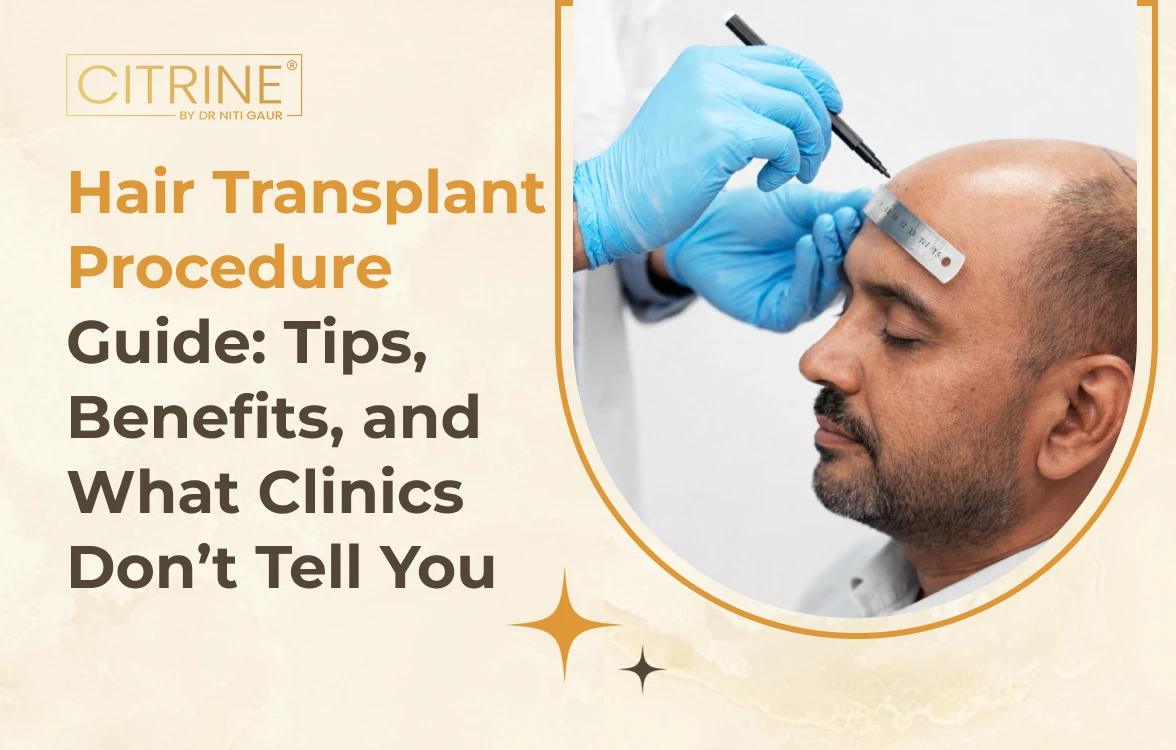
Widening of the scalp, hair thinning, and balding can profoundly shake one’s image, confidence, and quality of life. Thankfully, with a hair transplant, healthy, thick, natural hair can be restored in sparse or absent areas. Though many hair restoration clinics spotlight hair transplants through success stories of past real patients, new patients don’t receive the full scope of hair transplant options. In this read, a hair transplant surgeon in Gurgaon from Citrine Clinic offers a comprehensive hair transplant guide. Read on to learn about hair transplant, its complete procedure details, its benefits, and what to know and do if seeking a hair transplant.
Hair Transplant Overview
- The Basics/ Working
Hair transplant is an outpatient hair restoration surgery, performed by a skilled and experienced dermatologist or plastic surgeon. It involves relocating healthy, DH-T-resistant hair follicles from the back or sides of the scalp (donor sites) to areas requiring natural hair restoration (recipient sites). The transplanted hair follicles retain their resistance to shedding throughout an individual's life and continue to grow hair, permanently relieving patients suffering from thinning and baldness. - Methodologies/Techniques
Basically, a hair transplant can be done in two ways:
- Traditional FUT/FUSS Approach- Follicular Unit Transplantation or Follicular Unit Strip Surgery method involves making a linear, thin cut in the donor area to harvest a donor strip of hair. This hair-bearing strip of scalp tissue is dissected under a microscope to isolate hair grafts for transplant into the recipient area, precisely into pre-made micro-slits.
- Advanced FUE Approach - Follicular Unit Extraction method involves directly extracting individual hair follicle units using a micro-punch device for transplant in the recipient area. This approach has many variations, like manual FUE and motorised FUE. The modified FUE technique is DHI (Direct hair implantation), which involves the direct implantation of extracted hair follicles using a Choi Implanter Pen.
A hair restoration expert can only decide which type of hair transplant is best based on the severity/type of hair loss, donor hair density and quality, desired results, the condition of the targeted area, scarring, recovery, and budget.
Concerns Addressed by Hair Transplant
Hair transplant is recommended only for addressing permanent hair thinning or hair loss resulting from:
- Alopecia areata (patchy hair loss)
- Androgenetic alopecia (pattern baldness)
- Tractional alopecia or scarring alopecia
- Hormonal imbalances or thyroid issues
- Burns or trauma.
Best Candidates for Hair Transplant
A hair transplant only works for healthy adults with enough donor hair available, no severe skin laxity or skin conditions, realistic expectations, commitment to healthy haircare, and no bad lifestyle choices.
The Complete Hair Transplant Journey- What to Expect
- Initial, In-Depth Consultation
A hair restoration expert will assess your hair loss type and severity, the condition of the donor and recipient areas, and current/past medical records. Together with you, he/she will help set realistic goals and expectations. Lastly, he/she will craft and share a custom treatment plan that includes the best-suited technique, the required number of grafts, a cost breakdown, and anticipated results. - Preparation of Donor Site
The expert will shave long hair at the back or side of the scalp, the typical donor site. Then, cleanse the area and numb it with local anaesthesia. - Hair Grafts Harvesting/Hair Follicles Extraction
The expert will collect the hair follicles using a suitable approach, FUT or FUE, without damaging their surrounding tissues and ensuring no visible scarring. - Selection of Most Suitable Grafts
The expert will sort the collected grafts based on their size and quality, and keep them in a specialised solution to preserve their viability. The healthiest grafts with the most hair follicles are selected for transplant. - Preparation of the Recipient Site
The expert will numb the area and create tiny incisions using a sharp surgical tool in the thinning or balding areas, at the right depth and angle, in the same pattern as existing natural hair growth. - Placing of Grafts
The expert will use skill and artistry to carefully implant each viable graft into recipient sites, ensuring new hair closely replicates natural hair growth. Lastly, clean and bandage the operated areas.
The overall procedure takes anywhere from 4 to 8 hours, depending on the extent of hair thinning or baldness being treated.
Before and After Tips for the Success of a Hair Transplant
To prepare well for a hair transplant surgery:
- Quit smoking
- Go for a medical evaluation
- Choose the right surgeon for a hair transplant
- Avoid the use of blood thinners, including alcohol
- Maintain scalp and hair cleanliness and health
- Plan for at-home recovery in advance, including transport arrangements and recovery space.
To ensure smooth, faster recovery and optimal results after the hair transplant surgery:
- Sleep on a neck pillow for a few nights to reduce post-operative discomfort and swelling
- Protect the newly transplanted area from direct heat and sunlight, pressure, and infection
- Practice the surgeon-recommended surgical wound care and scalp and hair hygiene
- Maintain a healthy lifestyle, including proper diet, hydration, and stress management
- Patiently wait for 3-4 months for new hair to start growing, and further several months to have optimal regrowth of hair
- Restrict any activities that cause sweating
- Go for all follow-up schedules.
Key Benefits of Getting a Hair Transplant
- Can grow back, healthy hair on the scalp, eyebrows, and beard
- Suitable for covering scarred hair loss areas
- Hair regrowth that’s natural-looking and stays for a lifetime
- No need for special maintenance
- Improves overall appearance
- Enhances confidence and esteem
- Cost-effective solution for varieties of permanent hair loss.
What Clinics Don’t Tell You- What You Really Need to Know About Hair Transplant?
- Between weeks 2 and 8, the transplanted hair sheds due to surgical shock. That’s a normal ugly duckling phase, not a sign of hair transplant failure
- Hair transplant is successful only when hair loss is stable. In case of progressive hair loss, a touch-up session may be required to maintain the desired density and thickness. Hair transplants won’t stop hair loss
- Cheap, large-scale skin clinics may hand over graft harvesting/extraction and implantation to technicians instead of experienced surgeons. Graft survival, results, safety, and hygiene can be affected. Thus, leading to the need of revision hair transplant
- More than advanced technologies and techniques, the skill, artistry, and experience of the surgeon decide the success of the surgery
- Donor hair is finite. If overharvested, there will be permanent thinning of the donor site
- The density of new hair depends on the donor hair
- Desired outcomes take 12 to 18 months post-surgery.
Read Aiso: FUE vs FUT Hair Transplant: Pros, Cons, Cost & Recovery
The Final Thoughts
A hair transplant can benefit you if it’s done right. That’s when you are partnered with the right surgeon and clinic. If seeking the best guidance and support throughout the hair transplant journey, consider booking a consultation and hair transplant surgery appointment with Dr Niti Gaur, trichologist and hair transplant doctor in Gurgaon at Citrine Clinic.
About the Author