
 26 Feb 2026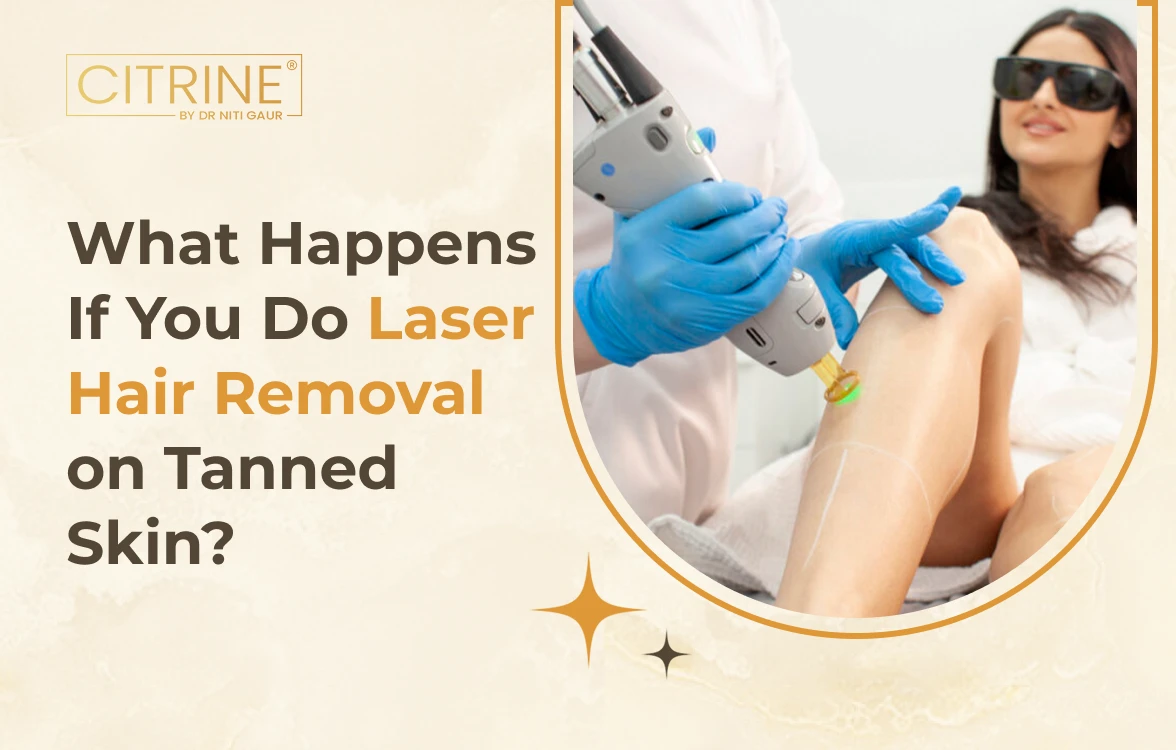
You just booked that beach vacation. You're excited. You already have your laser hair removal appointment scheduled for next week. Life is perfect.
Then reality hits: you're going to get tanned. And suddenly, you're left wondering—should I skip my appointment? What happens if I go through with it anyway? Will I end up with burnt skin?
If this sounds like you, you're not alone. At Citrine Clinic, we hear this question almost every summer. And the answer is more complicated than a simple "yes" or "no."
Why Your Tan and Laser Hair Removal Don't Mix (And What Happens If They Do)
Here's the uncomfortable truth: laser hair removal and tanned skin are like oil and water.
Your skin's color comes from melanin—a pigment that protects your skin from the sun. When you get a tan, your skin produces extra melanin. Lots of it.
Now, here's where the problem starts:
Laser hair removal works by targeting melanin in your hair follicles. The laser heats up the pigment, destroys the follicle, and boom—slower hair growth.
But when your skin is tanned, it's loaded with melanin everywhere—not just in your hair. So when the laser fires up, it doesn't know whether to target your hair or your skin. And that's when things go wrong.
What Happens If You Get Laser Hair Removal on Tanned Skin?
Scenario 1: Laser Burns (The Immediate Problem)
Your tanned skin absorbs way too much laser energy. The heat builds up. And suddenly, your skin is burning—literally.
You'll notice:
-
Severe redness that doesn't fade for hours
-
Blistering and peeling
-
Pain that makes you regret the entire decision
This isn't just discomfort. This is actual skin damage.
Scenario 2: Dark Spots That Won't Fade (The Long-Term Nightmare)
Your skin freaks out. In response to the laser heat, it produces even more melanin. This creates dark patches or spots called Post-Inflammatory Hyperpigmentation (PIH).
The worst part? These spots can stick around for months. Sometimes permanently.
Scenario 3: White Patches (The Permanent Problem)
On the flip side, the laser might completely destroy the melanin in your skin, leaving behind white, "bleached" patches. This hypopigmentation is even harder to fix than dark spots.
Imagine treating your legs for hair removal and ending up with permanent white patches. That's the risk you're taking.
The Different Types of Tans (And Why They All Spell Trouble)
Not all tans are created equal. Some are worse than others:
|
Type of Tan |
The Damage |
Your Move |
|
Natural Sun Tan |
Melanin production goes into overdrive. High risk of burns and PIH. |
Wait 4-6 weeks for the tan to fade completely. |
|
Tanning Bed Tan |
Ultra-intense UV exposure. Your skin is basically screaming for help. Maximum burn risk. |
Avoid treatment for at least 4 weeks. Seriously. |
|
Self-Tanner or Spray Tan |
Pigment sitting right on your skin surface. Laser thinks it's part of your skin. |
Strip it off completely with exfoliation at least 2 weeks before treatment. |
|
Sunburn |
Your skin is already damaged and inflamed. Adding laser = disaster. |
Don't even think about treatment. Wait until fully healed. |
How Doctors Adjust Laser Hair Removal for Tanned Skin
If you absolutely must get treated while your skin is slightly tanned, experienced dermatologists make adjustments:
1. They pick the right laser Not all lasers are created equal. The Nd:YAG laser (1064nm) is the safest option for tanned or darker skin because it penetrates deeper and avoids targeting surface melanin. Instead, it goes straight for the hair follicle.
2. They lower the power Think of it like turning down the heat on a stove. Lower energy settings mean less risk of burning your skin while still being effective.
3. They space out sessions Instead of coming in weekly, you might wait 3-4 weeks between sessions. This gives your skin time to heal and your tan time to fade.
4. They do a patch test first A small area gets treated to see how your skin responds. If it's not happy, they stop before treating your entire body.
The Real Question: Is It Worth the Risk?
Here's what Dr. Niti Gaur at Citrine Clinic recommends: It's probably not.
Yes, waiting 4-6 weeks feels like forever. Yes, you might have to reschedule your appointment. But the alternative—dealing with burned skin, dark spots, or white patches for months afterward—is so much worse.
Think about it: you're getting laser hair removal to look and feel better. Getting burned skin does the opposite.
What If You Already Made the Mistake?
If you've already had treatment while tanned, don't panic. But you need to be careful:
Immediately after treatment:
-
Apply cold compresses to reduce inflammation
-
Use aloe vera gel—it's your best friend right now
-
Take ibuprofen to reduce swelling and pain
For the next 2-4 weeks:
-
Wear loose clothing over treated areas
-
Skip the gym and hot yoga (sweat irritates damaged skin)
-
Apply high SPF sunscreen (at least SPF 50) every single day
-
Avoid additional sun exposure like the plague
-
Don't exfoliate or use active skincare products
Watch for complications:
-
If blistering gets worse, see a doctor
-
If dark spots appear and don't fade within 2-3 months, get professional treatment to fade them
-
If you develop white patches, see a dermatologist for options (they exist, but they're pricey)
Also Read: How to Treat Sun-Damaged and Tanned Skin: Dermatologist Treatments for Glowing Skin
When You Should Reschedule (Hint: Probably Now)
Reschedule if:
-
You got a tan in the last 4-6 weeks
-
You're planning to be in the sun heavily before your appointment
-
You just did a tanning bed session
-
You have sunburn—even mild sunburn
-
You applied self-tanner in the last 2 weeks
It's probably fine if:
-
Your tan completely faded 4+ weeks ago
-
Your skin is its natural color with no recent sun exposure
-
You've been religiously using SPF 50+ for weeks
The Bottom Line: Plan Ahead
The smartest move? Schedule your laser hair removal sessions during seasons when you're not planning beach trips, vacations, or outdoor activities. If you absolutely must have treatment while tanned, see an expert dermatologist who can assess your specific situation and make the call.
At Citrine Clinic, Dr. Niti Gaur will be honest with you. If your skin is too tanned, she'll tell you to reschedule. Not because she wants to lose your appointment, but because she wants you to get actual results instead of complications.
Because at the end of the day, smooth hair-free skin is only beautiful when it's healthy too.
Ready to Get It Done Right at Citrine Clinic?
Don't let a tan compromise your laser treatment results. Treating tanned skin too soon can increase the risk of irritation, pigmentation changes, and less effective outcomes.
Before starting treatment, schedule a consultation at Citrine Clinic with Dr. Niti Gaur. She will carefully assess your skin, determine whether you're ready for treatment, or recommend the ideal waiting period for the safest and most effective results. A professional evaluation can help ensure better outcomes and complete peace of mind.
You can also check our clinic location and patient reviews before visiting.
View Citrine clinic location, directions, and reviews on Google Maps
Frequently Asked Questions (FAQs)
1. How long should I wait after tanning to get laser hair removal?
It is suggested that you wait 4 to 6 weeks for the effects of your natural tan to diminish before undergoing a laser session.
2. Can I apply a self-tanner prior to undergoing a laser session?
No, the self-tanner deposits pigment on the skin surface. So do not use it and exfoliate it off at least two weeks prior.
3. Does laser hair removal cause permanent skin darkening?
If the procedure is performed on a tan, there’s an increased chance of developing hyperpigmentation (dark spots), which can be either temporary but will typically take a long time to fade.
4. What happens if I develop a sunburn after having had a laser treatment?
Sunburning recently treated skin significantly increases the risk of blisters, scarring, and long-term pigment changes.
5. Is there a specific laser that is safe for tanned skin?
The Nd:YAG 1064nm laser is the safest option for darker or tanned skin, but a consultation is still required to check for active inflammation.
About the Author