
 09 Jul 2026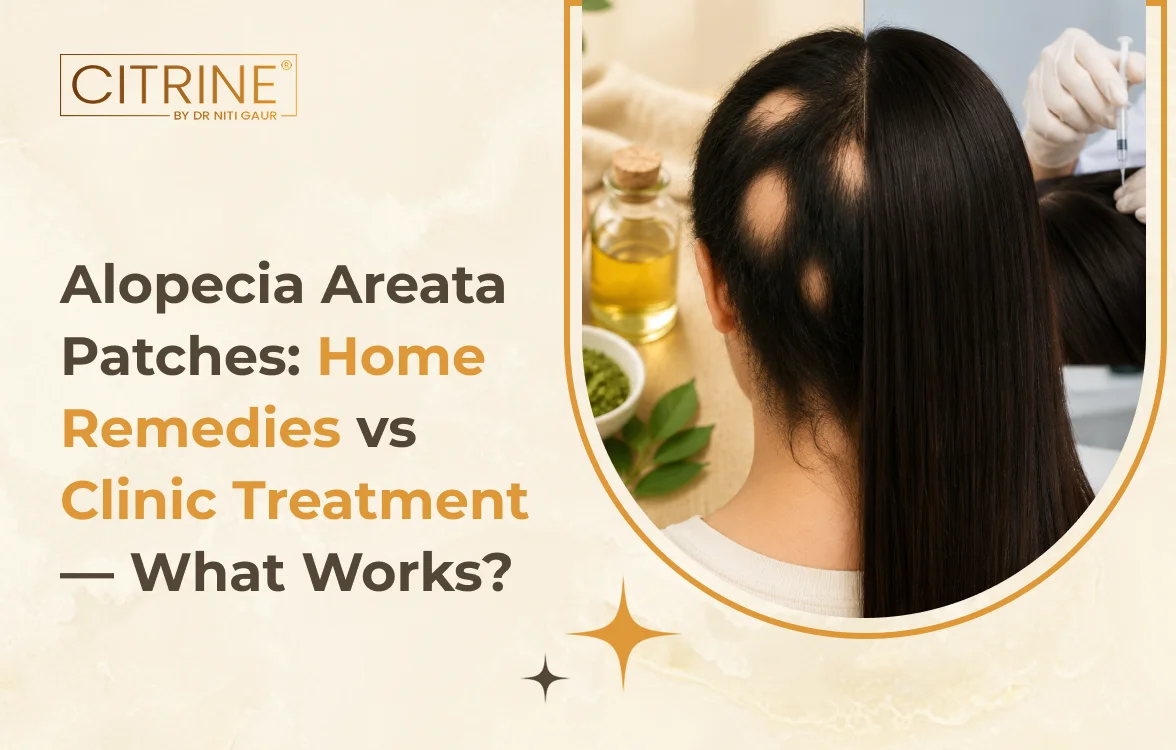
One of the canon events a person has to face in life is finding a bald patch near the back of their scalp on a fine morning. There are no pain or warning signs, just hair that disappears overnight.
As with anyone, the first instinct is not to visit a dermatologist; instead, people turn to the internet. There will be countless articles on social media about onion juice, garlic paste, rosemary oil, aloe vera, and coconut oil swearing that these methods help hair grow back.
Alopecia areata is not ordinary hair fall; it is an autoimmune condition. While certain home remedies may support overall scalp health, they don't necessarily address the underlying cause of patchy hair loss. Understanding the difference can improve the chances of successful hair regrowth.
Quick Summary
- Alopecia areata is an autoimmune condition where the immune system mistakenly attacks healthy hair follicles
- Home remedies like onion juice, aloe vera, and rosemary oil may improve scalp health but can not stop hair loss
- Some small patches may regrow on their own, while others require medical intervention
- Delaying professional treatment can allow patches to enlarge
- Dermatologists recommend treatment based on the size, location, duration, and severity of the condition
- At Citrine Clinic, Dr. Niti Gaur focuses on identifying the root cause of patchy hair loss before creating a personalised treatment plan.
What is Alopecia Areata?
Alopecia areata occurs when the body’s immune system mistakenly targets healthy hair follicles. Hair loss can occur for many reasons, such as nutritional deficiencies, hormonal changes, or genetic factors, but alopecia areata is entirely different.
As a result of alopecia areata, hair falls out in small patches mainly on the scalp, but it may also affect the beard, eyebrows, and other parts of the body. One of the most confusing aspects of alopecia areata is how suddenly it appears. The affected skin generally appears normal, and people often wonder whether the hair will grow back.
Sometimes, hair regrows within a few months, whereas individuals may develop multiple patches over the years.
Why Do Most People Try Home Remedies First?
There is no shortage of natural remedies claiming hair regrowth for alopecia areata. Many people simply prefer applying something at home rather than just visiting a clinic for prescribed medications. People prefer this approach because they worry about steroid-based procedures, side effects, cost, etc.
This approach is reasonable, but what is not reasonable is spending months experimenting with remedies with no improvement. The patches may remain unchanged or become larger.
The Most Popular Home Remedies—Do They Really Work?
Some of the remedies people commonly try to treat alopecia areata:
- Onion Juice: Onion juice is widely used as a home remedy to treat hair problems. Onion contains sulphur compounds that improve blood circulation and hair growth. Some research and studies also state that onion juice can boost hair regrowth in alopecia areata. While onion juice may have some potential, it should not be a primary source to treat an autoimmune condition.
- Aloe Vera: Aloe vera is renowned for its soothing properties to improve overall scalp comfort. However, there is no scientific evidence that shows aloe vera can rejuvenate hair growth by suppressing the immune attack on hair follicles. It could be a supportive part of hair care, but considering it as a solution for alopecia areata may be an overstatement.
- Rosemary Oil: Some research suggests that rosemary oil may support hair growth in people with androgenetic hair loss, but alopecia areata is a different issue. As much as rosemary oil is one of the most used natural hair-care ingredients, it cannot correct the immune response causing patchy hair loss.
- Coconut Oil: Coconut oil is one of the best remedies to improve hair softness and reduce protein loss, but it cannot reactivate hair follicles that no longer produce hair due to an autoimmune attack. Coconut oil may enhance the quality of existing hair, but it doesn’t treat alopecia areata
- Garlic, Amla, and Other Traditional Remedies: Garlic contains anti-inflammatory properties, while amla is rich in antioxidants and Vitamin C and may contribute to overall hair health. While these ingredients may help hair as part of a balanced diet, they cannot reverse alopecia areata patches.
Can Home Remedies Help at All?
Home remedies may help:
- Keep the scalp healthy
- Improve hair texture
- Reduce dryness
- Minimise breakage
- Encourage better overall hair care habits
Those are genuine benefits, but they cannot stop the immune system from attacking healthy hair follicles. That's where professional diagnosis begins to make a real difference.
When Home Remedies Stop Being Enough
One of the challenges with home remedies for alopecia areata is knowing when to stop experimenting and seek medical help. Some patches may regrow naturally, but the problem arises when months pass without improvement, and the hair loss begins to spread. Some signs that it is time to see a dermatologist include:
- The bald patch is getting larger
- New patches are appearing on the scalp
- Hair loss has started affecting the beard, eyebrows, or eyelashes
- There has been little or no regrowth after several months
- The condition keeps returning
Not every patch is alopecia areata; conditions like fungal infections, traction alopecia, trichotillomania, and certain nutritional deficiencies can sometimes look similar in the early stages.
What Treatments Do Dermatologists Actually Recommend?
There is no standard treatment for alopecia areata, as it depends on:
- the size and number of patches
- how long they've been present
- the patient's age
- previous episodes
- whether the hair loss is progressing
This is why a proper diagnosis is so important.
- Corticosteroid Injections: It is one of the most effective first-line treatments for small patches. This treatment reduces the immune activity around the affected hair follicles.
- Topical Medications: Creams or lotions may be recommended when injections are not suitable. It helps reduce inflammation around the hair follicles.
- PRP (Platelet-Rich Plasma): PRP treatment restores hair by injecting the patient’s own blood into the scalp to support follicle function.
- Oral Medications: Oral medications may be considered for patients with rapidly progressing alopecia areata, as these medications can influence the immune system.
At Citrine Clinic, Dr. Niti Gaur believes that treatment should never be selected simply because it's trending. Instead, every recommendation is based on a careful assessment of the patient's diagnosis, disease activity, and overall hair health.
Home Remedies vs Clinic Treatment: What's the Real Difference?
Here, home remedies and medical treatments are not competitors, but they serve different purposes. Home remedies help maintain a healthy scalp environment and improve the quality of existing hair. They are easily accessible and inexpensive.
While medical treatments are developed to address the disease itself, such as autoimmune conditions. They aim to reduce immune activity and encourage hair regrowth.
Home remedies support the scalp, while dermatologist treatments address the condition.
Understanding that distinction helps patients make more informed decisions instead of feeling disappointed when natural remedies don't deliver the expected results.
Why Early Diagnosis Can Make a Significant Difference
Most people spend months trying different remedies, but sometimes it doesn’t change the outcome. It can exacerbate the condition. Early consultation with a dermatologist may help confirm the condition.
A dermatologist can determine the following:
- Whether the hair loss is truly alopecia areata
- How active the condition currently is
- Whether additional investigations are needed
- Which treatment approach is most likely to benefit
At Citrine Clinic, Dr. Niti Gaur focuses on identifying the underlying cause before proceeding with the treatment.
Why Patients Trust Citrine Clinic for Hair Loss Management
Hair loss affects confidence and emotional well-being. A successful treatment begins with a good dermatologist who listens and understands the patient’s concerns.
At Citrine Clinic in Gurgaon, every patient undergoes a detailed consultation to get evaluated for their hair loss pattern and medical history before the treatment.
Dr. Niti Gaur creates personalised treatment plans for every individual rather than recommending the same treatment for everyone. That patient-centric approach is one of the reasons many individuals choose Citrine Clinic when seeking expert care for complex hair disorders.
Conclusion
People turn to home remedies for alopecia areata because they are accessible, affordable, and recommended by family, friends, or social media. However, an autoimmune condition requires more than home care. Home remedies like aloe vera, onion juice, etc., may contribute to a healthy scalp, but they cannot affect the immune response causing hair loss patches.
Alopecia areata is manageable when it's dicagnosed early and treated with an individualised approach. Consulting an experienced dermatologist can help clear the doubts regarding the condition.
At Citrine Clinic, Dr. Niti Gaur combines evidence-based dermatology with personalised treatment planning to help patients understand their condition for healthier hair.
Explore our clinic location & reviews.
View Citrine clinic location, directions, and reviews on Google Maps
Frequently Asked Questions (FAQs)
1. Can alopecia areata come back after successful treatment?
Yes, alopecia areata may recur after hair regrowth, as it is an autoimmune condition.
2. Does shaving the head help alopecia areata grow back faster?
No, shaving cannot affect the activity of hair follicles beneath the skin.
3. Can children develop alopecia areata?
Yes, alopecia areata can affect both adults and children. Early diagnosis may help.
4. Is alopecia areata contagious?
No, alopecia areata doesn’t spread from one person to another through contact.
5. Can stress cause alopecia areata?
Stress may act as a trigger who are genetically influenced by the condition.
6. Can diet reverse alopecia areata?
A nutritious diet supports hair health, but it cannot reverse the autoimmune mechanism.
7. How do I tell if my bald patch is alopecia areata or another type of hair loss?
Several scalp conditions appear as alopecia areata. A consultation with a dermatologist may help through a clinical examination.
About the Author