
 22 May 2026
There’s something about peak summer that makes skin feel constantly uncomfortable. One day it’s sudden acne breakouts, the next day your skin feels itchy, red, sweaty, irritated, or unusually dull despite using the same products you’ve always trusted. Add strong sun exposure, humidity, pollution, sweat, dust, and long outdoor hours into the mix, and the skin barrier starts reacting in ways that are hard to ignore.
A lot of people assume these changes are “normal summer skin problems” that will settle on their own. But summer-related skin allergies and reactions often become worse when they’re ignored or treated incorrectly with random home remedies, internet hacks, or harsh skincare products.
The reality is that summer affects every skin type differently. For some, it triggers painful acne flare-ups. For others, it leads to heat rash, tanning, pigmentation, itchy bumps, folliculitis, or sun sensitivity that makes even stepping outside uncomfortable.
The good news is that most summer skin concerns can be treated and managed effectively when the skin is properly evaluated and the treatment is customised according to the condition.
At Citrine Clinic, Dr. Niti Gaur focuses on treating summer skin concerns with a balanced approach that combines medical expertise, skin-safe technologies, and treatments that suit Indian skin and weather conditions.
Why Skin Problems Increase During Summer
Summer heat increases sweating and oil production, while prolonged sun exposure damages the skin barrier and increases inflammation. Humidity traps sweat, bacteria, and dirt on the skin, making pores clog more easily.
At the same time, excessive sun exposure stimulates melanin production, leading to tanning, pigmentation, melasma, and uneven skin tone. Heat and friction can also trigger allergic reactions, rashes, and infections in sensitive areas.
This is why skin that feels perfectly manageable during cooler months may suddenly start reacting during summer.
Acne Breakouts That Suddenly Get Worse in Summer
One of the most common summer skin concerns is acne flare-ups. Sweat, oil buildup, sunscreen residue, pollution, and clogged pores create the perfect environment for breakouts.
People often notice:
- Painful pimples around the forehead and jawline
- Tiny bumps caused by sweat and oil
- Increased blackheads and whiteheads
- Inflamed acne after long outdoor exposure
What makes summer acne tricky is that over-cleansing or using strong acne products can damage the skin barrier further, leading to irritation and more breakouts.
At Citrine Clinic, Dr. Niti Gaur carefully assesses the type and severity of acne before recommending treatment. Depending on the skin condition, treatments may include:
- Prescription topical creams
- Oil-control skincare routines
- Chemical peels for acne and marks
- HydraFacial-based deep cleansing treatments
- Laser treatments for post-acne pigmentation and scars
Her treatment approach focuses not just on calming active acne but also on preventing recurring summer flare-ups without over-drying the skin.
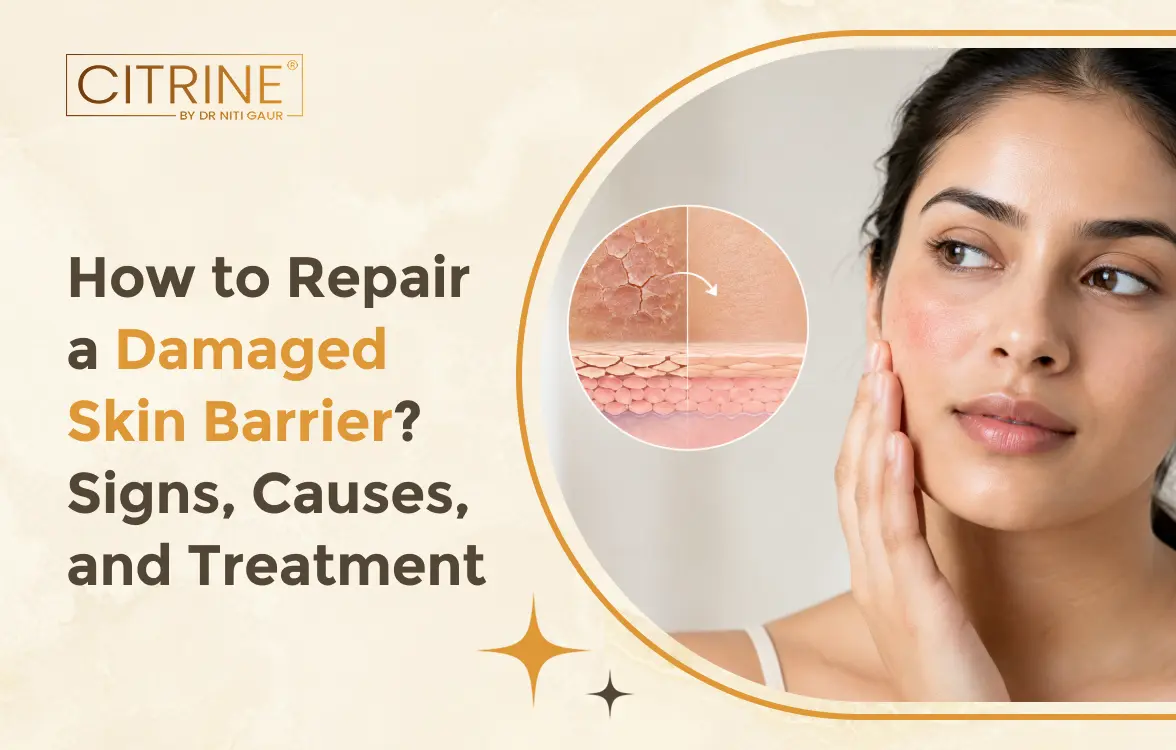
Dry, Irritated Skin in Summer Is More Common Than You Think
Most people associate summer with oily skin, but excessive heat, sun exposure, over-washing, and constant air-conditioning can actually leave the skin dry, dehydrated, and irritated.
The skin may start feeling:
- Tight and itchy
- Red and sensitive
- Rough or flaky in patches
- Uncomfortable after sun exposure
This often happens because the skin barrier becomes damaged and loses moisture faster.
Dr. Niti Gaur focuses heavily on skin barrier repair instead of simply masking symptoms. Depending on the severity of irritation, treatments at Citrine Clinic may include:
- Medical moisturising treatments
- Barrier-repair creams
- Hydration-focused facials
- Anti-inflammatory topical medications
- Skin-soothing laser therapies for redness and sensitivity
The goal is to restore skin comfort while reducing irritation triggers that become worse during hot weather.
Folliculitis: Those Tiny Painful Bumps After Sweating
Folliculitis is another common summer condition that many people confuse with acne or heat rash.
It happens when hair follicles become inflamed due to sweat, friction, bacterial buildup, or trapped moisture. It often appears as small red or pus-filled bumps on areas like:
- Back
- Chest
- Thighs
- Underarms
- Buttocks
Tight clothing, excessive sweating, gym sessions, and humid weather can make folliculitis worse.
At Citrine Clinic, Dr. Niti Gaur treats folliculitis by identifying the exact trigger first. Treatment may involve:
- Topical antibiotics
- Anti-inflammatory creams
- Medicated washes
- Oral medication when required
- Laser hair removal in recurrent cases
Laser hair reduction can especially help people who repeatedly experience folliculitis due to ingrown hair and trapped sweat around hair follicles.
Heat Rash That Makes Skin Feel Constantly Itchy
Heat rash can make summer feel unbearable. It usually appears as tiny red bumps accompanied by itching, prickling, or burning sensations, especially in areas where sweat gets trapped.
Common areas include:
- Neck
- Underarms
- Back
- Inner thighs
- Under the breasts
While mild heat rash may improve with cooling measures, severe or recurring rashes often need medical treatment because continuous sweating and friction can worsen inflammation.
Dr. Niti Gaur recommends treatment plans based on how sensitive or inflamed the skin is. These may include:
- Calming lotions and creams
- Anti-inflammatory medications
- Sweat-management treatments
- Barrier-repair skincare
- Lifestyle modifications to reduce recurrence
At Citrine Clinic, the focus remains on reducing irritation without using unnecessarily harsh products that may worsen sensitivity during summer.
Melasma and Pigmentation Become More Noticeable in Summer
Summer sun exposure is one of the biggest triggers for pigmentation and melasma.
Even brief sun exposure can worsen:
- Dark patches on cheeks and forehead
- Uneven skin tone
- Stubborn pigmentation around the mouth
- Sun-induced discoloration
What many people don’t realise is that aggressive home remedies often worsen pigmentation instead of treating it.
Dr. Niti Gaur takes a gradual and skin-safe approach towards pigmentation management, especially because Indian skin can be prone to post-inflammatory pigmentation if treated harshly.
Depending on the condition, treatment at Citrine Clinic may include:
- Medical-grade depigmentation creams
- Chemical peels
- Laser toning treatments
- Skin-brightening procedures
- Strict sunscreen protocols
Her focus remains on improving skin clarity safely while maintaining long-term skin health.
Tanning That Doesn’t Go Away Easily
Summer tanning is no longer just about temporary darkening. Repeated UV exposure can leave the skin dull, uneven, and damaged for months.
People often notice:
- Patchy tanning
- Uneven complexion
- Loss of natural glow
- Rough skin texture
At Citrine Clinic, Dr. Niti Gaur recommends customised tan-removal and skin-rejuvenation treatments instead of aggressive bleaching procedures.
Depending on the skin type and degree of tanning, treatments may include:
- Brightening facials
- Medi-facials
- Chemical exfoliation
- Laser rejuvenation
- Hydration therapies
The idea is not to artificially lighten the skin but to restore healthy, even-toned skin that has been damaged by excessive sun exposure.
Sun Allergy: When Skin Reacts to Sunlight Itself
Some people experience intense itching, redness, tiny bumps, or rashes after even limited sun exposure. This condition is commonly referred to as sun allergy or photosensitivity.
It can make outdoor exposure extremely uncomfortable and may worsen with:
Peak afternoon heat
Certain skincare products
Medications
UV sensitivity
At Citrine Clinic, Dr. Niti Gaur carefully evaluates whether the reaction is due to allergy, sensitivity, or an underlying skin condition before recommending treatment.
Treatment may include:
- Anti-allergic medications
- Barrier-repair skincare
- Topical steroids when required
- Photoprotection strategies
- Skin-calming treatments
More importantly, patients are guided on how to prevent future flare-ups without becoming dependent on heavy medications.
Your Skin Usually Tells You When It Needs Help
A lot of people keep waiting for summer skin problems to “settle on their own,” but persistent irritation, rashes, acne, pigmentation, or itching often need proper dermatological attention.
The earlier these concerns are treated, the easier it becomes to prevent long-term damage, stubborn pigmentation, scarring, or chronic sensitivity.
At Citrine Clinic, Dr. Niti Gaur focuses on creating personalised treatment plans that are practical, medically sound, and suited for real summer skin concerns rather than temporary fixes. To book a consultation with Dr. Niti Gaur, fill in the appointment booking form mentioned on this page or contact the number mentioned on this page.
Sometimes, the difference between “managing” your skin and actually feeling comfortable in it again starts with understanding what your skin has been trying to tell you all along.
You can also check our clinic location and patient reviews before visiting.
View Citrine clinic location, directions, and reviews on Google Maps
About the Author