
 06 Aug 2026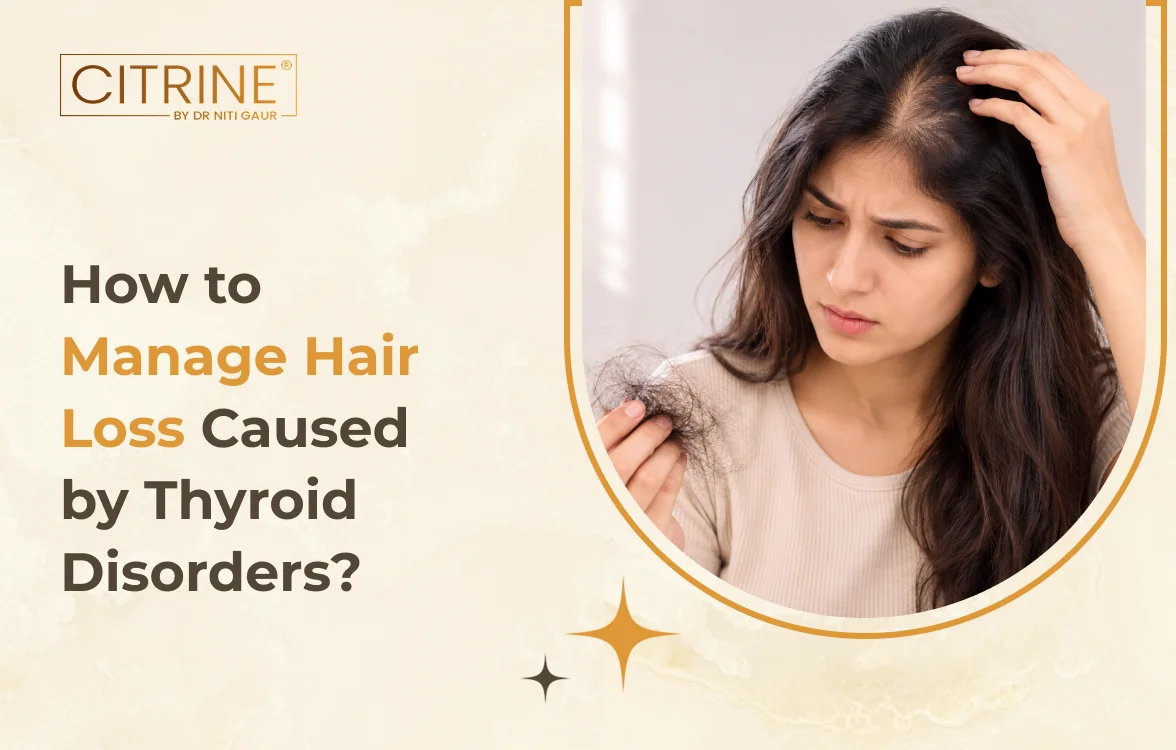
Hair loss is a common concern, primarily because of genetics, stress, damaging haircare habits, hormonal imbalance, and poor nutrition. Sometimes, the underlying reason could be a medical condition resulting in hormonal imbalance. Thyroid disorder is one such condition that causes excessive hair shedding. Hypothyroidism (underactive thyroid) and hyperthyroidism (overactive thyroid) can disrupt the normal hair growth cycle, causing noticeable hair thinning or hair loss across the scalp in both men and women.
Thankfully, thyroid disorder-related hair loss is manageable, shares Dr. Niti Gaur, dermatologist in Gurgaon. With thyroid hormones at a normal level and the root cause addressed, many patients can experience gradual follicular revitalization, progressive hair regrowth, and slow, gradual hair lengthening and thickening. Here, a combination approach works- a proper medical treatment, nutritional support, and a hair care routine.
In this article, our expert dermatologist explains how hair loss is caused by thyroid disorders and how it can be managed.
Quick Summary About Thyroid Disorder-Related Hair Loss
- The main cause is thyroid hormone imbalance.
- The signs include hair thinning, excessive shedding, and brittle hair.
- The diagnosis involves thyroid blood tests and scalp evaluation.
- The treatment includes thyroid medication, hair therapies, and nutritional support.
- The recovery usually takes 3-12 months after hormone levels stabilize.
- The prognosis is gradual hair regrowth with proper treatment and follow-up.
- The best approach is early thyroid management with dermatologist-guided care.
Thyroid Disorder-Related Hair Loss Signs and Symptoms
- Diffuse, overall hair thinning
- Increased hair shedding across the whole scalp
- Dry, coarse, brittle hair
- Thinning on the outer third of eyebrows
- Slow hair regrowth.
All the above signs show up alongside other thyroid disorder symptoms like fatigue, dry skin, weight changes, hot/cold sensitivity, irregular menses, unusual bowel movements, swollen neck, slow or rapid heart rate, and fluctuating mood.
Thyroid Disorder-Related Hair Loss Causes
These thyroid diseases can trigger hair loss:
- Hypothyroidism that slows most bodily functions
- Hyperthyroidism that speeds up metabolism
- Autoimmune thyroid disease.
Thyroid Disorder-Related Hair Loss Treatment Options
- Prescription thyroid medicines to target and fix the thyroid hormone levels
- Nutritional assessment and dietary adjustments
- Medications to promote hair regrowth (like minoxidil or finasteride)
- Hair regenerative therapies like P-RP or GFC therapy (in selected cases)
Hair Recovery Timeline
- Reduced hair thinning/shedding: Around 2-3 months after the thyroid hormone levels stabilize
- Noticeable hair regrowth: 3 to 6 months
- Significant improvement: 6 to 12 months.
How Do Thyroid Disorders Cause Hair Loss?
The thyroid gland produces T3 and T4 hormones that together help regulate metabolism, keep heart rate steady, and maintain body heat. They even interfere with growth and repair of most tissues, including hair follicles.
Normally, hair growth takes place in a cycle, involving three phases:
- Anagen- the hair growth phase
- Catagen- the transition phase
- Telogen- the resting phase, which is followed by hair shedding.
When thyroid hormones are outside the normal range, either too high or too low, they cause more hair follicles to prematurely enter the resting phase. As a result, there is increased hair shedding- a hair loss condition called telogen effluvium.
Who is at Higher Risk of Thyroid-Related Hair Loss?
Hair loss due to thyroid disorders can affect anyone, but it is more common in:
- Pregnant women or during the menopause in females
- People suffering from autoimmune thyroid disorders
- People with a family history of thyroid disease
- People with long-standing or untreated thyroid imbalance
- People with iron, Vitamin D, Vitamin B12, or zinc deficiency.
How is Thyroid-Related Hair Loss Diagnosed?
For effective management of thyroid-related hair loss, identifying the main culprit is very important. So, a dermatologist during consultation performs diagnosis by:
- Reviewing the patient’s medical records: This includes the hair loss pattern, onset and duration of the symptoms, current medications, family health history, and previous thyroid disease.
- Physically examining the patient: The scalp and hair are thoroughly evaluated.
- Ordering routine blood investigations: These include a thyroid profile test to check T3, T4, and TSH levels, thyroid antibody tests, iron profile test, Vitamin D and Vitamin B12 tests, ferritin, and zinc to confirm the type of thyroid disorder and identify nutritional deficiencies.
When To See a Dermatologist?
Consult a dermatologist if you notice:
- Persistent hair shedding for over 2-3 months
- Experiencing rapid or severe hair thinning
- Excessive hair loss due to uncontrolled thyroid levels
- Itching scalp, redness, or scaling
- Patchy hair loss or sudden bald spots.
How is Thyroid Disorder Related Hair Loss Managed?
The primary treatment is correction of the diagnosed thyroid disorder with medications. Once thyroid hormone levels are normalized and remain stable, the hair follicles start following the normal hair growth cycle.
A dermatologist may recommend some medical treatments, tailored to the cause and severity of hair loss, to support the hair follicles' recovery. These include:
- Topical minoxidil- to stimulate hair regrowth
- Plate-let-rich plas-ma (PR-P) or Growth factor concentrate (GFC) therapy- to regenerate/revive hair follicles with natural growth factors in suitable candidates
- Low-level laser therapy- to calm inflammation and support hair growth by improving hair follicles' activity
- Nutrition supplements- to treat deficiencies of iron, zinc, Vitamin B12, and Vitamin D.
As the hair regrows thick and healthy in hair-thinning and hair loss affected areas, dermatologists recommend:
- Use of mild hair shampoo with conditioner.
- Avoid tight hairstyles and chemical and heat-based hair treatments/styling.
- Detangle hair when slightly wet using a wide-tooth comb.
- Have a hair-healthy diet, rich in protein, iron, zinc, Vitamin B12, and Vitamin C.
- Protect the scalp from direct UV exposure.
- These haircare measures help minimize breakage of the regenerating/recovering hair.
Does Hair Grow Back Following Treatment of Thyroid Disorder?
Mostly yes, but you need to show patience.
As the thyroid hormone levels get back to normal:
- The hair shedding slows down.
- Healthier, thicker hair grows in over several months.
The recovery of hair from thyroid disorder generally depends on:
- The duration of the thyroid disorder
- Extent of hair thinning/hair loss
- Presence of nutritional deficiencies
- Health status, any other medical issues
- The individual hair growth cycle.
Also Read: How Is GFC Hair Treatment Done? Complete Procedure Explained
Final Takeaway
Hair loss caused by thyroid disorders is generally temporary and usually slows down with normalization of the thyroid hormone levels. However, hair grows back very slowly, so noticeable recovery can take several months to a year. To speed up recovery and improve outcomes, the best approach is to get the thyroid condition well managed and undergo dermatologist-guided treatment alongside a gentle haircare routine.
An early diagnosis, personalized treatment plan, and consistent follow-up ensure optimal healthy hair growth. At Citrine Clinic, our top-rated dermatologist Dr. Niti Gaur for affordable hair loss management in Gurgaon.
She recommends treatment like topical medications, nutrient supplementation, hair regenerative treatments, or LLLT therapy, whichever is appropriate for the patient. Schedule a visit to explore hair loss treatments in Gurgaon.
Navigate to Citrine Clinic with ease and read trusted patient testimonials.
FAQs About Thyroid-Related Hair Loss and Its Management
How long does thyroid disorder-related hair loss last?
Most patients experience less hair fall within 3 months of having their thyroid hormones within range. For more noticeable improvement from hair thinning/hair loss, 6-12 months of patience is required.
Can thyroid medication immediately stop hair shedding?
Hair follicles require time to return to their normal hair growth cycle. So, the noticeable improvement takes some time.
Can PR-P or GFC hair therapy help thyroid-related hair loss?
Yes, in selected patients. These hair regenerative therapies work when thyroid disease is stable and supportive hair regrowth therapy is needed alongside thyroid disorder treatments.
Will my hair grow back after thyroid treatment?
Mostly, it happens over several months. Thyroid treatment gets thyroid hormone levels back into the normal range to reduce hair shedding and gradually support healthy, thick hair regrowth.
When should I consult a dermatologist for thyroid-related hair loss?
Schedule a consultation for personalized evaluation and treatment when hair shedding is not slowing down or getting severe, accompanied by other scalp issues, despite controlled thyroid hormone levels.
About the Author