
 23 Apr 2026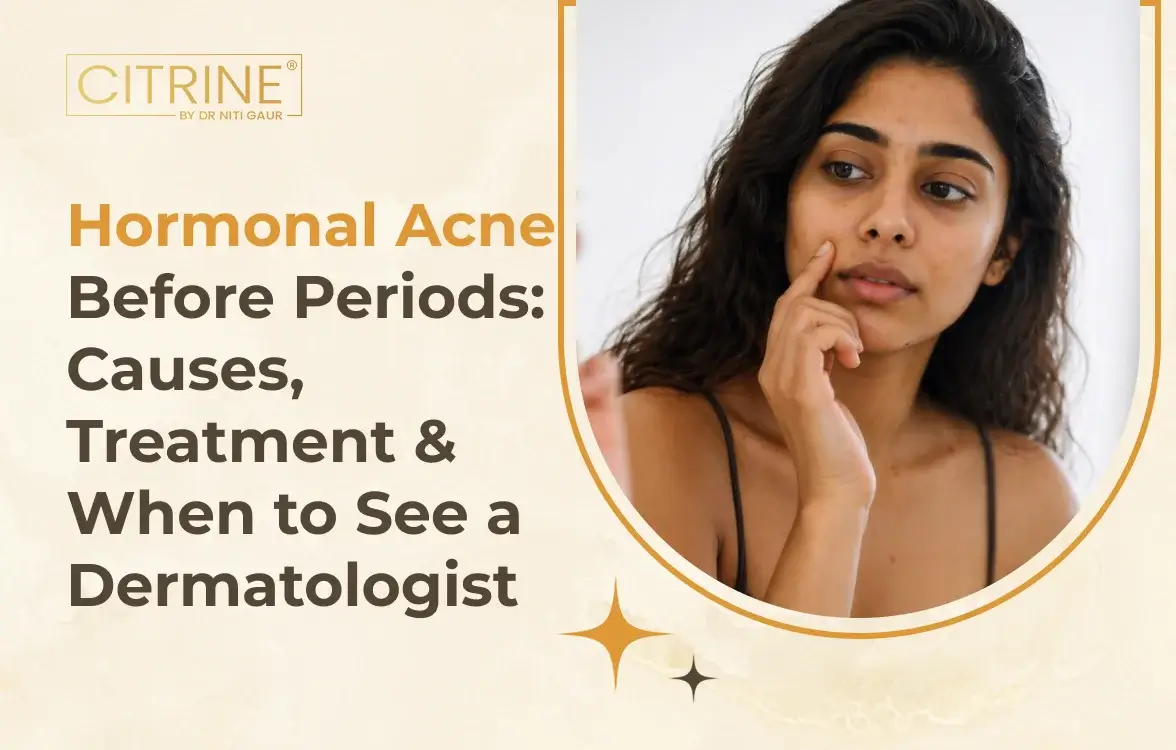
Do you also experience acne breakouts before your menstrual cycle every month? You aren’t alone in this; hormonal acne before periods is extremely common among women in their 20s, 30s, and even 40s. The acne usually appears on the jawline, chin, and cheeks and is more painful than regular acne.
Hormonal acne is manageable, and the right guide approved by a dermatologist can help reduce and prevent these monthly breakouts.
This blog explains why hormonal acne appears, how to treat it, and when to consult a dermatologist.
What is Hormonal Acne Before Periods?
Hormonal acne is triggered by hormonal shifts, specifically during the menstrual cycle. Estrogen levels drop and progesterone rises before the menstrual cycle, which leads to:
- Increased oil production
- Clogged pores
- Inflammation
- Painful cystic acne
Hormonal acne usually appears
- 7-10 days before periods
- Around chin and jawline
- As deep and painful pimples
- Repeating every month
At Citrine Clinic, led by Dr. Niti Gaur, dermatologists often consult women dealing with monthly acne breakouts. This breakout often requires hormonal acne treatments and not just generic skincare.
Hormones, stress, diet, and lifestyle factors can all worsen acne, which is why dermatologist evaluation is important to determine the root cause.
Why Do You Get Acne Before Periods?
Hormonal acne before periods occur due to various factors:
1. Hormonal Shifts- Hormonal imbalance leads to:
Inflammation
Bacterial growth
Excess oil
2. Increased Oil Production- Hormones boost sebaceous glands (oil-producing glands) before the menstrual cycle, which causes clogged pores and oily skin.
3. Genetics- Hormonal acne may be passed down from your mother or sister. You may experience it due to genetics.
4. Stress and Lifestyle- Stress fuels cortisol, which plays a role in worsening hormonal acne.
5. Diet Factors- Hormonal acne may be worsened by certain foods, such as high-sugar foods, dairy products, and processed foods.
What are the Common Signs of Hormonal Acne?
You may be having hormonal acne if you notice these:
- Breakouts appear before periods
- Acne occurs around the jawline and chin
- Pimples are painful and deep
- Acne repeats monthly
- Acne appears in adulthood
Hormonal acne is completely different than regular acne and requires personalised treatment plans
Best Treatments for Hormonal Acne Before Periods
The treatment approach for hormonal acne is different from regular acne. Dermatologists aim to prevent monthly flare-ups. At Citrine Clinic, treatments are personalised based on
the hormonal pattern and acne severity.
1. Prescription Topical Treatments- Experts prescribe medical-grade creams to control hormonal acne:
- Benzoyl peroxide to reduce acne bacteria
- Azelaic acid to reduce marks
- Salicylic acid to reduce oil buildup
These treatments contribute in preventing acne before the menstrual cycle.
2. Cortisone Injections for Painful Cystic Acne- Sometimes, dermatologists may use spot injections to:
- Reduce inflammation quickly
- Prevent scarring
- Flatten cystic acne
Cystic acne often occurs due to hormonal fluctuations, and the injections prevent acne from developing into painful and deep pimples, before the periods.
3. Oral medications- When the acne recurs every month, dermatologists may recommend oral medications:
- Anti-androgen medications (Control oil production)
- Short-term oral antibiotics (reduce inflammation)
These treatments are helpful when acne is painful and keeps recurring monthly.
When Should You See a Dermatologist?
You should consult a dermatologist if:
- Acne appears every month
- Acne is painful or cystic
- Acne leaves marks or scars
- Over-the-counter products don’t work
- Acne worsens with age
At Citrine Clinic, led by Dr. Niti Gaur, dermatologists follow customised acne treatment plans based on the skin type, severity of acne, and hormonal patterns. Personalised
treatment helps prevent future breakouts, not just treat current acne.
Why Adult Hormonal Acne Needs Professional Treatment?
Hormonal acne tends to:
- Be deeper and more painful
- Leave pigmentation
- Cause acne scars
- Recur monthly
Professional treatment helps:
- Reduce breakouts
- Prevent scars
- Improve skin texture
- Restore clear skin
How to Differentiate Hormonal Acne from Regular Acne
| Hormonal Acne | Regular Acne |
| Appears right before periods | Appears randomly |
| Appears on the jawline & chin | Appears on forehead & cheeks |
| Often form into painful cystic acne | Small and tiny pimples |
| Common among adult women | Common among teenage girls |
| Recurs monthly | Not cyclical |
Home Remedies for Hormonal Acne
Dermatologists often recommend the following:
- Gentle cleanser
- Oil-free moisturizer
- Non-comedogenic sunscreen
- Avoid picking at acne
- Reduce stress
However, home care alone may not be enough for recurring hormonal acne.
Lifestyle Tips to Reduce Hormonal Acne
Small changes can help:
- Sleep well
- Manage stress
- Avoid heavy makeup
- Follow consistent skincare
- Eat a balanced diet
These lifestyle changes support treatment results.
Conclusion
Hormonal acne before the menstrual cycle is irritating, but it is manageable. With the help of correct guidance from a dermatologist, hormonal acne can be prevented to maintain clearer skin. If you experience monthly acne flare-ups, it is time you consulted a dermatologist and received a personalised treatment plan.
At Citrine Clinic by Dr Niti Gaur, advanced acne treatments combined with expert evaluation help address hormonal acne at its root, not just the symptoms.
You can also check Citrine Clinic location and patient reviews before visiting.
View Citrine clinic location, directions, and reviews on Google Maps
Frequently Asked Questions (FAQs)
1. Why does hormonal acne need a different approach?
Hormonal acne is painful, appears repeatedly, and leaves pigmentation. It requires preventive treatment frequently.
2. Is it normal to get acne before periods?
It is common to get acne before the menstrual cycle. Research suggests that over 60% of women experience acne flare-ups before their periods. It happens due to hormonal fluctuations that promote oil production and inflammation.
3. Why is hormonal acne more painful than regular acne?
Hormonal acne forms deeper under the skin and is more painful compared to regular acne. Cystic acne takes longer to heal and leaves marks.
4. How many days before my period do I get pimples?
Hormonal acne often appears about a week before periods and may improve after menstruation begins.
5. Can hormonal acne mean hormonal imbalance?
It doesn’t always mean this. Mild acne before periods is common and normal. However, when acne is severe and associated with an irregular cycle, it may require medical attention.
6. Why am I getting hormonal acne before my period?
This acne occurs due to hormonal fluctuations (estrogen and progesterone) that increase oil production and cause deep cysts on the chin and jawline.
About the Author