
 25 Jun 2026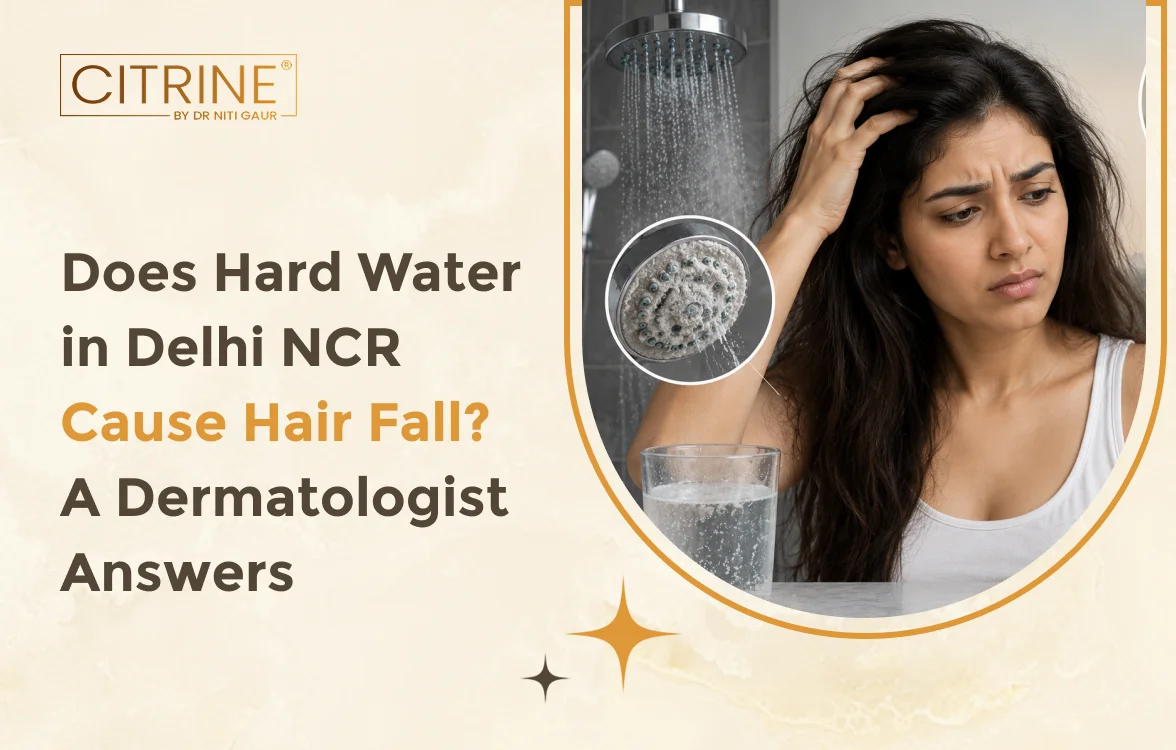
You recently moved to Gurgaon or Noida, and suddenly you are losing twice as much hair as usual. Is the water in Delhi NCR actually to blame?
It's a question many residents ask. A few months after moving to the region, people often notice that their hair feels rougher, their scalp becomes drier, and hair fall seems more noticeable. Since Delhi NCR is known for its hard water and high TDS levels, it's easy to assume that the water coming from your shower is entirely to blame.
But the reality is a little more complicated.
Hard water does not directly cause permanent hair loss or baldness. However, it can affect the health of your hair and scalp by making the hair strands dry, brittle, and more prone to breakage. It can also make existing hair fall concerns appear more severe.
In this guide, we will look at what dermatologists say about hard water and hair loss, why so many people in Delhi NCR experience these concerns, and the steps you can take to protect your hair.
Quick Summary
- Delhi NCR relies heavily on groundwater and borewells, leading to exceptionally hard water.
- This water is loaded with heavy minerals like calcium and magnesium.
- Hard water won't kill your hair roots or cause irreversible, pattern baldness.
- Instead, it leaves hair dry, brittle, and highly prone to breakage.
- If you already have a hair thinning condition, hard water makes it look much worse.
- Using shower filters, clarifying shampoos, and targeted hair care can minimize hair damage caused by hard water.
- If your hair loss is extreme or persistent, you need to seek help from a dermatologist.
What Is Hard Water and Why Does It Mess with Your Hair?
Hard water is water that carries a heavy load of dissolved minerals. The main culprits are:
- Calcium
- Magnesium
- Iron
We measure these dissolved minerals using a metric called Total Dissolved Solids, or TDS.
Understanding TDS Levels
| TDS Level | Water Quality |
| Below 300 ppm | Soft water |
| 300 to 600 ppm | Moderately hard |
| 600 to 1000 ppm | Hard water |
| Above 1000 ppm | Very hard water |
In many residential societies across Delhi, Noida, and Gurgaon, TDS levels frequently cross the 1000 ppm mark.
When you wash your hair with this water, these minerals leave a crusty layer on your hair shafts and scalp. This makes it incredibly difficult for your shampoos and conditioners to rinse away properly.
Is the Water in Delhi NCR Really That Hard?
Yes, the water quality across Delhi NCR is genuinely tough on hair.
There are a few big reasons for this:
- Most areas depend deeply on underground water networks.
- Societies frequently use deep borewells.
- The local underground rock structures are naturally mineral-rich.
- Many sectors rely heavily on private water tankers.
Because of this, residents regularly observe these signs:
- White, chalky crust on bathroom taps
- Stubborn mineral stains on bathroom tiles
- Hair that feels stiff or straw-like right after a wash
- Constant frizz that no serum seems to fix
Does Hard Water Directly Cause Hair Loss?
The short answer is no.
There is zero scientific proof that hard water damages the actual hair follicle underground or triggers permanent genetic baldness.
Instead, hard water is responsible for:
- Extreme hair breakage along the shaft
- Chronic scalp dryness and irritation
- Increased daily shedding from tangles
- Rough, unmanageable hair texture
- Exaggerating the appearance of existing hair thinning
What Happens When You Wash Your Hair With Hard Water?
Every single time you step into the shower, minerals coat your hair strands.
This mineral buildup can affect your hair in several ways:
- Shampoo may not lather properly
- A layer of mineral residue can remain on the hair
- The hair becomes dry and rough
- Hair strands rub against each other more easily, causing friction
- The hair becomes weaker and may break while brushing or styling
Over time, your hair starts looking completely lifeless, tangles into knots instantly, and develops split ends.
Who suffers the most? This mineral damage hits hardest if you color your hair, get chemical treatments like keratin, use straighteners frequently, or have naturally curly or dry hair textures.
Why Does Hair Fall Spike Right After Moving to Delhi?
This is where the problem gets a bit more complicated. Hard water is not just the only factor that contributes to hair fall.
When you relocate to the Delhi NCR region, your body deals with a massive shift all at once.
The Combined Triggers
- Sudden exposure to mineral-heavy water.
- Mental stress arising from changing locations or starting a new job
- A high concentration of air pollution
- Changes in daily diet and eating routine
- Disrupted sleep cycle because of longer commute
- Hidden vitamin deficiencies (like Vitamin D3 or B12)
- Sudden hormonal shifts
- Underlying genetic thinning
This is why so many people feel that their hair changed soon after moving to Delhi. In reality, increased hair fall is usually the result of several factors working together, not just hard water.
Also Read: How Pollution in Delhi NCR Damages Your Skin & Hair?
How Hard Water Affects Your Scalp?
Your hair strands are not the only thing that is affected, your scalp suffers too.
You might notice:
Persistent scalp dryness
Uncomfortable itching right after a wash
Flaky patches that look like dandruff
Layered product and mineral buildup
Chronic redness and micro-inflammation
If you already deal with conditions like seborrheic dermatitis or have a naturally sensitive skin type, hard water can make these symptoms worse.
Signs Your Hair Issues are Caused Due to Hard Water
You are likely dealing with mineral buildup if you notice the following signs:
- Your hair feels coarse and sticky even when wet.
- You have to use double the shampoo just to get a slight lather.
- Your hair knots up the second you move your head.
- You see broken hair on your bathroom floor.
- Your hair looks completely matte and lacks any natural shine.
- Your scalp feels tight, dry, or itchy a day after washing.
Hard Water vs. Soft Water Comparison
| Feature | Hard Water | Soft Water |
| Mineral Load | Very high (Calcium/Magnesium) | Very low and balanced |
| Shampoo Performance | Poor lather, requires more product | Lathers instantly with less product |
| Residue Left Behind | Heavy mineral film on scalp/hair | Rinses away completely clean |
| Overall Hair Texture | Stiff, dry, and prone to frizz | Smooth, soft, and easy to manage |
| Breakage Risk | Significantly higher due to friction | Much lower risk of breakage |
Soft water can make hair easier to manage and improve its texture, but it will not treat underlying causes of hair loss.
Does Using RO Water to Wash Hair Actually Work?
A very common local hack is switching to RO or purified water for hair washes.
The reality is that it absolutely helps, but within limits. Using RO water for your final rinse can prevent new minerals from locking onto your hair, making it feel noticeably softer and cutting down on structural breakage. However, it cannot fix genetic hair thinning or solve internal nutritional deficiencies.
Simple Ways to Protect Your Hair from Hard Water
You can easily minimize the daily damage with these simple steps:
- Install a Quality Shower Filter: A particular filter helps catch heavy minerals before they even touch your head.
- Use a Clarifying Shampoo: Try a clarifying shampoo once a week to get rid of all the accumulated minerals.
- Do Not Skip Conditioners: Apply some intensive conditioner onto your mid-section and ends to replace lost moisture and reduce friction.
- Stay Away From Heat Styling Tools: Stay away from blow-dryers and straighteners wherever possible because heat worsens hard water dryness.
- Add a Leave-In Conditioning Serum: Apply some serum on your damp hair to seal in moisture. This will make hair easy to comb.
Common Mistakes to Avoid
- Blaming Water for Everything: Ignoring health issues while changing your water will not solve hair concerns.
- Neglecting Scalp Health: Letting your dandruff and other inflammation go untreated is damaging your hair follicles slowly.
- Shampooing Hair Too Often: Too much shampooing to remove that "sticky" feeling is dehydrating your scalp.
- Following Aggressive Hair Remedies: Using very harsh ingredients on your sensitive scalp can irritate it more.
- Delaying Visit to See a Professional: Delaying your visit to a dermatologist may allow hair loss to progress further.
What Do Dermatologists Recommend?
Dermatologists usually recommend a two-step approach: protecting the hair from hard water damage while also identifying the underlying cause of hair loss.
According to Delhi-based dermatologist Dr. Niti Gaur, hard water can contribute to hair damage and increased breakage, but it is not the only cause of significant hair loss. In patients who experience increased shedding after moving to Delhi NCR, she assesses other potential triggers, including stress, dietary deficiencies, thyroid problems, and underlying genetic hair thinning.
When to See a Dermatologist for Hair Fall Concerns?
You should schedule a professional evaluation if:
- Your excessive shedding continues for more than three consecutive months.
- You start noticing a wider hair parting line or visible patches of scalp.
- Your hair comes out in large clumps during regular brushing or washing.
- You develop defined, round bald spots anywhere on your scalp.
- Your scalp experiences severe flaking, intense itching, or painful burning.
At Citrine Clinic, the experts focus on diagnostics rather than providing temporary solutions. Depending on what the cause of hair fall is, Dr. Niti Gaur recommends medical prescriptions, scalp therapy, P-R-P, GFC, or changes in diet to restore hair growth.
Final Takeaway
So, does the water in Delhi NCR cause hair fall?
Not directly. Hard water is unlikely to cause permanent baldness, but it can make your hair dry, brittle, and more prone to breakage. It may also make existing hair loss concerns appear more noticeable.
If you've noticed a change in your hair after moving to Delhi NCR, don't assume that hard water is the only reason. Hair fall is often influenced by several factors, and a proper medical evaluation can help identify the underlying cause and guide the right treatment approach.
If you are experiencing persistent hair shedding or noticeable thinning, consulting an experienced dermatologist such as Dr. Niti Gaur at Citrine Clinic can help determine whether hard water is contributing to your concerns and whether there are other factors affecting your hair health.
To book a consultation with Dr. Niti Gaur, visit Citrine Clinic now.
You can also check our clinic location and patient reviews before visiting.
View Citrine clinic location, directions, and reviews on Google Maps
Frequently Asked Questions
1. Does Delhi water cause hair loss?
Delhi’s hard water causes severe hair dryness and breakage, but it does not cause permanent baldness or damage hair follicles.
2. Will hair grow back after hard water damage?
Yes. Once you clear the mineral buildup and protect the hair shaft from future exposure, your hair quality will improve.
3. How to know whether your hair is damaged by hard water?
Pay attention to the stiffness or straw-like hair, constant tangles, and hair breakage while brushing.
4. Can I use Aquaguard water on my hair?
Washing your hair with RO/purified water helps minimize the mineral build-up, making your hair softer and silkier.
5. How to protect my hair from hard water?
Install a proper shower filter, use clarifying shampoo sometimes, deep condition, and apply leave-in serum to your hair.
6. Can TDS in water cause hair loss?
High TDS levels do not cause your hair roots to fall out, but the heavy mineral presence degrades the hair shaft and leads to breakage.
7. Can hard water cause baldness?
No, there is no medical evidence linking hard water exposure to permanent or genetic baldness.
8. Why is my hair falling after moving to Delhi?
It is typically a combination of things hitting your body at once: new hard water, increased pollution, moving stress, and dietary changes.
9. Should I see a dermatologist for hair fall?
Absolutely. If your hair shedding is heavy, lasts over three months, or you notice visible thinning, a dermatologist can identify the real trigger.
About the Author