

 07 Apr 2026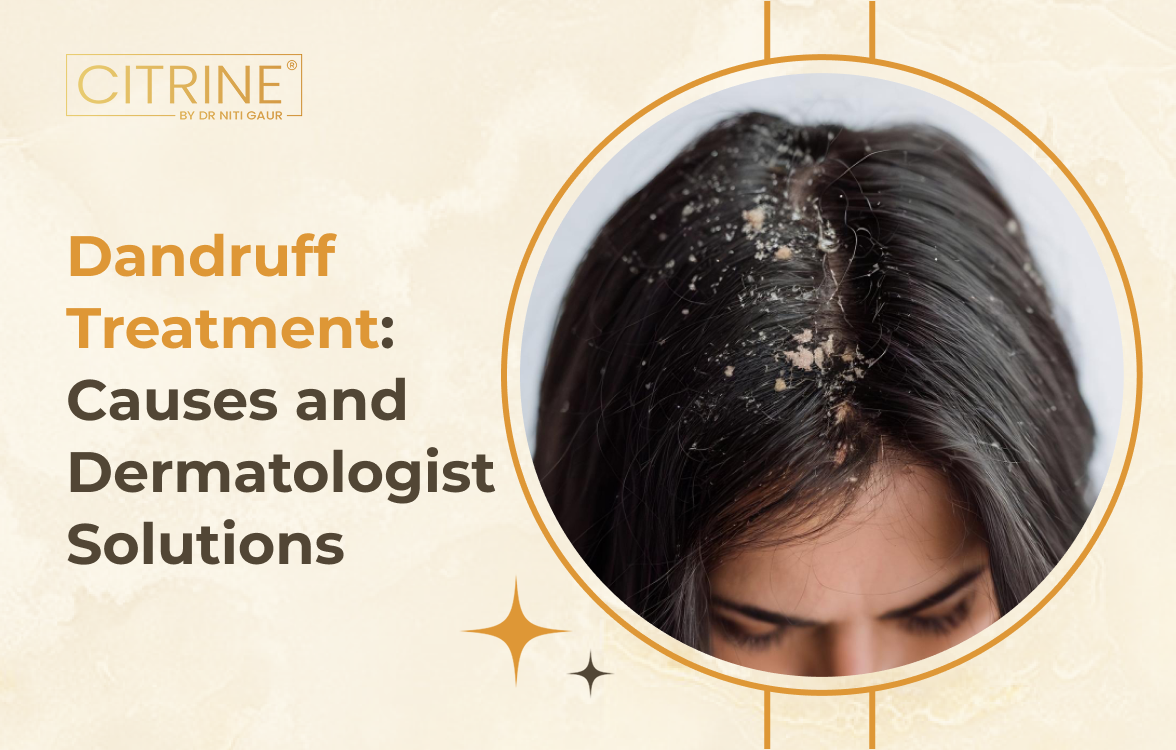
What Exactly Is Dandruff?
Dandruff is characterised by flaking of the scalp, often accompanied by itching, irritation, or mild redness. It exists on a spectrum—from simple dry scalp to seborrheic dermatitis, a more persistent and inflammatory form.
At its core, dandruff is linked to:
- Overgrowth of Malassezia yeast (a naturally occurring scalp fungus)
- Excess sebum (oil) production
- Individual sensitivity and immune response
This explains why two people with similar scalp conditions may experience very different symptoms.
Common Causes of Dandruff
1. Fungal Overgrowth
The most well-established cause is the overgrowth of Malassezia fungi, which feeds on scalp oils and disrupts the natural skin barrier. This leads to accelerated shedding of skin cells, resulting in visible flakes.
2. Seborrheic Dermatitis
A more severe form of dandruff, seborrheic dermatitis presents with:
- Yellowish, greasy flakes
- Redness and inflammation
- Involvement of areas beyond the scalp (eyebrows, sides of nose)
This condition often requires medical-grade treatments for dandruff.
3. Dry Scalp vs. Oily Scalp Imbalance
Both extremes can contribute:
- A dry scalp leads to smaller, powdery flakes
- An oily scalp creates larger, sticky flakes
Balancing scalp hydration is therefore essential in any treatment plan.
4. Product Build-Up & Irritation
Frequent use of styling products, harsh shampoos, or inadequate cleansing can lead to:
- Residue accumulation
- Scalp irritation
- Disruption of the microbiome
5. Lifestyle & Environmental Factors
Stress, diet, weather changes, and even water quality can influence scalp health. These factors often explain recurring or seasonal dandruff.
Why Over-the-Counter Solutions Often Fall Short
Many individuals rely on anti-dandruff shampoos without understanding their correct use or limitations. While these may provide temporary relief, they often fail to address:
- Persistent fungal overgrowth
- Inflammation beneath the scalp surface
- Scalp barrier dysfunction
This is where dermatologist-guided treatments for dandruff become essential—offering a structured, cause-based approach rather than symptomatic relief.
Dermatologist-Recommended Dandruff Treatments
1. Medicated Shampoos
Medicated shampoos remain the first line of treatment in most cases. Depending on the diagnosis, dermatologists may recommend formulations containing:
- Ketoconazole – antifungal, reduces Malassezia
- Zinc pyrithione – antimicrobial and anti-inflammatory
- Selenium sulfide – slows skin cell turnover
- Salicylic acid – exfoliates and removes flakes
However, their effectiveness depends on:
- Correct frequency (often 2–3 times weekly initially)
- Proper contact time (leaving the shampoo on the scalp for several minutes)
Used correctly, they form the foundation of the best dandruff treatments.
2. Antifungal Medications
In moderate to severe cases, topical shampoos alone may not be sufficient. Dermatologists may prescribe:
- Topical antifungal lotions or serums
- Oral antifungal medications (in resistant cases)
These treatments directly target fungal overgrowth and help control recurrence. They are particularly effective in conditions like seborrheic dermatitis.
3. Scalp Hydration & Barrier Repair
Restoring the scalp barrier is an often-overlooked aspect of treatment. This may include:
- Gentle, sulphate-free cleansers
- Hydrating serums
- Avoidance of irritant products
A balanced scalp environment is crucial for long-term control, especially in individuals with recurrent dandruff.
4. HydraFacial Keravive (Hair Keravive)
Hair Keravive is an advanced, clinic-based scalp treatment designed to cleanse, exfoliate, and hydrate the scalp. It works through a three-step process:
- Removal of impurities and dead skin cells
- Infusion of growth factors and hydrating serums
- Improvement of overall scalp health
In the context of treatments for dandruff, Keravive is particularly useful for:
- Product build-up
- Dry or imbalanced scalp
- Maintenance after medical therapy
It complements traditional treatments by addressing the scalp environment, not just the symptoms.
5. Additional Professional Treatments
Depending on the severity and underlying cause, dermatologists may also recommend:
- Chemical scalp exfoliation to remove persistent scaling
- Low-level laser therapy (LLLT) for scalp health support
- P-R-P-based scalp therapies in cases where dandruff coexists with hair thinning
- These interventions are typically part of a comprehensive treatment plan, rather than standalone solutions.
The Importance of Personalised Treatment
One of the most critical aspects of managing dandruff is recognising that no single treatment works universally. The same product may be highly effective for one individual and ineffective for another.
Factors influencing treatment choice include:
- Type and severity of dandruff
- Scalp oil production
- Sensitivity and skin type
- Presence of associated conditions
This is why clinical practices such as Citrine Clinic emphasise individualised diagnosis and treatment planning. Under the guidance of experienced dermatologists like Dr. Niti Gaur, patients receive care that is tailored not just to their symptoms, but to the underlying cause.
Preventing Dandruff Recurrence
Dandruff is often a chronic, recurring condition, which means maintenance is just as important as treatment.
Key preventive measures include:
- Regular use of prescribed or maintenance shampoos
- Avoiding excessive oiling or harsh products
- Maintaining scalp hygiene
- Managing stress and lifestyle factors
Consistency is essential—irregular treatment is one of the most common reasons for relapse.
When to See a Dermatologist
While mild dandruff can sometimes be managed at home, professional consultation is recommended if:
- Flaking persists despite regular shampoo use
- There is significant itching, redness, or irritation
- Dandruff spreads beyond the scalp
- Hair fall accompanies the condition
Early intervention not only improves outcomes but also prevents progression to more severe scalp disorders.
Conclusion
Dandruff may appear simple, but its causes and manifestations are often complex. But modern day treatments have made it possible to manage this condition effectively through a combination of medical therapy and advanced scalp treatments.
The best dandruff treatments are those that are root-cause driven, medically guided, and consistently followed. From medicated shampoos and antifungal therapies to advanced solutions like Hair Keravive, modern treatments for dandruff offer both immediate relief and long-term control.
At clinics such as Citrine Clinic, where a scientific and patient-centric approach is followed under the expertise of Dr. Niti Gaur, dandruff management goes beyond surface-level care, focusing instead on restoring scalp health in a holistic and sustainable manner.
Ultimately, successful treatment lies in understanding that dandruff is not just a cosmetic concern, but a dermatological condition that deserves informed, professional care.
About the Author