
 25 Aug 2026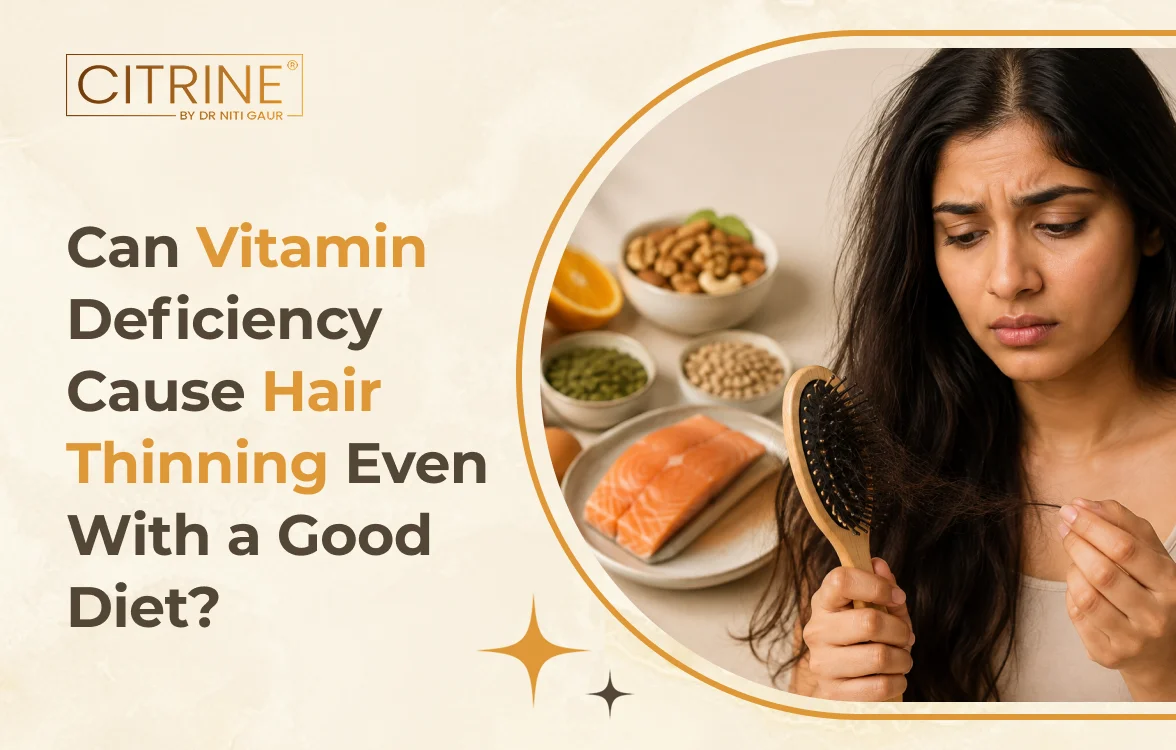
Noticeable, excessive hair fall or hair thinning, a widening parting, or a gradual reduction in hair density is not always due to stress, a medical condition, or poor haircare. An unhealthy diet can even be the culprit.
Most dermatologists advise a hair-healthy diet that includes protein, biotin, B vitamins, Vitamin C, zinc, and omega-3 fats. Some people eat fruits, vegetables, and whole grains regularly, but still get frustrated with hair thinning. Thus, they often ask: Can vitamin deficiency cause hair thinning even with a good diet?
Well, yes, shares dermatologist in Gurgaon, Dr. Niti Gaur, MD, at Citrine Clinic. A healthy diet doesn't mean the body absorbs or maintains every nutrient at a normal level, as required for healthy hair growth.
The hair thinning could be due to Vitamin D, Vitamin B12, or other essential nutrients. Vitamin deficiency is just one potential cause of hair thinning. To treat hair thinning, you need to know the actual cause. Blind use of vitamin supplements may even lead to hair thinning and affect well-being.
Quick Summary About Vitamin Deficiency and Hair Thinning
- Certain vitamins have a role in hair health.
- Not every case of hair thinning is linked to vitamin deficiency.
- A deficiency in Vitamin D, Vitamin B12, iron, zinc, folate, or protein can disrupt the normal hair growth cycle.
- Despite healthy eating, vitamin deficiency and increased hair thinning or shedding are possible.
- Other causes of hair thinning are hormonal shifts, stress, underlying illness, poor scalp condition, or genetics.
- Potential reasons include poor nutrient absorption, restricted diets, increased nutritional needs, certain illnesses, blood loss, certain medications, and differences in nutrient stores.
Can a Good Diet Support Healthy Hair Growth?
A genuine answer: Yes. However, the nutrients essential for healthy hair growth must all be available at normal levels to support the normal hair growth cycle.
Our hair follicles are highly active structures that need sufficient energy, an adequate supply of essential vitamins and minerals, and even a good dose of omega-3 fatty acids to keep growing healthy hair. If any of these nutrients are insufficient, hair follicles can shift from the active growth phase to the shedding phase, causing more hair fall, reduced hair density, delayed hair growth, or weak/brittle hair.
The exact impact on the hair growth cycle, or the extent of hair thinning/hair loss, depends on which nutrients are deficient and how severe the deficiency is.
Which Nutrients Are Essential for Hair Growth?
Healthy hair is only possible with normal levels of the following key nutrients:
- Protein: Our hair is made of keratin, a tough protein. A protein-rich diet supports strong hair.
- Iron: This mineral helps red blood cells carry oxygen to the hair follicles to keep them active and stop hair thinning.
- Zinc: This mineral helps repair and grow hair tissue.
- Vitamin D: It binds to specific receptors inside the hair follicles to make them grow hair, make new hair roots, support the scalp skin cells that create keratin and new hair strands, and regulate the hair growth cycle.
- Vitamin A: It helps keep scalp skin moist by helping in sebum production to support healthy hair growth.
- Vitamin B12: It plays a role in red blood cell formation to support oxygen and other nutrient supply to the scalp and hair roots. It supports natural hair color and healthy hair growth by helping divide fast-growing hair cells.
- Vitamin C: It protects the scalp and hair from oxidative damage and helps with iron absorption.
- Omega-3 Fatty Acids: These are healthy fats that can keep the scalp and hair hydrated.
Can Hair Thinning Occur Due to Vitamin Deficiency Despite Your Good Diet?
Some vitamin deficiencies can occur in people who believe they are eating a healthy diet and can lead to hair thinning if ignored. That’s because of any of the following reasons:
- Poor absorption: Some gastrointestinal conditions like pancreatitis, celiac disease, Crohn’s disease, and small intestinal bacterial overgrowth can interfere with nutrient absorption. So, you may take enough vitamins, but your body may not absorb them well, leading to health issues, including hair thinning.
- Low intake of animal-based foods: Animal-sourced foods are rich in Vitamin B12, which is essential for healthy hair growth.
- Long-term use of certain medications: Some medications affect nutrient absorption or metabolism and indirectly contribute to vitamin deficiency.
- Increased requirement of specific vitamins: Some shifts in physical condition, lifestyle, and life stage can increase nutritional needs. If enough vitamins are not taken through food, then the body’s natural nutrient store may gradually deplete.
- Restricted food choices: People may think that eating only fresh fruits and vegetables daily is a good diet. But this diet lacks protein, essential vitamins, minerals, and healthy fats, all of which are important for healthy hair growth.
- Persistent blood loss: This can lead to nutrient loss.
How Do Dermatologists Check for Vitamin Deficiency?
Generally, a nutritional deficiency shows up as diffuse shedding or thinning. But still, a professional diagnosis is needed to rule out other possibilities.
Dermatologists perform a detailed evaluation of your hair thinning/hair loss. During consultation, the following is expected:
- Review of medical and dietary history
- Review of existing medications
- Thorough scalp examination
- Hair pulling test (in some cases).
A blood test with a specific panel (when clinically appropriate)- for checking specific vitamin and mineral levels, complete blood count, thyroid function, and other relevant medical factors.
Can Taking Vitamin Supplements Help Regrow Healthy, Thick Hair?
Simply taking high-dose vitamin supplements does not guarantee hair regrowth unless there is an actual deficiency or another relevant cause. Otherwise, they can cause unwanted side effects, nutritional imbalances, and delayed diagnosis and treatment of the underlying problem.
Take supplements prescribed by a dermatologist at the recommended dosage. They can help correct the deficiency and normalize the hair growth cycle. However, the improvements take time. If another cause is also present, additional treatment will be needed.
When Is Dermatologist Help Needed?
Consult a dermatologist if experiencing:
- Sudden excessive hair shedding
- Hairline recession
- Gradually noticeable scalp
- Widening hair part
- Patchy bald spots
- Scalp itching or scaling
- Hair thinning that persists even if eating healthy.
With an early, precise diagnosis, hair thinning or hair loss may not progress, and you may get appropriate treatment.
Final Takeaway
Some vitamins and nutrient deficiencies can contribute to increased hair thinning or hair loss, even if you think your diet is proper. Possible reasons include poor nutrient absorption, increased nutritional needs, a restricted diet, blood loss, certain medications, or an illness that affects nutrient levels.
The safest way to address nutrition-related hair loss or hair thinning is to see a dermatologist for an evaluation and follow their recommended treatment plan.
Concerned about persistent hair thinning despite following a healthy diet?
Don’t rely on supplements without knowing the underlying cause. Consult now with Dr. Niti Gaur, an experienced hair fall treatment doctor in Gurgaon, at Citrine Clinic for a detailed scalp and hair assessment, appropriate investigations, and a personalized treatment plan to address nutritional deficiencies or other factors affecting your hair growth.
Locate Citrine Clinic easily and explore verified patient experiences.
FAQs on Hair Thinning Due to Vitamin Deficiency
Can I have vitamin deficiency even with healthy eating?
Yes, if your body isn't properly absorbing nutrients or your nutritional needs aren't being met.
Which vitamin deficiency is responsible for most hair loss?
There is no single nutrient. Generally, Vitamin D, Vitamin B12, Vitamin C, and Vitamin A, along with zinc, iron, and protein, are all required.
Can having vitamin supplements stop hair thinning?
Supplements work only when a deficiency of that particular nutrient is present and no other relevant cause.
How long does it take to have normal hair growth after correction of nutrient deficiency?
It will take several months, only when the underlying cause of hair loss is properly addressed.
Should I take a multivitamin for hair thinning?
Not necessarily. Get a proper dermatologist evaluation to determine which supplements best support your nutritional needs for restoring healthy hair.
About the Author