Dull or rough skin, post-acne marks, uneven skin tone, stubborn pigmentation, and fine lines and wrinkles are common concerns that may not improve with regular skincare alone. Even with a consistent skincare routine, some skin concerns require targeted, professional treatment. In such cases, chemical peel treatment in Rajouri Garden by Citrine Clinic can improve skin texture and reduce certain types of pigmentation.
Chemical peel treatment uses specially formulated exfoliating acids to cause controlled peeling of the skin, removing dead skin cells and encouraging renewal.
The peel type and strength are chosen based on your targeted concerns and their severity, skin sensitivity, pigmentation history, and treatment goals to achieve the desired improvement while minimizing the risk of irritation.
At Citrine Clinic, Rajouri Garden, dermatologist Dr. Niti Gaur will assess your skin concerns and, after a careful evaluation, recommend a suitable chemical peel treatment based on your skin type, expectations, sensitivity, and treatment goals.
If you are exploring chemical peel treatment in Ramesh Nagar, Kirti Nagar, Moti Nagar, Patel Nagar, Naraina Vihar, or Mayapuri for your skin texture concerns, a consultation with Citrine Clinic experts can help you explore suitable chemical peel options or alternatives in detail.
| Parameter | Details |
| Procedure Type | Non-surgical aesthetic dermatology treatment |
| Treatment | Superficial, medium-depth, and deep chemical peels |
| Concerns | Pigmentation, acne marks, dullness, fine lines, and uneven texture |
| Treatment Duration | Approximately 20-45 minutes |
| Number of Sessions | 2-6 sessions. Depends on peel type and skin concern |
| Downtime | Minimal for superficial peels; longer for medium and deep peels |
| Results | Gradual improvement in skin tone and texture |
| Cost | Rs. 5,000-7,000/session |
| Clinic Address | Citrine Clinic, C-70, Sudesh Kumar Marg, Rajouri Garden, West Delhi |
A chemical peel is a popular aesthetic dermatology service that resurfaces the skin at a controlled depth. The treatment involves applying a carefully selected acid solution to exfoliate the skin, remove dead, old, or damaged skin cells, and encourage skin renewal.
Depending on the peel formulation and concentration, chemical peel solutions can work at different skin depths to reveal smoother, more evenly toned skin underneath.
Chemical peel is considered a versatile cosmetic skin treatment, as it can help address the following varieties of skin concerns:
Fine lines and wrinkles around the mouth or eyes
Uneven complexion or skin dullness
Early to moderate acne or acne scars
Pigmentation concerns like freckles, sun spots, post-acne marks, and certain cases of melasma.
Depending on the peel strength or depth at which the solution acts, there are three types of chemical peels:
Superficial/Light Peels: These are mild alpha-hydroxy acid peels that act only on the skin’s outermost layer (the epidermis). Common ingredients are glycolic acid for uneven texture and superficial pigmentation; lactic acid for skin exfoliation and surface hydration; and mandelic acid for superficial pigmentation and acne-prone skin.
Medium Peels: These are medium-strength, beta hydroxy acid (BHA)solutions that reach up to the upper dermis. Common ingredients are salicylic acid for oily and acne-prone skin or trichloroacetic acid (TCA) for pigmentation and textural concerns, as well as certain forms of superficial scarring.
Deep Peels: These are the strongest acid solutions and work up to the mid-reticular dermis. A common ingredient is phenol. It is typically a one-time application peel.
A dermatologist selects the peel and application technique after assessing the individual’s skin concern/condition, skin type, tolerance, medical history, and treatment needs.
In some cases, a combination peel formulation like Jessner’s solution is recommended to address multiple skin concerns at once. Its ingredients are lactic acid, salicylic acid, and resorcinol.
Chemical peels are commonly performed on the face, but can also be used on other body areas.
Face
For managing acne marks, pigmentation, dullness, and uneven texture
Neck
Pigmentation and uneven skin tone
Chest and décolletage
Manage sun damage and pigmentation
Hands
Help with superficial sun spots
Back
Target acne-related marks and uneven skin texture.
A chemical peel is worth considering in selected cases, specifically for early to moderate aesthetic skin concerns.
A dermatologist consultation may be relevant for individuals:
Chemical peel treatment may not be suitable for everyone. A dermatologist recommends postponing or modifying the procedure if you have:
Here’s the stepwise process:
Initial consultation and assessment: Dermatologist at Citrine Clinic carefully examines the affected skin, identifies the primary concern and skin type, and reviews medical records, previous procedures, and the existing skincare routine to assess candidacy for chemical peels and customize the treatment plan.
Skin preparation: Based on the peel and targeted skin condition, the dermatologist cleanses and prepares the skin with suitable products to ensure even peel application.
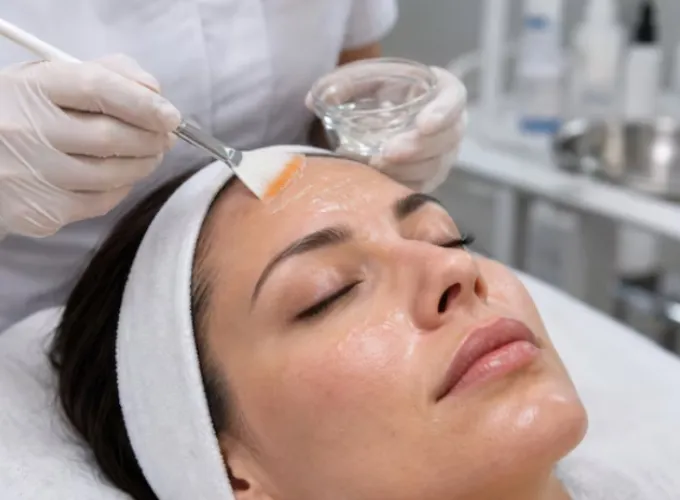
Chemical peel application: Then the doctor carefully applies the selected peel to the area of concern. Application timing and technique depend on the desired treatment depth and selected formulation.
Monitoring of skin response: Experts monitor the skin throughout the procedure for expected skin response and signs of excessive skin irritation.
Neutralization or removal of peel: Depending on the chemical peel selected, a neutralization solution is applied, or the peel is removed.
Aftercare guidance: Regular, suitable moisturization and sun protection are recommended. A dermatologist explains how to care for dry, red, peeling, or sensitive skin during recovery.
Chemical peel treatment is elected by many as it offers the following wide range of therapeutic and cosmetic benefits:
The treatment is generally safe when an experienced dermatologist selects an appropriate chemical peel and applies it in a modern clinical setting. Still, side effects are usually mild and temporary, including redness, flaking, peeling, sensitivity, stinging or burning sensations, dryness, tightness, and skin pigmentation changes. If the side effects are persistent, worsening, or unusual, promptly seek medical advice.
The safety depends on the following factors:
Superficial peels have shorter recovery periods, while medium and deep peels may take longer to heal.
| Timeline | What May Occur | What To Do |
| Immediately after treatment | Mild redness or stinging sensation | Try to soothe the skin as prescribed and apply moisturizer as recommended |
| Day 1-3 | Dry, tight and sensitive skin | Avoid harsh skincare products and direct sunlight |
| Day 3-7 | Peeling or flaking, depending on peel depth | Allow skin to naturally shed. Avoid picking |
| Week 2 | Gradual reduction in skin redness and peeling | Follow gentle skin care and sun protection |
| Week 3-4 | Skin recovery continuous | Go for follow-up appointments |
| Following weeks | Gradual improvement in tone and texture of skin | Do proper skin care and apply sunscreen |
Proper skin care after treatment protects the skin and reduces the risk of irritation or unwanted pigmentation.
Chemical peel treatment cost in Gurgaon usually ranges from Rs. 5,000- 7,000 per session, depending on the type and depth of the peel. Superficial peels are more affordable, while medium and deep peels are expensive.
Factors that affect chemical peel treatment cost:

Treatment by dermatologist
Dr. Niti Gaur with 20+ years of experience.
Proper treatment
Peel formulation is based on the patient's skin type and specific concerns.
Personalized treatment
We select the peel formulation based on individual requirements.
Clinical supervision
We perform treatments with close attention to application technique, skin response, and safety.
Aftercare guidance
Patients receive instructions on moisturization, sun protection, and skincare during recovery.
Convenient location
Citrine Clinic is located at C-70, Sudesh Kumar Marg, Rajouri Garden, West Delhi.
If you are exploring chemical peel treatment in Rajouri Garden for acne, pigmentation, dullness, or uneven skin texture, start with a professional skin assessment and a discussion of your treatment goals with Dr. Niti Gaur.
She can help identify your underlying concern, choose an appropriate peel formulation, and discuss possible benefits, side effects, recovery requirements, and pricing. She can also determine whether chemical peels alone or a combination of treatments would be more suitable.
The goal is to achieve healthier-looking, smoother, and more even-toned skin through a personalized treatment plan that considers your skin type, concerns, and long-term skin health.
Chemical peel can help fade certain types of superficial pigmentation but does not guarantee permanent removal. Melasma, sun spots, and post-inflammatory hyperpigmentation may recur with ongoing triggers. Maintenance skincare is important for long-lasting, even skin tone.
You'll notice smoother, brighter skin soon after the initial recovery ends. But improving specific tone and texture concerns takes multiple sessions over several weeks.
The session is usually tolerable. Superficial peels usually cause slight warmth, stinging, or tingling, while stronger peels cause more discomfort. Discomfort varies by peel type, concentration, and treatment depth.
About 2-6. The number of sessions and their frequency are determined during consultation, based on the selected peel type, formulation, and strength; targeted concern; and individual response. Mild peels generally need more sessions.
Yes, chemical peels can be performed during summer if the dermatologist considers them suitable. Following sun protection measures and avoiding direct sunlight during recovery are particularly important.
Result longevity depends on the peel type and the maintenance skincare you follow. Light peels last 1-2 months, medium peels last 2-6 months, and deep peels can improve results for several years.
It is generally advisable to avoid makeup until the initial redness and sensitivity settle. After medium or deep peels, you may need to wait longer. Your dermatologist will recommend when it is appropriate to resume makeup based on your skin's recovery.
Certain superficial chemical peels may help improve melasma when used alongside prescribed topical treatments and sun protection. A dermatologist should assess the condition before recommending treatment.
It can range from Rs. 5,000-7,000 per session. The total price varies by the peel type/formulation/depth, targeted area, number of sessions, and chosen clinic/clinician. Consulting different clinicians can help you compare estimated chemical treatment pricing for a customized treatment plan.