
 16 Aug 2026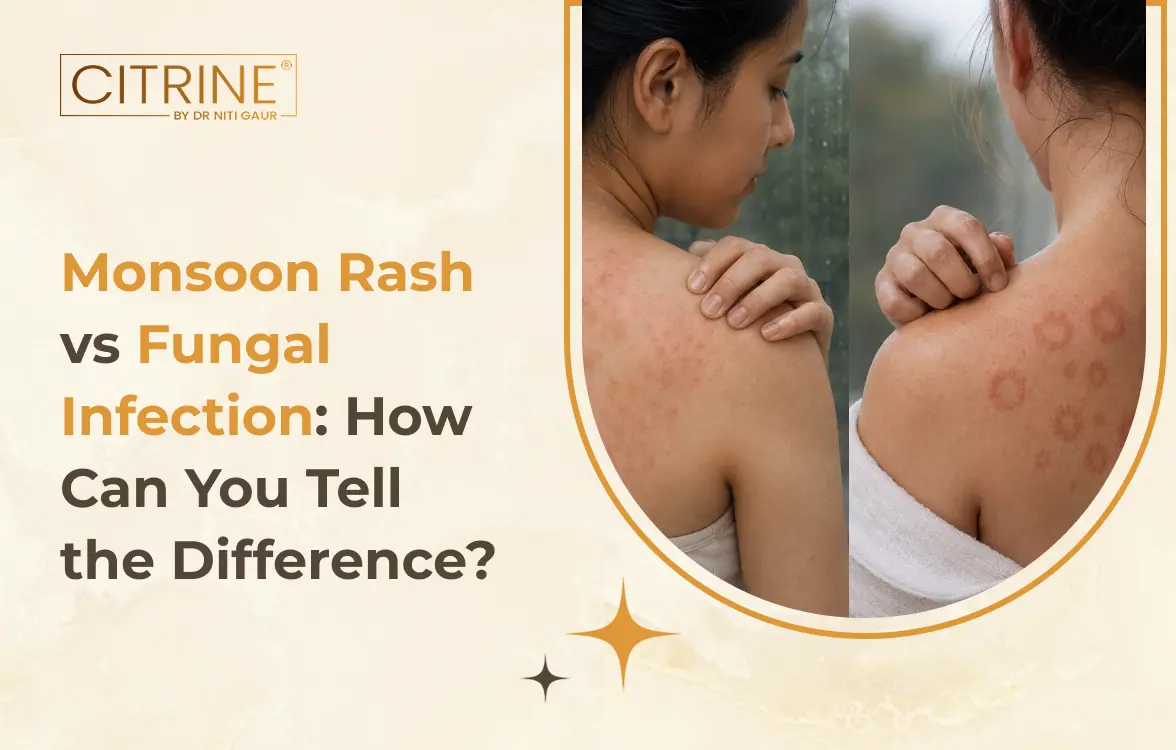
Monsoon season brings high humidity, which further increases sweat buildup and moisture retention on the skin, ultimately causing rashes of various kinds. The two most common ones are monsoon rash and fungal infection.
Many people mistake a fungal infection for a monsoon rash, as both skin conditions cause itchy, irritated, red skin. So, knowing which one is present is important before treatment to ensure you take the right steps.
If you have developed itchy, irritated skin during monsoon, find out which type of rash you have and what to do about it by reading this comparison guide on monsoon rash and a fungal infection by Dr. Niti Gaur, skin doctor in Gurgaon and founder of Citrine Clinic.
Quick Summary
- Monsoon rash has irregular red patches
- Fungal infection shows defined ring-shaped borders
- Heat rash improves with cooling measures
- Fungal rashes spread without antifungal treatment
- Skin folds commonly develop fungal infections
- Correct diagnosis prevents wrong cream use.
What is a Monsoon Rash?
Monsoon rash isn’t a single medical diagnosis. It is a common term used to refer to eczema flare-ups, heat rash (prickly heat), contact dermatitis, repeated friction-caused irritation, allergic skin reactions, or dry-skin itchiness.
A monsoon rash develops when warm, humid weather causes excessive sweating and moisture retention. Other triggers include prolonged wear of damp clothes/shoes, blocked sweat ducts, repeated friction, and increased exposure to environmental irritants or certain topical products.
Depending on the cause or type of monsoon rash, the symptoms may include:
- Slight redness
- Burning sensation
- Itching/prickling
- Irritated skin
- Often, it is apparent on the back, chest, neck, underarms, inner thighs, waist, and skin folds.
What is a Fungal Infection?
A fungal infection is a medical skin condition caused by an overgrowth of fungus that naturally resides on the skin. A rash caused by a fungal overgrowth is usually red, persistently itchy, scaling, spreading, raised, and sometimes ring-shaped. It is usually seen in constantly warm, moist areas of the skin.
Common fungal skin infections in monsoon include tinea corporis (ringworm), tinea cruris (which affects the inner thighs and groin), and tinea pedis (athlete’s foot).
How Can You Tell the Difference Between Monsoon Rash and Fungal Infection?
Here are the key distinguishing factors to consider:
| Feature | Monsoon Rash | Fungal Infection |
| Appearance | Small, superficial red bumps or tiny blisters without sharp boundaries (an irregular shape) | Red, scaly, flaking, or cracking patches of skin with well-defined borders, often ring-shaped with a lighter or clear center. |
| Feel | Prickly, stinging, or slightly irritated skin that goes away when the skin is cooled down and dried | Intense itching accompanied by a burning sensation that doesn’t fade on its own; instead spreads to surrounding skin. |
| Location of Occurrence | Limited to the irritated area of the skin, like where clothing rubs or there is trapped heat or moisture, such as the chest, back, neck, and others | Rashes develop in the damp or sweaty skin folds like the groin, under breasts, between the toes, and underarms. |
| Triggers | High humidity, blocked sweat ducts, allergic reaction, repeated friction, or irritation | Rapid multiplication of a fungus that naturally is present on the skin |
| Response to Keeping Skin Cool, Dry, and Not Irritated | Often, rashes improve | Rashes only improve with use of prescribed antifungal medication |
These differences are just clues of a possible type of rash. These factors alone do not confirm diagnosis. A dermatologist can only help accurately diagnose the monsoon skin problem and recommend an appropriate treatment plan.
The diagnosis is usually based on:
- Patient’s history- the symptoms' duration, sweating, recent environmental exposure, wearing of tight clothing, or use of skincare products/cosmetics
- Visual evaluation of the rashes
- Additional tests (if needed)- like skin scraping, Wood’s lamp test, microscopic examination, and laboratory testing.
Most Effective Treatment and Preventive Strategies Based on Monsoon Rash
Because monsoon rash and fungal infection have different causes, their treatment approaches vary.
For a monsoon rash:
- Primary treatment goal: Keep the skin cool and keep sweat ducts clear.
- First-line care: Stop the sweating by being in an air-conditioned or well-ventilated room. Get out of sweaty or damp clothes and take regular, cool showers. Change into loose, breathable clothes. For a prickly sensation, soothe the skin with calamine lotion or menthol-based formulas.
- Extreme rashes treatment: Use a doctor-prescribed topical, likely a mild steroid.
- What to avoid: Don’t use heavy, thick, greasy products on the skin.
For a fungal infection:
- Primary treatment goal: Kill the overgrown fungus or inhibit the fungal growth on the skin.
- First-line care: Use a topical antifungal, as directed by the prescribing doctor. Continue applying it for 1-2 weeks after the rash disappears to ensure microscopic roots of the fungus are no longer present. Before applying it, ensure the skin is clean and dry.
- Extreme rashes treatment: Take the prescribed oral antifungal.
- What to avoid: Don’t use over-the-counter steroid creams, as these could multiply the fungus. Also, avoid sharing personal belongings.
Final Thoughts
Any itchy rash that develops during monsoon season is not necessarily a fungal infection. It could be a monsoon rash caused by high humidity, excessive sweating, irritation, allergic reaction, eczema, or repeated friction. Fungal infections typically cause persistent itching, scaling, and raised rashes that spread.
Knowing the exact cause of the rash, triggers, and symptoms can help one get appropriate treatment and prevent the rash from returning.
Not sure whether your rash is heat-related or a fungal infection? Book a consultation with Dr. Niti Gaur, dermatologist in Gurgaon at Citrine Clinic, for a precise diagnosis and targeted treatment that relieves itching, prevents spreading, and reduces the risk of recurrence.
Read what our patients say and find the easiest route to Citrine Clinic.
FAQs About Monsoon Rash vs Fungal Infection
Is it possible to have both monsoon rash and fungal infection?
Yes, prolonged moisture retention and sweating in the monsoon can irritate the skin and even create favorable conditions for fungal growth. This means a fungal infection may accompany a heat rash, so a dermatologist should make the diagnosis.
Is every monsoon rash a fungal infection?
No. A fungal infection is one possible kind of monsoon rash. Others include eczema, allergic reaction, friction, contact dermatitis, and sweat duct blockage.
How to tell if my monsoon rash is a fungal infection?
If your rash is scaling, spreading gradually, has a raised, defined border, and causes persistent itching, it may be a fungal infection. Confirm it with a dermatologist evaluation.
Can I use a steroid cream to relieve my itchy skin in monsoon?
Not without a dermatologist’s recommendation. If your rash is a fungal infection, steroids can suppress symptoms and make the infection spread.
When should you see a dermatologist for a rash that develops in monsoon?
Seek a dermatologist evaluation if the rash is spreading, very itchy, causing great discomfort, recurring, and not improving with basic skincare.
About the Author